Duffy Faces Criticism After FAA Ground Stop Briefings
Transportation Secretary Sean Duffy’s Saturday briefing at the Transportation Department began with feedback blaring through the microphone. After twice stopping, Duffy remarked, “This is our kind of, um, day.” Staff fixed the sound, and the livestream resumed several minutes later as Duffy tested the microphone by counting from one to seven.
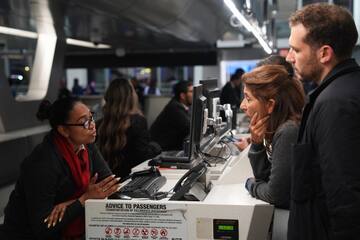
The disruption came a day after the Federal Aviation Administration halted departures nationwide for more than four hours. Airlines canceled thousands more flights on Saturday, while travelers faced continuing disruptions. The halt was the second nationwide ground stop since the September 11 attacks.
Duffy said a router installed at a remote FAA site during a copper-to-fiber upgrade had overwhelmed the network. Officials were still examining whether the problem stemmed from an installation mistake or defective equipment. Duffy identified L3Harris, an FAA contractor, as involved in telecommunications maintenance at the time. The company had not immediately responded to a request for comment.
At an earlier briefing with Homeland Security Secretary Markwayne Mullin, Duffy blamed aging air traffic control technology and described overloaded telecommunications equipment. The two officials said a cyberattack was not responsible, but former White House counterterrorism adviser Richard Clarke said officials should not rule that out before completing a forensic or root-cause investigation.
Clarke called the earlier appearance among the worst crisis-communications briefings he had seen and said the public needed a more complete account. Duffy’s second briefing continued to reject an AI scheduling tool or malicious attack as the cause, while officials investigated whether the router failure resulted from human error or faulty hardware.
FAA Crisis Demands Answers, Not Another Troubled Briefing
The FAA’s nationwide departure halt left travelers facing more cancellations on November 14, and Transportation Secretary Sean Duffy’s effort to explain the disruption began with a microphone malfunction. Feedback forced him to pause twice before staff restored the livestream.
Duffy said a router at an FAA facility far away had overwhelmed the network during a copper-to-fiber upgrade. He said officials were still determining whether the cause was an installation error or faulty equipment. That leaves key questions about the failure unresolved as passengers deal with continuing disruption.
At an earlier briefing with Homeland Security Secretary Markwayne Mullin, officials ruled out a cyberattack. Former White House counterterrorism adviser Richard Clarke said it was too early to exclude that possibility before forensic or root-cause analysis. He also called for a fuller explanation and sharply criticized the earlier briefing’s handling of the crisis.
The administration’s explanations have not yet supplied a settled account of how the network failed. Duffy identified FAA contractor L3Harris as involved in maintenance at the time, while saying officials were investigating whether the router was installed incorrectly or was defective. The public deserves clarity about the cause and the steps being taken as cancellations continue.
FAA Failure Exposes Weak Crisis Management Under Duffy
Travelers were still contending with flight cancellations on November 14 after the FAA’s nationwide ground stop, and Transportation Secretary Sean Duffy faced another difficult briefing when feedback disrupted his microphone. The interruption was an unhelpful start to an effort to explain a major failure in the nation’s air traffic system.
Duffy said a router at a remote FAA site overwhelmed the network during a copper-to-fiber upgrade. He said the investigation had not determined whether the cause was poor installation or defective hardware. L3Harris, the FAA contractor involved in telecommunications maintenance, had not immediately responded to a request for comment.
The administration’s first public explanation, delivered by Duffy and Homeland Security Secretary Markwayne Mullin, drew criticism from former White House counterterrorism adviser Richard Clarke. He called for a more complete account and said officials should not dismiss a cyberattack until a forensic or root-cause review is finished.
Duffy’s second appearance also rejected an AI scheduling tool or malicious attack as the cause. The practical priority now is a clear explanation of the router failure and the source of any installation or equipment problem, as airlines continue canceling flights and passengers bear the consequences.
Reported by The Daily Beast, Raw Story.