Tesla Opens Cybercab Orders to Select Personal Buyers
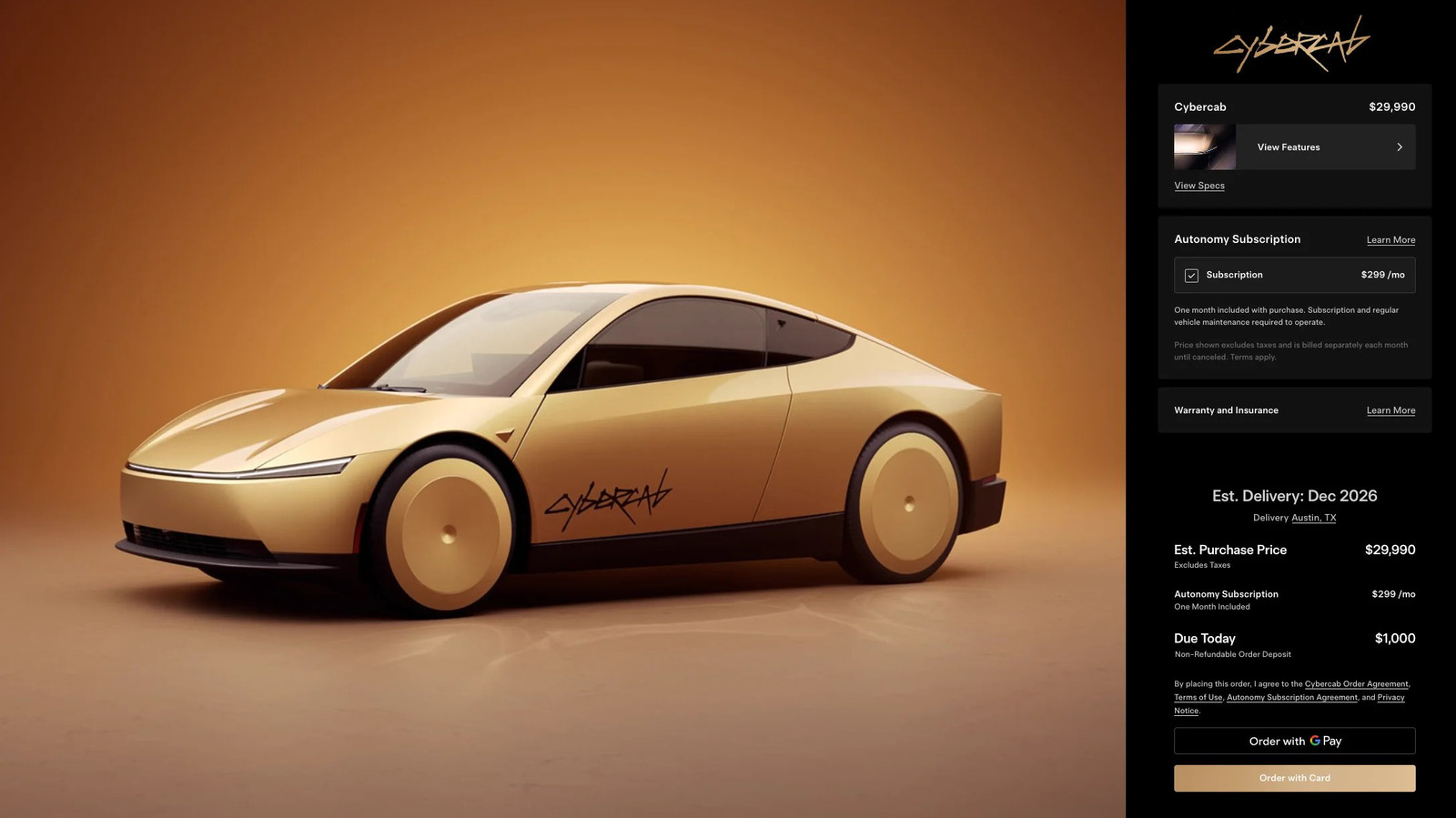
Tesla has begun offering its Cybercab to some customers for personal use, a shift from its earlier plan to sell the driverless vehicles to organizations building its robotaxi network. The company announced the invitations on November 13, with order materials showing a $29,990 price and a required $299 monthly Autonomy Subscription. Initial availability is limited, and the listed delivery estimate is December 2026.
The two-seat Cybercab has no steering wheel, accelerator or brake pedals. It is designed to operate autonomously, so it cannot be driven on public roads without the subscription. Tesla AI chief Ashok Elluswamy said customer vehicles would operate without supervision only in the same geofenced areas as Robotaxi, serving their owners. Those service areas include locations in Florida and Texas.
The order terms prohibit personal-use buyers from using the vehicles commercially. That means owners cannot put them on Tesla’s Robotaxi network to generate income. Tesla has discussed customer vehicles joining that network in the future, with a possible target of the second quarter of 2027, but the current offer does not allow it.
Tesla also requires a $1,000 non-refundable deposit, and the delivery window is not guaranteed. The monthly fee would add $17,940 over five years, bringing the vehicle and subscription total to about $47,600 before taxes and other costs.
The National Highway Traffic Safety Administration has opened an audit query into Tesla’s process for certifying the Cybercab, focusing on the lack of conventional manual controls and related issues. Tesla submitted its justification to the agency in October. The agency’s review remains pending as the company seeks deposits from prospective buyers.
Tesla’s Driverless Car Offer Raises Safety and Accountability Questions
Tesla is asking customers to put money down on a driverless car whose federal safety review is still unresolved. The Cybercab, offered to select personal buyers on November 13, costs $29,990 and requires a $299 monthly autonomy subscription. Buyers must also pay a non-refundable $1,000 deposit, while the December 2026 delivery estimate is not guaranteed.
The design has no steering wheel, accelerator or brake pedals, leaving no manual driving option if a customer cancels the subscription. The car is restricted to geofenced areas where Tesla runs Robotaxi service, and Tesla says it will serve its owner there without supervision.
The National Highway Traffic Safety Administration has opened an audit query into how Tesla certified a vehicle without conventional manual controls. Tesla submitted its justification in October, and the agency’s review is pending. That makes the timing of the consumer offer especially consequential: the company is seeking deposits while regulators examine the basis for putting these vehicles on public roads.
The economics also put the burden on buyers. Over five years, the subscription adds $17,940, bringing the price to roughly $47,600 before taxes and other ownership costs. Owners cannot use the vehicle commercially or add it to Tesla’s Robotaxi network under the current terms. Tesla has floated a possible second-quarter 2027 target for allowing customer cars into the network, but that offers no current way to offset the cost.
Tesla’s Cybercab Offer Tests Whether Regulation Can Keep Pace
Tesla’s Cybercab offer puts a new autonomous vehicle in front of select customers while a federal audit of its certification process is underway. The company began sending invitations on November 13. The listed price is $29,990, plus $299 a month for the autonomy service the car needs to operate on public roads.
The Cybercab has no steering wheel or pedals, and Tesla says personal vehicles will work only in the same geofenced areas as its Robotaxi service. That narrow operating footprint reflects the current limits of the offer, not a promise of nationwide availability. Tesla’s estimated delivery timing is December 2026, and buyers must submit a non-refundable $1,000 deposit without a guaranteed delivery date.
The National Highway Traffic Safety Administration is examining Tesla’s self-certification process and the vehicle’s lack of conventional controls. Tesla provided its legal justification in October; the agency’s review is pending. The central question is whether regulators will permit the vehicle’s design and operating model, not simply whether customers want an autonomous car.
The subscription also makes the advertised price only part of the cost. Over five years, fees add $17,940, for a total of about $47,600 before taxes and other expenses. Buyers cannot currently use the car commercially or add it to Tesla’s Robotaxi network, though a company AI executive has mentioned the second quarter of 2027 as a possible target for customer cars joining the network. Until then, the vehicle’s usefulness depends on Tesla’s service areas and continued subscription.
Reported by Engadget, The Verge, TechCrunch.