Flight Shutdown Fuels Cyberattack Fears and Warnings of More Disruption
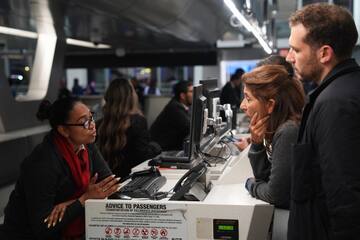
The Federal Aviation Administration halted domestic departures across the United States at 3:45 p.m. ET on November 13, citing safety concerns and extraordinary circumstances. The stop ended shortly after 8 p.m., leaving passengers waiting at airports and on planes as officials investigated the cause. Transportation Secretary Sean Duffy attributed the grounding to a communications problem affecting air traffic control.
Markwayne Mullin, who leads Homeland Security, said investigators had found no sign thus far of a deliberate attack, though authorities were considering all possibilities. FBI personnel were monitoring the situation. Former FBI official Chris Swecker said he would keep possible hostile involvement in mind, particularly amid the conflict with Iran, but said an operation on this scale would likely come from outside the United States rather than a local cell. He urged the country to prepare for a major cyberattack.
The flight disruption followed a Microsoft outage that began on November 12 and affected Outlook and services used by organizations including banks and courts. Microsoft said the failure did not stem from an online assault or a security compromise. Cybersecurity expert James Knight questioned whether the scale and effects could reflect a nation-state operation. Officials have not tied the Microsoft outage to the flight stop.
Atlantic writer Josh Tyrangiel said cybersecurity specialists he had spoken with expect more service interruptions as AI tools advance and software weaknesses persist. He cited the FAA’s recent launch of its $875 million SMART air-traffic system; its maker, Air Space Intelligence, denied its technology caused the grounding. Tyrangiel’s sources expect recurring disruptions over the next 18 months, while he emphasized that he did not know what caused the shutdown. Two ship crashes were also part of the wider run of incidents that prompted concern.
Officials Need Evidence, Not Speculation, as Flight Disruption Exposes Risks
The FAA grounded domestic departures nationwide on November 13, then lifted the order shortly after 8 p.m. Transportation Secretary Sean Duffy said a communications issue affecting air traffic control prompted the halt. Homeland Security Secretary Markwayne Mullin said authorities had no indication of foul play, while keeping possibilities open.
That distinction matters as fears of a foreign operation circulate. Former FBI official Chris Swecker raised the possibility of hostile involvement amid the conflict with Iran, and cybersecurity expert James Knight said the disruptions merited scrutiny. But officials have not connected the flight stop to the Microsoft outage, and Microsoft said its failure did not stem from a malicious digital attack or a compromise of protected systems. Speculation is not proof, and the cause of the grounding remains under investigation.
The outage, which began on November 12, affected Outlook and services relied on by banks and courts. The FAA shutdown left travelers waiting across the country. Atlantic writer Josh Tyrangiel said experts expect recurring disruptions as AI advances and software vulnerabilities persist, with his sources predicting difficulties over the next 18 months.
The FAA had recently introduced its $875 million SMART air-traffic management system, but its maker, Air Space Intelligence, denied that the technology was responsible. Tyrangiel said he did not know the cause either. The central challenge is to examine these failures and strengthen the systems people depend on without treating unconfirmed claims of an attack as established fact.
Nationwide Flight Halt Demands Serious Attention to Cyber Threats
A nationwide flight stop on November 13 brought domestic departures to a standstill for more than four hours. The FAA cited safety concerns and extraordinary circumstances; Transportation Secretary Sean Duffy said a communications problem affecting air traffic control was behind the halt. The shutdown came after a Microsoft outage and amid a conflict with Iran, a context that makes vigilance essential.
Homeland Security Secretary Markwayne Mullin said authorities had no indication of an attack but were not ruling out possibilities. Former FBI official Chris Swecker said the scale of any hostile operation would point beyond a local cell and urged the country to prepare for a major cyberattack. His concern should not be confused with proof: officials have not established that the flight stop and Microsoft failure were connected.
The Microsoft outage began on November 12 and disrupted Outlook and services used by banks and courts. Microsoft said the incident did not result from a malicious digital assault or a compromise of protected systems. Cybersecurity expert James Knight questioned whether the breakdowns looked accidental, while Atlantic writer Josh Tyrangiel relayed experts’ warnings that AI and weaknesses in software could bring repeated service interruptions over the next 18 months.
The FAA had recently rolled out its $875 million SMART system, and its developer, Air Space Intelligence, denied that its technology caused the grounding. Tyrangiel also said he did not know the cause. Still, a country that depends on interconnected systems cannot treat a nationwide shutdown as an ordinary inconvenience; authorities must investigate the facts and prepare for future disruptions.
Reported by Daily Mail US, Raw Story.