Trump and Schiff join forces over a Hollywood bill

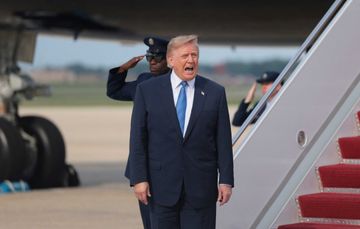
Donald Trump is urging Congress to approve a federal film tax credit for film and television production before control of both chambers changes hands. The unusual alliance behind the proposal includes Trump and Senator Adam Schiff, a former political adversary. But bipartisan support does not settle the central question: whether a subsidy costing billions can reliably bring production and jobs back to the United States.
In a Truth Social post, Trump named lawmakers from both parties who are working on the proposed federal production-incentive legislation. He argued that foreign incentives had drawn production to Canada, the United Kingdom and Australia, and said the proposed credit could help bring work home. He also claimed that the measure would benefit hundreds of thousands of blue-collar workers and that the additional economic activity would more than cover its cost. Those are arguments for the bill, not established outcomes.
Schiff publicly backed the effort as well, saying Congress should act before January rather than let a bipartisan opportunity to create jobs pass by. The proposal was introduced in September by Republican Senator Tim Scott alongside Schiff, Republican Senator John Cornyn and Democratic Senator Raphael Warnock, and is now before the Senate Finance Committee. The bill’s supporters include lawmakers from states where production has been lost to competing incentives, a point Trump emphasized in making the case across party lines. The push has already drawn attention to the bill’s narrow legislative window.
Under the proposal, eligible productions would receive a federal credit starting at 20 percent of labor costs, potentially rising to 30 percent with bonuses. Projects would need budgets above $1 million and at least three-quarters of principal photography conducted in the United States. The credit could be combined with state incentives, as production subsidies can be in other countries. The bill also includes post-production and visual-effects expenses if at least 75 percent of those costs occur domestically. The details matter: this is not simply a general payment to Hollywood, but a proposed subsidy tied to production spending and location.
The timing is precarious. After Democrats won control of both chambers in the midterms, Republicans have a limited period before the new lawmakers take office. One possible route is attaching the tax credit to year-end funding legislation. That would put it amid a larger budget fight, where the measure could be delayed, dropped or caught in a funding impasse. Democrats are also preparing investigations of the Trump administration, and the spending proposal may have to compete with other priorities. The bill’s prospects are therefore not secured by the public show of bipartisan cooperation. The effort faces a compressed lame-duck timetable.
The other obstacle is price. A Joint Committee on Taxation estimate had not been released in the reports. An estimate from the Cato Institute put the cost at $33 billion to $49 billion over a decade. Trump says the incentive would pay for itself many times over; critics question whether state programs offer a sound basis for that promise. A policy brief from the Mackinac Center argued that state film incentives often have little influence on production decisions and rarely create lasting jobs or strong returns for public budgets. The Tax Policy Center similarly questioned whether a federal credit is justified without clearer evidence of benefits, while pointing to design choices such as caps as possible ways to limit waste. The dispute is not whether production jobs matter. It is whether this particular subsidy can secure them at a price taxpayers should accept.
There are signs of real strain in the domestic production business, though they do not by themselves prove the proposed credit will reverse it. One account cited a steep decline in Los Angeles on-location shoot days since 2019, losses in local film-sector employment and closures among production-service businesses. The United Kingdom, meanwhile, reported a record year for spending on movies and premium television in 2024. A separate industry coalition report said the U.S. share of the 25 most expensive films had declined substantially since the start of the century and estimated billions in annual losses. The figures describe a serious challenge; they do not establish that a federal credit is the best remedy. The arguments over bringing production back have also surfaced at the American Film Market.
Trump has previously floated tariffs on films made abroad, which industry analysts warned could prompt retaliation against U.S. entertainment exports. The current proposal is a different instrument: a tax credit intended to make domestic production more attractive, rather than a penalty on foreign-made films. Whether Congress takes it up, and whether the final design limits the cost, remain open. The legislation is pending in committee, and the year-end funding negotiations may determine whether it advances now or waits for the next Congress. The broader flight of production from California is part of the backdrop.
For my part, the bipartisan cast is striking, but the arithmetic deserves more attention than the applause. A promise of jobs is not the same thing as proof that a subsidy will deliver them.
Reported by Deadline, The Hollywood Reporter, Townhall, Newsweek.