Starship Reaches Orbit as SpaceX Aborts Booster Catch
SpaceX’s Starship reached low Earth orbit on November 13 during the rocket’s 15th test flight, while its Super Heavy booster returned to the Gulf of Mexico after a planned catch at the Texas launch site was called off. The company did not immediately explain why it abandoned the catch attempt.
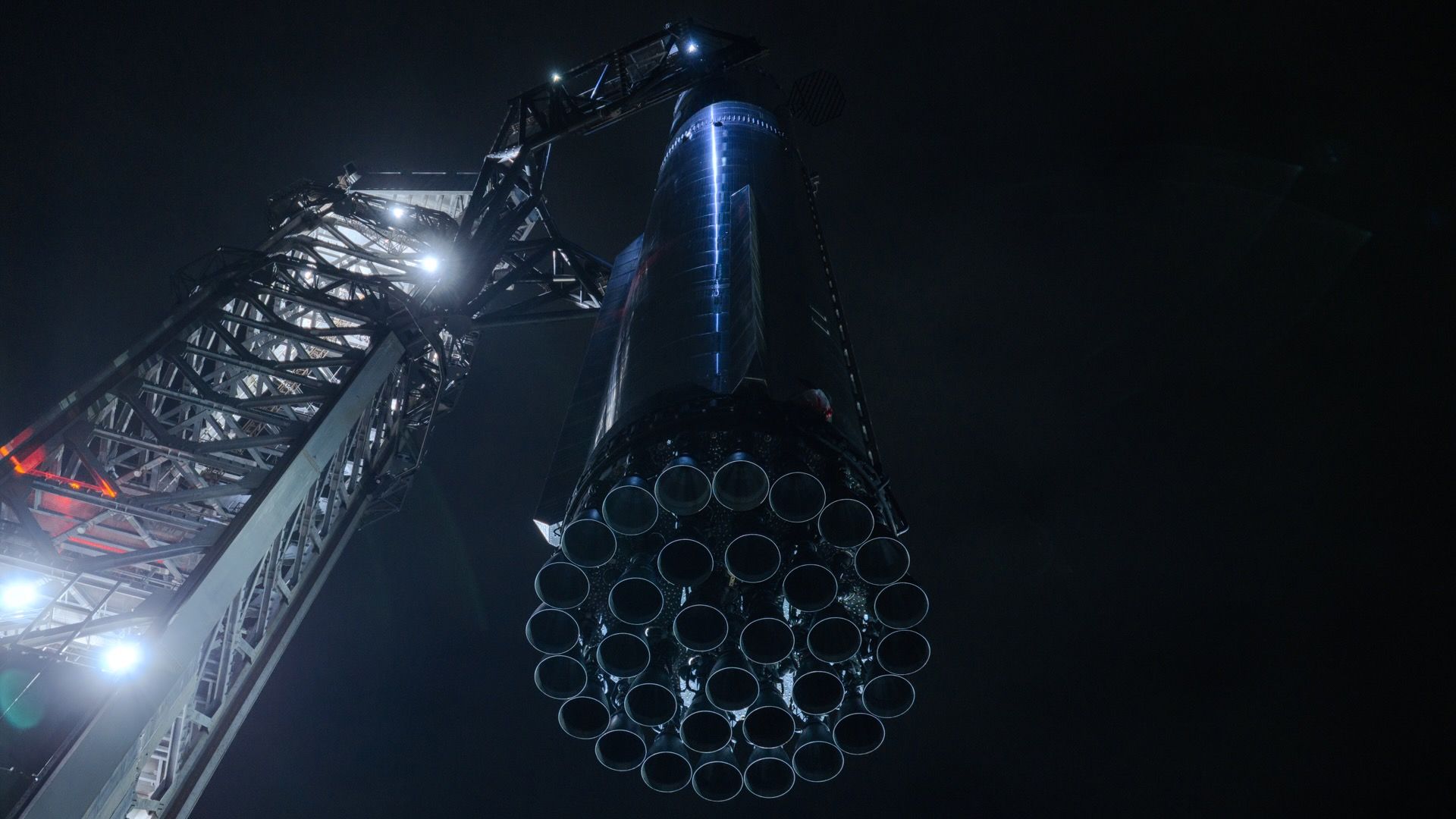
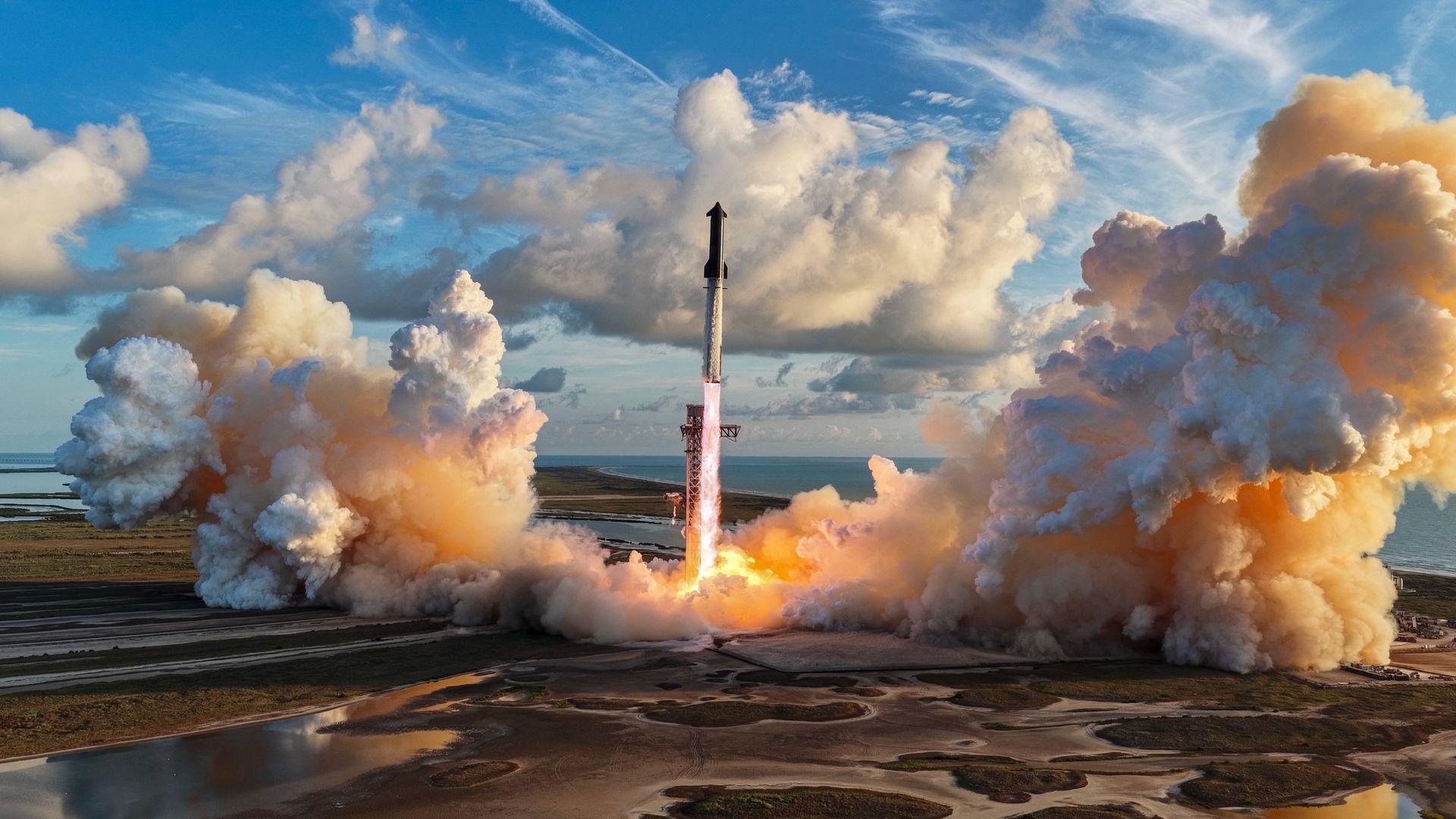
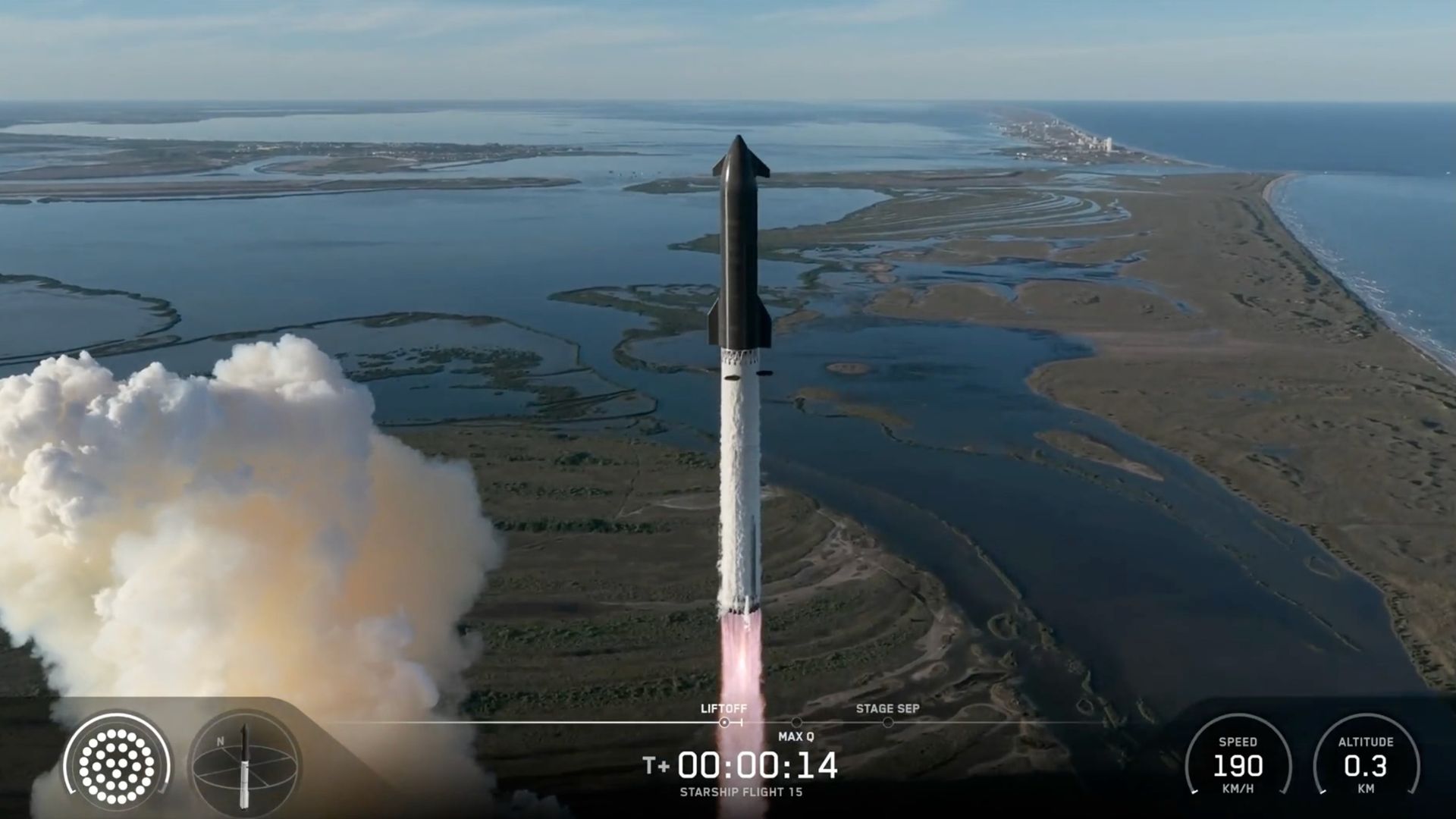
The launch from Starbase, on the South Texas coast, began at 5:47 p.m. Eastern time. The 33-engine booster and upper stage cleared the tower, and the stages separated about two and a half minutes into flight. The booster splashed down roughly six and a half minutes after launch.
The upper stage completed two engine burns and entered orbit about 26 minutes after liftoff, at an altitude of roughly 170 miles. It carried 26 upgraded Starlink satellites, with deployment planned over a 42-minute period beginning 35 minutes after launch. Three satellites also carried cameras intended to capture images of the spacecraft’s heat shield and other equipment.
SpaceX planned to keep the spacecraft in orbit for more than 21 hours while engineers assessed whether its systems were ready for reentry and a return to Starbase. The company set out checkpoints for diverting to an ocean landing if conditions made a site return unsafe. A successful return would be the first recovery of a Starship upper stage; the booster catch would have been the first for a Version 3 Super Heavy.
NASA has selected Starship as a lunar lander for its Artemis program. The company’s development of the vehicle has taken longer than initially expected, and NASA has said it is open to another lander option depending on which spacecraft is ready.
Reported by CBS News, Space.com, Ars Technica, Hot Air, ABC13 Houston, Engadget.