Europe Names Team for Ukraine Peace Talks
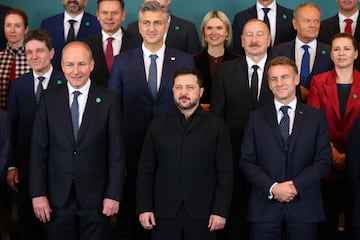
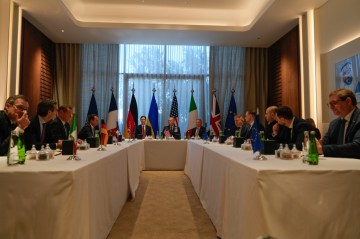
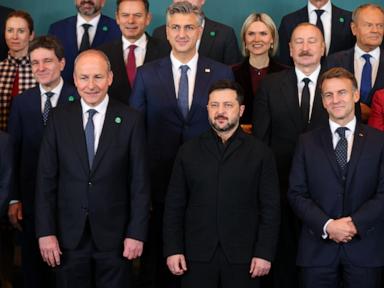
The European Union and five members of the coalition supporting Ukraine will form a team to represent Europe in negotiations on ending the Russia-Ukraine war, European Council President Antonio Costa said on November 13. The announcement came at the close of an EU leaders’ summit in Dublin focused on Europe’s role in talks backed by the United States with Moscow and Kyiv.
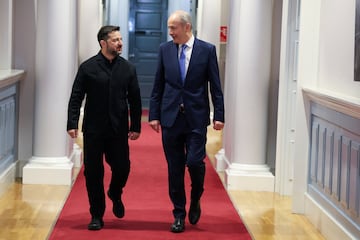
The five countries are the United Kingdom, France, Germany, Italy and Poland. The decision followed debate over whether Europe should appoint a single envoy or speak through a broader group. Irish Prime Minister Micheál Martin had argued that representation should extend beyond the EU, pointing to the role of countries including Britain and Norway in supporting Ukraine.
European leaders have worried that a process led by Washington and Moscow could leave both Europe and Ukraine with too little influence over an agreement affecting the continent’s security. Kyiv has sought its European allies’ involvement, while Russia has opposed their participation in direct negotiations, citing European military support for Ukraine.
The question of who speaks for Europe has also exposed divisions over how to coordinate diplomacy. Italian Prime Minister Giorgia Meloni has criticized separate initiatives by individual countries, while some leaders have favored a single representative. The newly announced team combines the EU with five national governments; the talks are expected to include European participation in a coming round.
Europe Secures a Voice in Ukraine Peace Talks
Europe’s new negotiating team is a necessary answer to the danger of deciding Ukraine’s future without the countries that will live with the consequences. On November 13, European Council President Antonio Costa said the EU would join the United Kingdom, France, Germany, Italy and Poland in representing the continent in talks involving Russia and Ukraine.
European leaders have warned that a U.S.-backed process could leave Kyiv vulnerable as Washington and Moscow shape a settlement. Ukraine wants its European allies involved, and the European position has been that peace must be decided with Ukraine and that questions of European security require European participation. The new team gives that principle a place at the negotiating table.
The stakes extend beyond Ukraine. Russia has demanded NATO forces move back from its borders and opposed European involvement in direct negotiations, while European governments fear an agreement could weaken the continent’s security. France’s Emmanuel Macron has argued that Europe must determine its own security future.
The team is broader than the EU alone, reflecting Martin’s argument that Europe’s role includes countries outside the bloc. That matters: leaving Europe fragmented or absent would hand greater influence to Washington and Moscow over a war whose outcome directly affects European security.
Europe’s Ukraine Envoy Team Highlights a Fragmented Continent
Europe has named a negotiating team, but the decision underscores the basic problem: the continent still struggles to agree on who can speak for it. On November 13, European Council President Antonio Costa said the EU and five countries—the United Kingdom, France, Germany, Italy and Poland—would represent Europe in Ukraine peace talks.
The choice follows competing calls for a single envoy and exposes the limits of a unified European position. Italy’s Giorgia Meloni has warned that separate national initiatives can undermine European interests. Meanwhile, Martin argued that representation cannot be confined to the EU, and the final arrangement includes Britain, which left the bloc in 2020.
The talks concern a war that has roiled Europe, and leaders want a say in an agreement affecting their security. But the debate over whether Europe means the EU, a handful of major powers or a wider group has frustrated Washington and complicated efforts to coordinate diplomacy. Russia has also opposed European participation in direct negotiations.
The team now provides a route for European involvement, but it does not erase the divisions over representation that prompted the search. A process that requires multiple governments to speak for the continent risks making Europe’s voice harder to define even as leaders insist it must be heard.
Reported by ABC News, The Philadelphia Inquirer, The Washington Examiner.