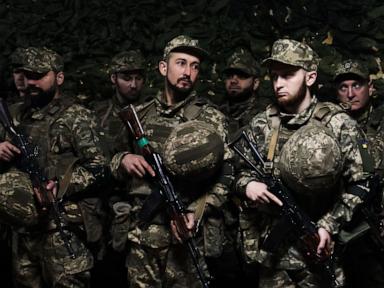
Ukraine Launches Nearly 1,200 Drones as Talks Turn to European Security
Ukraine sent almost 1,200 drones toward Russian targets overnight into November 13, in one of its largest aerial attacks since Russia’s full-scale invasion began nearly five years ago. Russia’s Defense Ministry said its air defenses intercepted the drones. Officials in three Russian regions said the strikes claimed seven lives, among them a 12-year-old, and left 17 others injured. Ukraine’s military said it struck an oil refinery in Volgograd, setting it on fire.
The attack came as American representatives Steve Witkoff and Jared Kushner briefed Russian President Vladimir Putin in Moscow and Ukrainian President Volodymyr Zelenskyy in Dublin. Following meetings in Abu Dhabi with Russian and Ukrainian delegations, the envoys said further discussions were planned. Kushner said Russia had agreed to include European representatives in upcoming talks on postwar security arrangements as well as territorial disputes.
European leaders voiced concern about discussing the continent’s security structure, which dates to the post-Cold War period. EU foreign policy chief Kaja Kallas urged that a ceasefire come before negotiations advance, warning that Moscow’s approach could be a trap. Luxembourg Prime Minister Luc Frieden said Europe should not let Washington or Moscow determine its future. German Chancellor Friedrich Merz said NATO’s role was already established. The Kremlin said Russia was open to contact with European governments.
Russia also launched 117 drones at Ukraine overnight, Ukrainian authorities said, claiming the lives of at least two people, one of them a 17-year-old. A Russian strike in Zaporizhzhia damaged two residential buildings and injured people, including children. Russian attacks on energy infrastructure caused power outages in 12 Ukrainian regions, Ukraine’s energy ministry said. Fighting continues along a roughly 1,200-kilometer front, with Ukraine using drones and ground robots in its defense.
Europe Must Not Let Russia Rewrite the Security Order
The prospect of negotiating Europe’s security structure alongside Ukraine’s territorial future has alarmed leaders who see the risks of letting Moscow shape the terms. Moscow has consented to European participation in future discussions, but EU foreign policy chief Kaja Kallas says a ceasefire must come first. She warned that engaging on Russia’s security demands without that step could play into Moscow’s hands.
Ukraine’s massive drone barrage shows Kyiv is still striking back as Russian forces press the war. Russia said it intercepted almost 1,200 drones overnight into November 13, while local officials reported seven deaths and 17 injuries in three regions. Ukraine said it hit a Volgograd oil refinery. The strikes underscore that the battlefield remains active even as U.S. envoys pursue a diplomatic breakthrough.
European leaders are right to resist decisions made over their heads. Luxembourg Prime Minister Luc Frieden said Europe should not leave its future to Washington or Moscow; German Chancellor Friedrich Merz argued NATO’s framework already exists. Russia’s openness to European contact is not, by itself, reassurance: the Institute for the Study of War assessed that Moscow seeks to take apart NATO and the security order established after the Cold War.
Russia’s continued attacks on Ukraine sharpen the stakes. Its overnight barrage killed at least two people in Ukraine, and strikes on energy infrastructure left 12 regions facing power outages. Any peace effort that discusses Europe’s security while fighting continues must account for the countries under attack and the European governments whose security is at issue.
Broader Security Talks Offer a Path Beyond the Battlefield
Peace talks cannot be confined to territorial disputes if the parties are also confronting Europe’s wider security order. After conferring in Abu Dhabi with representatives from Russia and Ukraine, U.S. envoys briefed Vladimir Putin and Volodymyr Zelenskyy and said more discussions were planned. Jared Kushner said Moscow had agreed to include European representatives in future talks, opening a route to discuss postwar arrangements alongside Ukraine’s territory.
European leaders have reason to press their interests, but insisting that the discussion stop at a ceasefire risks narrowing negotiations before they begin. Kaja Kallas called for a ceasefire first and warned that Russia’s approach could be a trap. German Chancellor Friedrich Merz said NATO’s role was already set. The Kremlin, meanwhile, said it was open to contact with European governments.
The urgency of diplomacy is clear from the scale of the fighting. Ukraine launched almost 1,200 drones at Russian targets overnight into November 13, with Russian officials reporting seven deaths and 17 injuries. Ukraine said it hit a refinery in Volgograd. Russia sent 117 drones toward Ukraine, killing at least two people, while attacks on energy infrastructure caused outages in 12 regions.
Neither battlefield strikes nor competing statements about NATO have ended the war. Continued talks, including discussion of the broader security questions Russia has raised, offer a chance to pursue a settlement while the countries involved remain engaged.
Reported by WTOP, ABC News, New York Post.