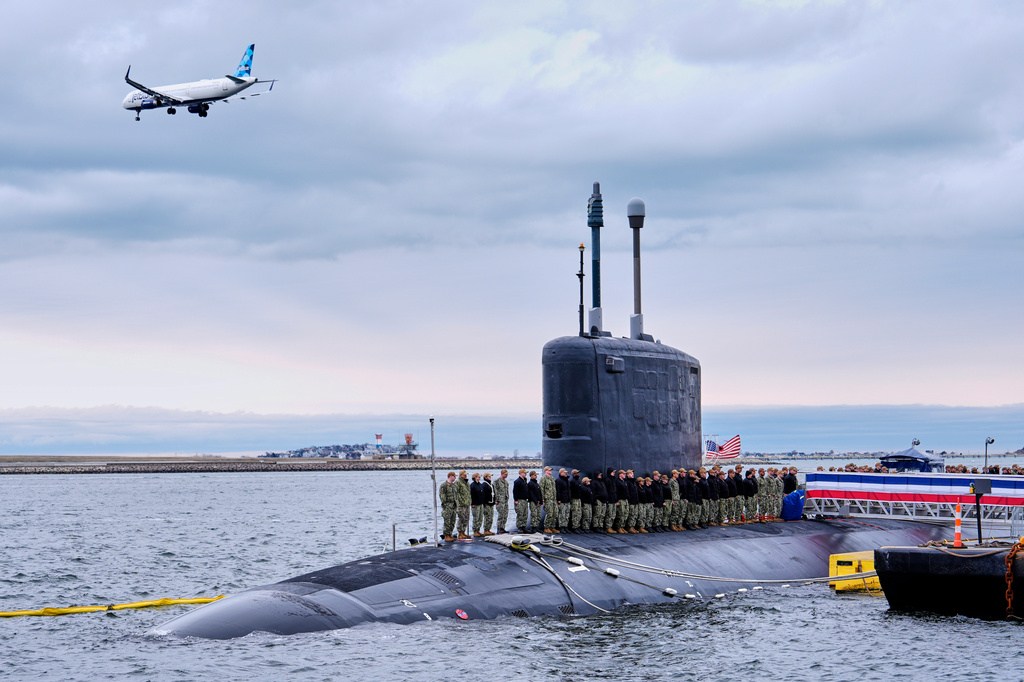
Navy’s Quiet Submarine Firings Draw Congressional Rebuke
Connecticut Rep. Joe Courtney and Washington Rep. Adam Smith said the Navy failed to notify the House Armed Services Committee before dismissing the commanding officer, executive officer and chief of the boat aboard the nuclear-powered USS South Dakota. The three were fired on October 14 after the submarine struck something on the seabed, the lawmakers said in a letter to Navy leaders. The Navy declined to comment publicly on the collision or the firings.
The lawmakers said they learned of the leadership changes only after a media inquiry prompted questions about who was leading the submarine. They described the Navy’s failure to communicate as damaging to its working relationship with Congress and said they were deeply frustrated.
The submarine case is among several recent departures that the Navy did not publicly announce. The Navy relieved Cmdr. Caitlin Cunningham from command of the USS Michael Murphy on September 27, citing a loss of confidence, according to a defense official. The destroyer was deployed in support of operations against Iran. The official said the Navy typically would announce such a removal within days.
Dr. Brian Monahan, who had served for nearly 18 years as doctor to Congress and the Supreme Court, also left his post during a Navy investigation. Senators Mike Rounds and Alex Padilla confirmed his departure but gave few details.
The departures could become an issue at acting Navy Secretary Hung Cao’s confirmation hearing next week. The Navy’s limited public disclosure comes amid broader restrictions on information about U.S. military activity in the Middle East.
Navy’s Secrecy Is Undermining Congress’s Oversight Role
The Navy dismissed the USS South Dakota’s commanding officer, second in command and top enlisted sailor after the submarine struck something on the seabed, yet did not notify the House Armed Services Committee. Reps. Joe Courtney and Adam Smith say they learned of the October 14 firings only after questions about the submarine’s leadership surfaced.
Their letter calls the Navy’s silence a failure of basic information sharing and warns it has damaged the service’s relationship with Congress. When the military removes senior officials without timely notice, lawmakers charged with oversight are left catching up through outside inquiries rather than receiving information directly.
The submarine case is not the only quiet departure. The Navy removed USS Michael Murphy commander Caitlin Cunningham on September 27, citing a loss of confidence, but made no public announcement even when asked. The destroyer was deployed in support of operations against Iran. Dr. Brian Monahan, the longtime doctor to members of Congress and the Supreme Court, also left during a Navy investigation, with senators confirming the departure but offering few details.
These undisclosed changes come as the Navy’s acting secretary, Hung Cao, prepares for a confirmation hearing next week. The lack of transparency gives lawmakers a legitimate reason to press him on whether Congress will be kept informed. The Navy declined public comment on the submarine collision and firings.
Congressional Pushback Tests Navy’s Handling of Sensitive Personnel Matters
The Navy removed the USS South Dakota’s three senior leaders after the submarine struck something on the seabed, but did not notify the House Armed Services Committee. Reps. Joe Courtney and Adam Smith say they learned of the October 14 firings only after questions about the submarine’s leadership arose, and they have turned the lack of notice into a test of the Navy’s transparency.
The dispute lands amid several sensitive personnel departures that the service did not publicly announce. The Navy relieved USS Michael Murphy commander Caitlin Cunningham on September 27, citing a loss of confidence, while the destroyer supported operations against Iran. Dr. Brian Monahan also left his job as doctor to lawmakers and the Supreme Court during a Navy investigation. Senators confirmed his departure but disclosed little else.
The lawmakers say the Navy’s approach has harmed its relationship with Congress. But their demand for disclosure also raises the question of how much detail should be made public about military personnel matters and operations. The Navy declined public comment on the submarine collision and firings, and the defense official discussing Cunningham’s removal spoke anonymously about sensitive personnel matters.
The issue may surface at acting Navy Secretary Hung Cao’s confirmation hearing next week. The Navy’s recent choices have drawn scrutiny, but the cases involve distinct personnel matters and, in the submarine’s case, an underwater collision.
Reported by The Washington Examiner, WTOP.