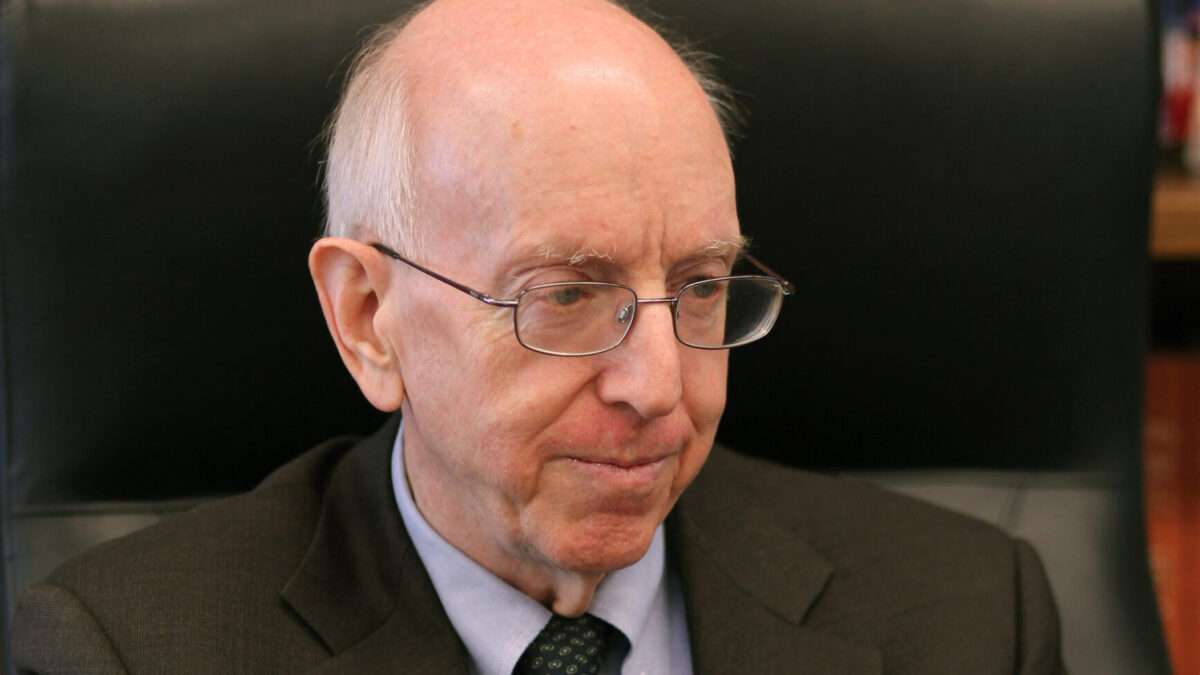
Judge Richard Posner, Influential Legal Scholar, Dies at 87
Posner served on the U.S. Court of Appeals for the Seventh Circuit from 1981 to 2017, writing thousands of opinions. His son Eric confirmed his death in Chicago on November 10. Posner was 87.
A longtime University of Chicago law professor, Posner helped pioneer the use of economics to analyze legal questions. His 1972 book, Economic Analysis of Law, became a defining work in the field. He wrote more than 50 books and numerous scholarly articles on subjects ranging from antitrust to literature, sex and reason, and national security.
Studies of legal scholarship and casebooks found that Posner’s work was cited and taught more than that of other judges. His writing was admired for its clarity and originality, while critics questioned his confidence and his approach to legal rules. Posner described his method as pragmatic, focusing on what would be a sensible resolution to a dispute.
His opinions often reached conservative outcomes earlier in his judicial career, but he later wrote decisions on issues including abortion, voter ID, same-sex marriage and workplace discrimination that were described as markedly liberal. He also acknowledged changing his mind, including about an Indiana voter identification law he had previously upheld.
Posner was known for producing a large volume of work and for taking an unconventional approach to judging, including conducting internet research and experiments in his chambers. His books and opinions continued to shape legal education and debate after his retirement.
Posner’s Practical Judging Left a Lasting Mark on the Law
Richard Posner’s legacy shows the value of judges willing to confront the real-world effects of the law. He died in Chicago on November 10 at 87, after serving on the Seventh Circuit from 1981 to 2017 and writing thousands of opinions.
Posner’s pragmatic approach focused on the consequences of legal decisions, rather than treating tradition or formal rules as ends in themselves. His opinions in later years took markedly liberal positions on abortion, voter ID, same-sex marriage and workplace discrimination. In 2013, he blocked a Wisconsin law restricting abortions, weighing its asserted health benefits against the burdens on access.
He also admitted error over his earlier decision upholding Indiana’s photo ID requirement for voters, later describing such laws as a way to suppress votes instead of preventing fraud. That willingness to revisit his own conclusions set him apart from judges who treat past decisions as beyond reconsideration.
Posner’s work reached far beyond the bench. His 1972 book Economic Analysis of Law helped establish a field, and studies found his opinions and scholarship dominated legal casebooks and citations. His influence endured because he pressed courts to ask what law was accomplishing in people’s lives—not simply whether a rule fit familiar doctrine.
Posner’s Legacy Raises Questions About Law Without Restraint
Richard Posner’s extraordinary influence came with a troubling question: how far should a judge go in setting aside legal rules to reach what seems like a sensible result? Posner, who died in Chicago on November 10 at 87, served on the Seventh Circuit for 36 years and wrote thousands of opinions.
He said he paid little attention to rules, statutes and constitutional provisions, preferring to begin with what would be a sensible resolution to the dispute. Critics called that approach lawless. Posner also rejected originalism and used internet research and experiments in chambers, departing from customary limits on appellate judging.
His career began with opinions that generally reached conservative results, but his later decisions on abortion, voter ID, same-sex marriage and workplace discrimination were markedly liberal. He acknowledged error in a 2007 decision upholding Indiana’s voter ID law, later saying that such measures were widely regarded as tools of voter suppression rather than fraud prevention.
Posner was also a major scholar whose 1972 book Economic Analysis of Law helped establish law and economics. His work remains influential, but his legacy is not only a story of intellectual achievement: it is also a reminder that a judge’s preferred practical outcome can conflict with the constraints that legal interpretation is meant to impose.
Reported by Reason, The Boston Globe, Chicago Sun-Times, The Philadelphia Inquirer, CBS Chicago, FOX 26 Houston, The Free Press.