Two arrests near White House leave key questions unanswered

White House arrests followed two separate security incidents at Lafayette Park on Monday morning: a vehicle crashed onto a sidewalk, and another person jumped a barricade. Authorities said officers quickly took both people into custody. The incidents occurred roughly a block from the White House, and investigators have not said whether they were connected. They also have not publicly identified either person or explained a motive. The Secret Service’s account offers the clearest outline so far, but it does not settle the questions beyond the sequence of events. The agency’s account places the vehicle crash just before 10 a.m. near the park’s north side, at 16th and H streets NW.
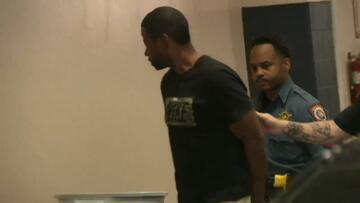
Secret Service Police and National Guard members went to the crash scene. A spokesperson said the driver confronted law enforcement and officers arrested him. A reporter’s video, described in another report, showed officers surrounding the car and urging the driver to get out; after he exited, the video showed him striking an officer before officers subdued him. That account offers a more specific description of the encounter, but investigators have not made a final finding. The available reports do not say whether the driver suffered injuries, what charges may follow, or what sent the vehicle onto the sidewalk. Nor do they establish whether the crash was deliberate.
The second arrest came around the same time, near the park’s northwest corner, after a person jumped a barricade. The Secret Service said officers quickly took that person into custody. A law-enforcement source briefed on the incident told one outlet that the person was a man and never reached the White House perimeter or its security fence. The source also said the relationship between the two incidents remained unclear. That distinction matters: two events happening nearby and at about the same time do not, by themselves, prove a shared plan. Officials have not publicly supplied evidence connecting them. The fuller account of the two incidents preserves that uncertainty rather than treating proximity as a conclusion.
Authorities called in the Metropolitan Police Department’s Explosive Ordinance Disposal team to examine the vehicle as a precaution, and police closed roads around Lafayette Park. The reports do not say that explosives turned up or that the sweep produced any particular result. The closures were a practical response while police checked the car and secured the area, not evidence on their own of a specific threat. Officials briefly moved reporters inside the White House briefing room, then released them. The public record so far does not describe a prolonged lockdown of the White House itself, though the incidents unfolded near the presidential residence and prompted an immediate security response.
The timing put the arrests near a scheduled meeting: about two hours later, President Donald Trump was due to meet Qatar’s prime minister, Mohammed bin Abdulrahman Al-Thani, at the White House. The available reports do not say that the meeting was delayed or affected, and they offer no link between the visit and either arrest. That is an important boundary on what can responsibly be said. When a security incident occurs near a high-profile event, the calendar invites speculation; the reported facts so far do not support a connection. Investigators can establish what happened to the vehicle, clarify the conduct alleged in each arrest, and determine whether the two cases are related. Those are the basic but consequential next steps.
Monday’s events arrive amid a broader history of security incidents around the White House, though the circumstances differ and comparisons require care. In 2014, a man jumped the White House fence and entered the building before officers arrested him; the breach contributed to scrutiny of Secret Service practices and the agency director’s resignation. In April 2026, gunfire near the screening area for the White House Correspondents’ Dinner prompted officials to evacuate Trump and other leaders. Those episodes show why perimeter security attracts public attention, but they do not establish that Monday’s incidents involved the same kind of danger. The 2014 intrusion reached the building; according to a source briefed on the case, Monday’s reported barricade breach did not bring the second person to the White House perimeter. The 2026 dinner shooting likewise took place at a different venue and under different circumstances. That incident’s account supplies context, not evidence about Monday’s arrests.
The immediate story is therefore narrower than the alarm such headlines can produce: a car went onto the sidewalk, officers arrested its driver after an encounter, and officers also arrested a second person for crossing a barricade. Police swept the vehicle and closed nearby roads; investigators continue their work. Earlier coverage has also followed a crash near Lafayette Park, while broader Washington security policy has included additional National Guard vehicles. Those subjects explain the steady attention paid to security around the capital, but evidence does not justify folding them into a single narrative. Officials have yet to release findings that would support one.
For my part, I find the unresolved connection between the two incidents more important than the dramatic shorthand of a “breach.” The public deserves a clear account of what investigators establish, and just as much care about what they do not establish. For now, investigators are handling two separate arrests.
Reported by Fox News, FOX 5 DC, The Washington Examiner, MSNBC, WTOP.