AI Stock Rebound Lifts World Markets After Election-Related Sell-Off
Markets across Asia and Europe advanced on November 9 after a Friday rebound in U.S. artificial-intelligence shares eased some of the pressure from last week’s sell-off. U.S. futures also moved higher. The gains came as investors weighed whether Democratic midterm wins might hinder data-center projects, particularly in Texas, where voters have raised concerns about AI and higher electricity bills linked to the facilities.
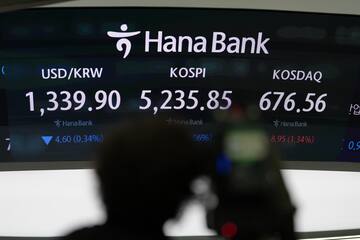
In Asia, Taiwan’s Taiex rose 4.9%, while Tokyo’s Nikkei 225 closed 2.3% higher. South Korea’s Kospi gave back earlier gains to finish down 0.8%. Hong Kong edged lower, while Shanghai and Australia recorded modest gains. European markets also opened higher, with Germany’s DAX up 0.6% and France’s CAC 40 and Britain’s FTSE 100 each gaining 0.4%.
On Friday, the S&P 500 gained 0.3%, narrowing its weekly loss to 2.7%; the Nasdaq rose 1.1%, while the Dow fell 0.5%. Nvidia rose 2.8% that day, but its shares fell 4.1% in premarket trading Monday after the company said it was investigating reports that chief executive Jensen Huang had been targeted by a foreign intelligence effort. China’s Foreign Ministry dismissed the allegations as a smear campaign.
U.S. employment figures released Friday showed hiring exceeded economists’ expectations. Strong job growth could help the economy withstand slower data-center construction, but it could also add to inflation and increase the chance that the Federal Reserve raises interest rates in December. The S&P 500 remained 5.7% below its record set last month.
Election Voters’ AI Concerns Put Data-Center Boom Under Scrutiny
The market rebound does not erase the political risk facing the AI data-center boom. Asian and European shares rose on November 9 after U.S. AI stocks recovered Friday, but investors are still weighing whether Democratic election victories could slow projects, particularly in Texas. Voters across parties have expressed concern about AI and rising power bills tied to data centers.
The gains followed a sharp global slide, including 6% drops in Tokyo and Seoul after Wall Street fell Thursday. Taiwan’s Taiex rose 4.9% Monday, and Tokyo’s Nikkei closed 2.3% higher; South Korea’s Kospi ended down 0.8%. European markets and U.S. futures also advanced.
The debate is about more than share prices: data-center expansion has consequences for electricity bills, and voters’ concerns are already part of the political landscape. Yet Friday’s U.S. market recovery, led in part by a 2.8% rise in Nvidia, offered relief to investors betting on AI growth. Nvidia fell 4.1% in premarket trading Monday amid reports of a foreign intelligence effort involving CEO Jensen Huang; China’s Foreign Ministry called the allegations a smear campaign.
U.S. hiring beat economists’ expectations, a sign of economic resilience that could help absorb slower data-center construction. But stronger job growth may also fuel inflation and raise the prospect of a Federal Reserve rate increase in December. Markets are left balancing AI investment against public concerns and the economic costs of inflation.
AI Market Rebound Faces Political Threat to Data-Center Growth
The recovery in AI stocks is welcome, but the prospect of political limits on data-center construction remains a concern for markets. Shares rose across Asia and Europe on November 9 after a Friday rebound on Wall Street. Investors are watching whether Democratic victories in the midterms will slow projects, especially in Texas, as voters voice concerns about AI and electricity bills.
Taiwan’s Taiex gained 4.9%, and Tokyo’s Nikkei closed 2.3% higher. South Korea’s Kospi, after rising earlier, finished down 0.8%. European indexes and U.S. futures also climbed. The rebound came after a worldwide sell-off that included 6% drops in Tokyo and Seoul following Wall Street’s Thursday decline.
Nvidia, a central supplier of chips for AI systems and data centers, gained 2.8% Friday, helping lift the S&P 500. Its stock then dropped 4.1% in premarket trading Monday as the company examined claims that its chief executive, Jensen Huang, had been targeted by a foreign intelligence effort. China’s Foreign Ministry rejected the allegations as a smear campaign.
The election-driven uncertainty comes as U.S. hiring has proved stronger than economists expected. That resilience could support the economy if data-center construction slows, but it may also push prices higher and make a Federal Reserve rate increase in December more likely. Investors must weigh both the economic risks and the consequences of curbing a major source of AI investment.
Reported by WTOP.