Kennedy Family Seeks to Block Trump’s Arlington Arch
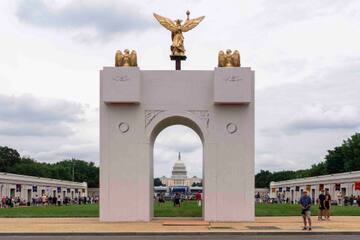
Nine children and grandchildren of Robert F. and Edward M. Kennedy asked to join existing litigation seeking to stop construction of President Donald Trump’s planned 250-foot arch near Arlington National Cemetery. Their filing was made in federal court in Washington on November 10.
The family argues that the arch would cast shadows on the graves of President John F. Kennedy, his brothers and other relatives, as well as on the graves of service members. They also say it would obstruct the view from John F. Kennedy’s gravesite and disrupt a sightline intended to represent national unity after the Civil War.
The filing describes the project as an intrusion on the cemetery and says the arch would damage the Kennedy memorials. Two plaintiffs, Rory and Maxwell Kennedy, said in a statement that the structure would cast a shadow over democratic principles and protections for the site.
The Kennedy family is joining challenges brought by other parties, including veterans, a historian and local governments. A federal judge temporarily halted construction for 14 days on November 5 while legal challenges proceed. The judge said the project required congressional approval and could bring costs to Virginia and the District of Columbia and disrupt traffic near the cemetery.
The National Capital Planning Commission had approved the project shortly before the judge’s order. The Kennedy filing asks the court to block the work and argues that the arch would permanently affect the gravesites and their setting.
Kennedys Challenge Trump’s Arch to Protect Arlington Graves
A 250-foot arch planned by President Donald Trump near Arlington National Cemetery would intrude on the resting places of the Kennedy family and service members, nine relatives argued in a court filing on November 10. Their move adds a personal and historic dimension to a broader fight over the project.
The children and grandchildren of Robert F. and Edward M. Kennedy say the structure would cast shadows over family graves, obstruct the view from President John F. Kennedy’s gravesite and disrupt a sightline meant to represent unity after the Civil War. They argue that the effect would permanently damage the memorials and the cemetery’s solemn setting.
The filing also raises the question of who has authority to approve such a major project. A federal judge temporarily stopped construction on November 5, saying congressional approval was required and citing possible costs for Virginia and the District of Columbia, along with traffic disruption.
The National Capital Planning Commission had approved the arch shortly before the court halted work. The Kennedys are joining legal challenges from veterans, a historian and local governments, asking the court to prevent a project they say would harm a historic site and its graves.
Trump’s Arlington Arch Faces Another Court Challenge
President Donald Trump’s planned 250-foot arch has cleared the National Capital Planning Commission, but construction remains on hold as challengers press their case in court. On November 10, nine Kennedy family members joined existing litigation seeking to block the project.
The family says the arch would cast shadows on relatives’ graves at Arlington National Cemetery, obstruct the view from President John F. Kennedy’s gravesite and alter a sightline associated with national unity after the Civil War. Their concerns now join challenges brought by veterans, a historian and local governments.
A judge paused construction for 14 days on November 5 while the legal disputes proceed. The ruling said the project required congressional approval and could impose costs on Virginia and the District of Columbia and disrupt traffic near the cemetery. That order—not the planning commission’s approval—currently prevents work from moving ahead.
The Kennedy filing seeks to add the family’s claims about the effect on the gravesites to the broader case. The dispute now turns on whether the project can proceed under the required legal authority and how the court weighs the family’s objections alongside the other challenges.
Reported by Newsweek, The Boston Globe, CNN.