Midterm Results Reignite Debate Over Democratic Candidates’ Ideology
The Democratic wins did not settle a debate over whether the party should nominate more progressive or more moderate candidates. Results across Senate and House races showed left-wing contenders winning in some competitive areas, while often trailing other Democrats on the same ballots or making smaller gains compared with Kamala Harris’s 2024 results.
Democratic Wins Don’t Prove Progressives Are a Liability
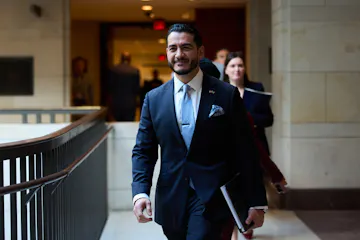
Democrats’ broad midterm victory included wins by left-leaning candidates in competitive contests, from Michigan Senate-elect Abdul El-Sayed to William Lawrence, who captured Michigan’s 7th District. Those victories make it difficult to claim that progressive candidates cannot win outside deep-blue territory, even if some races were close.
Several left-wing Senate candidates did gain less ground against Harris’s 2024 results than other Democrats. But the comparisons do not by themselves show that ideology caused the difference: candidates ran in different states and races, and Democrats won nearly all the contests cited. In the House, progressive and Congressional Progressive Caucus candidates improved on Harris’s margins by an average of 12.2 points, while DSA candidates averaged 16.5 points, albeit in a sample of only seven.
The election therefore offers no simple case for ruling out progressive nominees. Michigan’s results show both the opportunities and the risks: El-Sayed won, while Lawrence narrowly took a swing district. Meanwhile, Democrat Troy Jackson lost Maine’s 2nd District after defeating a more moderate primary rival. The results leave party leaders weighing candidate ideology against the circumstances of each contest, rather than treating moderation as a guaranteed path to victory.
Midterm Results Warn Democrats Against a Leftward Turn
The Democratic wave did not amount to a clear endorsement of the party’s left flank. In key Senate contests, the four candidates most closely associated with the party’s left—Troy Jackson, Peggy Flanagan, Abdul El-Sayed and Angie Nixon—were the weakest performers relative to Harris’s 2024 results. Each also trailed the Democratic gubernatorial candidate on the same ballot.
Moderates posted some of the largest gains over Harris’s results. Roy Cooper in North Carolina improved by 23.2 points, while Scott Colom in Mississippi was up 23.1 points and could still upset Republican Sen. Cindy Hyde-Smith. Jon Ossoff in Georgia and Josh Turek in Iowa also substantially outperformed Harris. The pattern suggests that voters seeking a change from the Trump-era status quo were not necessarily asking for a socialist agenda.
The House numbers point in the same direction: moderate-to-conservative Blue Dogs improved on Harris’s margins by an average of 15.4 points, compared with 12.2 for progressives. And in Maine’s 2nd District, Sanders-backed Matt Dunlap lost after defeating a more moderate Democrat in the primary. Democrats may have won widely, but treating that victory as permission to move further left risks ignoring where their strongest performances came from.
Reported by CNN, New York Post.