AI investment fears send Asian markets tumbling
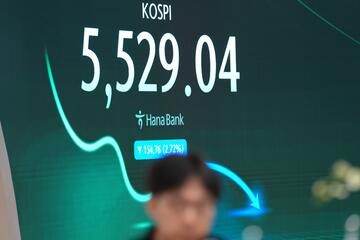
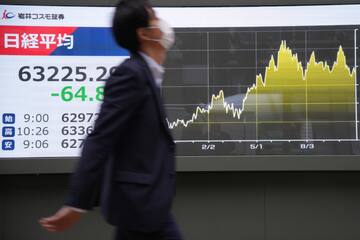
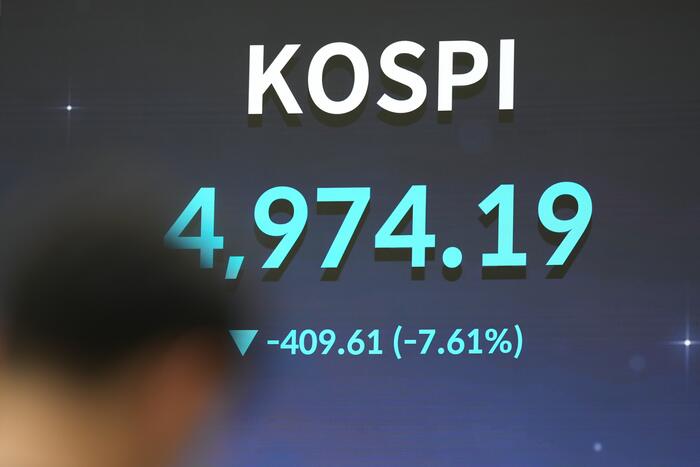
Japan’s Nikkei 225 fell 6.2% to 57,271.19 in morning trading, while South Korea’s Kospi dropped 7.1% to 5,000.25. A later account put the Kospi’s decline at more than 8% after the open, prompting a trading halt. Australia’s S&P/ASX 200 lost 0.7% to 9,003.40.
The declines followed Thursday’s steep losses in the United States, led by technology shares. The S&P 500 fell 4.4%, its biggest one-day drop since April 2025, while the Nasdaq Composite slid 5.5% and ended 11.9% below its record high from last month. Nvidia fell 9.3%, and chipmaker Advanced Micro Devices dropped 17.3%.
Investors have been reassessing the cost and likely returns of the AI boom, including the expense of borrowing to build data centers. Concerns that stock valuations had risen too far have added to volatility. Asian technology companies are exposed to the pullback because they supply components such as semiconductors for the facilities.
The US midterm results added to uncertainty. Democrats’ victories raised concerns among investors that officials could slow or block new data center construction amid public objections to its community and environmental effects and higher electricity bills. Slower construction could reduce demand for chips, power and other goods tied to the AI buildout.
US Treasury yields fell as investors sought safer assets: the 10-year yield declined to 4.84% from 4.90% late Wednesday. Meanwhile, benchmark US crude rose to $91.06 a barrel and Brent crude to $98.29, amid uncertainty over the Iran war and the energy industry’s return to normal.
AI market rout exposes risks of unchecked data center expansion
The sharp fall in Asian shares shows how much the AI investment boom depends on an expansion that faces growing public resistance. Japan’s Nikkei 225 dropped 6.2% in morning trading, while South Korea’s Kospi fell as much as more than 8%, triggering a trading halt. Australia’s benchmark lost 0.7%.
The sell-off followed a 4.4% drop in the US S&P 500 on Thursday. The Nasdaq fell 5.5%, and Nvidia, the company most closely associated with the AI boom, slid 9.3%. Advanced Micro Devices plunged 17.3%.
Investors are questioning the cost of building data centers and whether the huge spending will pay off. The US midterm victories for Democrats have raised concern that officials could slow or block new facilities. That debate reflects objections to the environmental and community effects of data centers, as well as higher electricity bills.
The stakes reach beyond technology investors. A slowdown could curb purchases of AI chips, electricity and other goods and services that have helped drive economic growth in the United States and Asia. The rout is a warning against treating ever-expanding AI infrastructure as an unquestioned engine of prosperity.
Democratic data center opposition rattles AI investment markets
Investors are pricing in a new political risk to the AI boom: Democratic victories in the US midterms have raised fears that officials could block or slow construction of data centers. The sharp Asian sell-off underscores how much growth in the technology supply chain depends on that investment continuing.
Japan’s Nikkei 225 fell 6.2% in morning trading. South Korea’s Kospi dropped 7.1% in one account and more than 8% in another, triggering a halt in trading. Australia’s S&P/ASX 200 fell 0.7%.
The losses followed a 4.4% decline in the S&P 500 on Thursday, its worst day since April 2025. The Nasdaq slid 5.5%. Nvidia fell 9.3%, while Advanced Micro Devices dropped 17.3%.
Data centers require chips, electricity and other supplies, and a slowdown in construction could weaken demand across the industry and weigh on economic growth in both the US and Asia. Democrats’ wins have heightened concern that political opposition to the facilities, including over power bills and community impacts, could constrain a major source of investment. Investors are also questioning whether the cost of the AI buildout can be justified.
Reported by KPRC 2 Click2Houston, CNN, The Philadelphia Inquirer, NBC News, The Guardian US, Semafor.