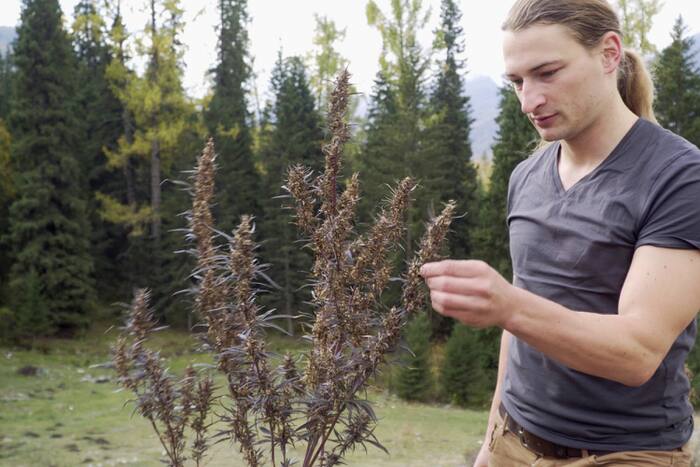
Siberian Tomb Offers Evidence of Ancient Cannabis Use
Archaeologists excavating a monumental burial cemetery within Siberia’s southern Uyuk Valley have uncovered evidence that cannabis may have been used for its mind-altering effects about 2,800 years ago. The tomb dates to the early Scythian period and held the remains of high-status people from a nomadic society known for horseback riding and elaborate goldwork.
Researchers identified more than 1,000 small black specks as cannabis seeds. Radiocarbon dating placed some of them around 2,800 years ago. Alongside the seeds, the team found preserved human hair and detected THC, cannabis’s main psychoactive compound, as well as cannabinol, which forms as THC degrades.
The study’s authors say the combination of plant remains and chemical traces in hair supports the idea that cannabis played a part in burial rituals. They have not established how it was taken or exactly what role it served. The lead researcher also raised the possibility that it could have been used to sedate sacrificial victims, but said the evidence cannot confirm that explanation.
An outside forensic toxicology specialist challenged the interpretation, saying the hair findings do not establish that the person consumed cannabis. The compounds could have reached the hair through contact with cannabis in the burial, the specialist argued, and the analysis did not rule out that possibility. Cannabis seeds can also be used for purposes other than intoxication.
The research, published on November 5 in Science, adds evidence to a sparse record of ancient psychoactive cannabis use. The team is now examining DNA from the seeds, which its lead researcher says could shed light on the plant’s domestication history.
Reported by CNN, ClickOnDetroit WDIV.