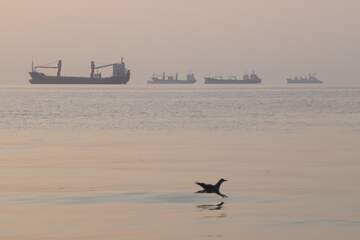
Tanker Hit by Projectiles Off Qatar as Hormuz Mine Claims Mount
The tanker was struck roughly 50 nautical miles north of Madinat ash Shamal, Qatar, according to the United Kingdom Maritime Trade Operations center. The vessel was not identified. The crew’s status, the extent of damage and any environmental impact had not been confirmed, and no one had claimed responsibility for the attack by November 5.
Iranian state television said two oil tankers and a tugboat burst into flames after hitting mines in the Strait of Hormuz. Iran’s Revolutionary Guard said the ships had attempted to use unauthorized routes and also claimed its forces had taken control of two U.S. drones. Iran later said five ships had been damaged by mines while trying to cross the strait. The vessels were not identified, and the claims could not be independently verified.
The strait was closed by Tehran after the United States and Israel attacked Iran in February, starting the war. About 20% of the world’s oil supply passed through the strait during peacetime. The maritime center said last month that many ships were not reporting attacks, making it difficult to establish their full number.
South Korea’s military has proposed expanding an anti-piracy naval unit’s operating area to waters south of Oman, citing increased pirate activity amid Middle East conflicts. A Defense Ministry spokesperson said the proposal would keep South Korea out of the U.S.-Iran war. It requires authorization from President Lee Jae Myung and the legislature.
War Escalation Puts Gulf Shipping and Crews at Risk
A tanker was hit by two projectiles in the Persian Gulf off Qatar, while Iran said three vessels were set ablaze after hitting mines in the Strait of Hormuz. The crew’s status and the tanker’s damage remained unconfirmed on November 5, and no one had claimed responsibility for the attack.
Iran later claimed five ships had been damaged by mines while trying to cross the strait, but the vessels were not identified and the claim could not be independently verified. Its Revolutionary Guard also said it had taken control of two U.S. drones. These claims come amid a war that began after U.S. and Israeli attacks on Iran in February, and a closure of the strait by Tehran.
The stakes extend well beyond the vessels themselves: about 20% of the world’s oil supply passed through the strait during peacetime. The maritime center has said that ships’ reluctance to report attacks makes it difficult to establish how many incidents have occurred. South Korea’s proposal to expand a naval unit’s anti-piracy area, while explicitly avoiding participation in the U.S. war, reflects the broader maritime dangers the conflicts have created.
Iran’s Mine Claims Raise Stakes for Gulf Shipping
A tanker was hit by two projectiles in the Persian Gulf off Qatar, and Iran said three other vessels burst into flames after hitting mines in the Strait of Hormuz. The tanker’s crew status, damage and environmental impact remained unconfirmed on November 5. No one had claimed responsibility for the attack.
Iran’s Revolutionary Guard said the ships in the strait had attempted to use unauthorized routes and claimed its forces had taken control of two U.S. drones. Iran later said five ships had been damaged by mines. The vessels were not named, and the claims could not be independently verified. The Guard’s assertion that it controls the strait is a stark warning for commercial shipping, not reassurance that passage is safe.
Tehran closed the strait after the United States and Israel attacked Iran in February, beginning the war. About 20% of the world’s oil supply passed through the waterway during peacetime. The maritime center has also warned that many ships do not report attacks, complicating efforts to establish the scale of the threat. South Korea’s military is weighing a wider anti-piracy mission but says it would stay out of the U.S.-Iran war.
Reported by Local 10 Miami, Breitbart.