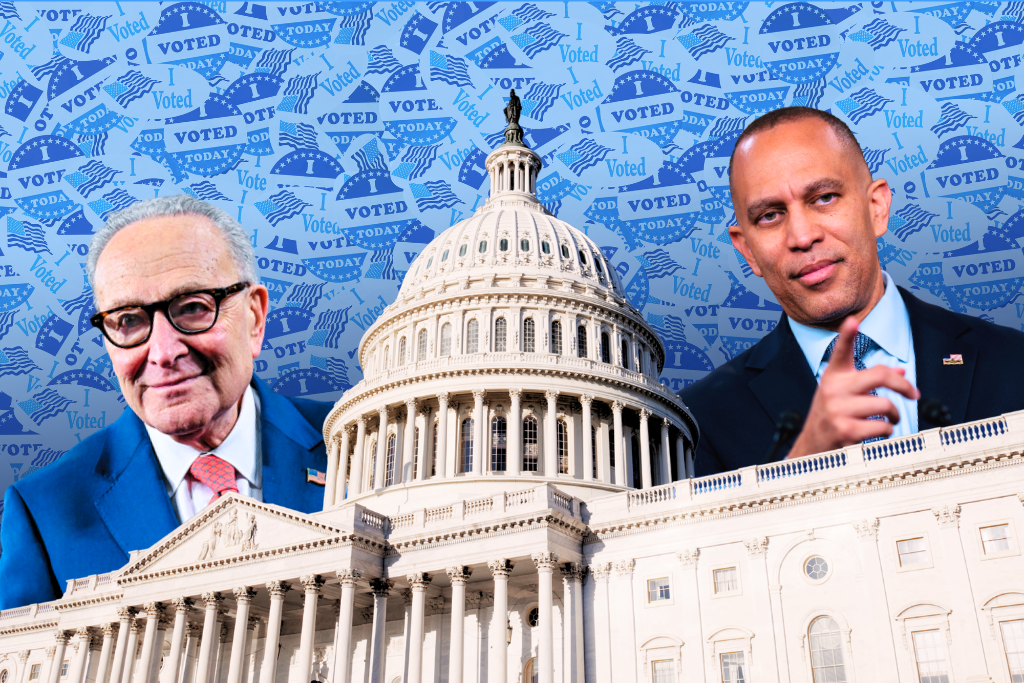
Democrats Face a Broad Agenda and a Fight Over Their Direction
Democrats are preparing to take control of both chambers of Congress in January, but their leaders have not settled on a signature bill. Possible priorities include an anti-corruption or affordability measure, while the party’s broader wish list spans healthcare, abortion rights, voting rules, taxes and labor policy.
The new majority could use budget reconciliation to pass some legislation with a simple majority. But President Donald Trump has threatened to veto Democratic bills, and lawmakers are unlikely to have enough votes to override him. Democrats may also seek Republican support on issues such as releasing more Epstein-related files, ending the Iran war or restricting stock trades by government officials.
Other potential fights include Trump’s tariffs, funding for the Iran war, the Republican-backed One Big Beautiful Bill Act, and whether to impeach Trump or War Secretary Pete Hegseth. Democrats also differ over whether to abolish or reform Immigration and Customs Enforcement. Medicare for All, universal childcare, a higher minimum wage and limits on Supreme Court membership are among the other proposals under discussion.
The agenda could also shape the party’s 2028 presidential contest. One view is that congressional Democrats will move left to energize primary voters, even when proposals cannot become law; another is that vetoes and divisions within the party will constrain what the new majority can accomplish. The filibuster would need to be eliminated for some measures, including nationwide abortion-rights legislation, to advance without 60 Senate votes.
Democrats Can Put Affordability and Accountability at the Center
Democrats’ new House and Senate majorities give them a chance to challenge Trump’s agenda and put affordability and anti-corruption measures at the center of Congress. Their proposed priorities include protecting healthcare, addressing Medicaid reductions in the Republican-backed One Big Beautiful Bill Act, and pursuing voting and abortion-rights legislation.
The president’s veto threat may block bills, but it does not erase the stakes of congressional action. Democrats could use hearings to press for more Epstein-related files and votes to oppose the Iran war or Trump’s tariffs. Some measures could attract Republican support, while reconciliation may allow others to pass with a simple majority.
The party also faces pressure from voters and lawmakers who want a more ambitious response, including Medicare for All, universal childcare and stronger labor protections. Democrats will need to decide whether to pursue those goals despite the obstacles or let veto threats define the limits of their agenda.
The coming Congress will also influence the 2028 Democratic primary. Presidential contenders may use the debate over these proposals to show what they would fight for, while congressional members press party leaders to take up priorities that may not yet have the votes to become law.
Democrats’ Leftward Agenda Could Deepen Their 2028 Problem
Democrats are poised to control both chambers, but the central question is whether their agenda will move sharply left. Proposals such as Medicare for All, abolishing ICE, expanding the Supreme Court and raising taxes on the wealthy could become tests for lawmakers and presidential hopefuls, even when Trump is likely to veto legislation.
A majority in Congress will not guarantee that Democrats can enact their priorities. Some proposals need 60 Senate votes unless the filibuster is eliminated, and the party is divided over issues including ICE and whether to impeach Trump. Measures targeting tariffs or the Iran war could draw some Republican backing, but that does not resolve the party’s larger internal disputes.
The legislative push may be aimed as much at the 2028 primary as at passing laws. Candidates could embrace left-wing measures to appeal to Democratic voters, while House and Senate members press party leaders to advance them. That strategy risks sidelining moderates and making the party’s direction a major source of conflict.
Democrats will also confront Trump’s veto power and the challenge of persuading voters that proposals unable to become law are a practical governing agenda. Their decisions in 2027 could shape the presidential race, but a move further left could make winning the White House more difficult.
Reported by Fox News, The Washington Examiner.






