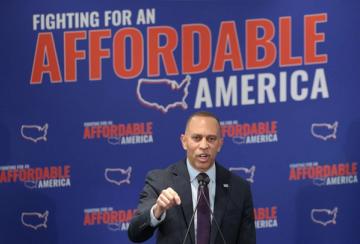
Affordability drove Democratic gains in the midterms
The cost of living emerged as a defining issue in the November 3 midterm elections, as Democrats won a string of important races and were projected to take control of both chambers of Congress. Voters across party lines had expressed concern about prices before the election, and candidates from both parties addressed those worries on the campaign trail.
Preliminary exit polling found that 89% of voters considered living costs a major or crucial factor in choosing a candidate. Fifty-nine percent said they were very concerned about gasoline prices, while 88% were very or somewhat concerned about grocery costs. Only 2% described the economy as being in excellent condition. The figures could change as vote counting continued.
Democratic candidates tied their campaigns to the pressure families face from bills, housing and health care. Jon Ossoff, who won reelection to the Senate, spoke about rising expenses and the difficulty of buying a home. Texas Senator-elect James Talarico said his victory represented workers, families and young people trying to afford homes and put food on the table.
Republicans also campaigned on affordability. Texas Republican Senate candidate Ken Paxton said Texans should be able to buy homes and support families without financial strain. In Maine, Republican Susan Collins and her Democratic challenger Troy Jackson both discussed how tariffs affect the price of local products.
Democrats now face pressure to turn their campaign focus into action. Their proposed priorities include investigating the Trump administration and pursuing measures on tariffs, health care subsidies and the Iran war, which the account linked to higher fuel prices. President Trump has promoted himself as focused on affordability, despite previously dismissing the crisis as a hoax. The next inflation reading and a sluggish labor market are expected to keep economic concerns in view.
Voters handed Democrats a mandate to lower costs and demand accountability
The midterm results delivered a clear warning about the cost of living: voters are struggling with prices, and Democrats now have the power to make affordability and government integrity their priorities in Congress. Their victories reached beyond traditional strongholds, with Senate gains in states including Texas, Ohio, Iowa and Maine, as well as a win in South Carolina.
Preliminary exit polling found that 89% of voters saw living costs as a major or crucial consideration. Concern was especially widespread over groceries and fuel, while just 2% rated the economy excellent. Those results reinforce the campaign message Democrats took to voters: housing, food, utilities and health care are pressing burdens, not distractions from Washington’s decisions.
Democrats have also promised scrutiny of the Trump administration. With control of both chambers, they can hold hearings, issue subpoenas and examine matters including the Trump family’s cryptocurrency dealings, Jared Kushner’s international business and private donations for a proposed presidential ballroom. Serious investigations should establish their case before any impeachment push, the argument goes.
The party must also pursue practical steps to ease household costs. Its options include pressing against tariffs that raise consumer prices, restoring health care subsidies and seeking an end to the Iran war, which has driven up gasoline and diesel prices. Democratic leaders have said they will fight to bring down expenses such as housing, food and fuel. The election gives them an opportunity—and an obligation—to show voters that their promises can produce results.
Democrats’ sweeping win puts their affordability promises to the test
Democrats won a sweeping set of races by putting affordability at the center of their campaign. Now that they are projected to control both houses of Congress, voters will be able to judge whether the party can deliver lower costs rather than simply campaign against President Trump.
The pressure is real: preliminary exit polling found that 89% of voters considered living costs a major or crucial factor in their choice. Large shares were concerned about grocery and gasoline prices, and only 2% said the economy was in excellent condition. Republicans also addressed those strains, with candidates speaking about the ability to buy a home and the impact of tariffs on local products.
Democrats have paired their cost-of-living message with plans to investigate the administration. They can use congressional hearings and subpoenas to scrutinize issues including the Trump family’s cryptocurrency dealings and private donations for a proposed ballroom. But investigations alone will not lower food, housing, utility or fuel bills—the economic concerns that helped propel their victories.
The party’s proposed responses include challenging tariffs, restoring health care subsidies and seeking an end to the Iran war, which has pushed fuel prices higher. Some of those efforts could face a presidential veto or require Republican support. Democrats will need to show that their agenda can improve household finances, while making clear what their investigations establish. Voters have given the party power; delivering on its promises is the next test.
Reported by Business Insider, The Boston Globe, NBC News, The 19th, Yahoo News, The Guardian US, The Daily Caller.