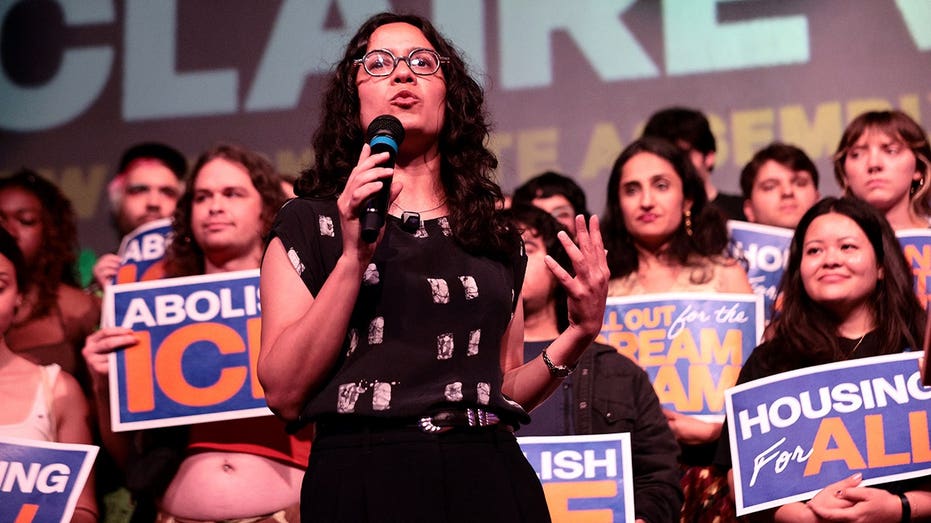
Five DSA-Backed Candidates Win House Seats
The Democratic Socialists of America is set to have five newly elected candidates in the House after races in New York, Colorado, Michigan and Pennsylvania were called for its endorsed contenders on November 3. The results mark a major expansion for the organization, which currently has two members in Congress: Reps. Alexandria Ocasio-Cortez of New York and Rashida Tlaib of Michigan.
The incoming members are Darializa Avila Chevalier and Claire Valdez of New York, Melat Kiros of Colorado, Donavan McKinney of Michigan and Chris Rabb of Pennsylvania. Their victories followed primaries in which DSA-backed candidates challenged Democratic incumbents and party-aligned contenders. Kiros defeated longtime Rep. Diana DeGette in July, while Chevalier beat Rep. Adriano Espaillat, chair of the Congressional Hispanic Caucus.
The candidates campaigned on policies including universal health care and childcare, and some called for abolishing Immigration and Customs Enforcement. They also criticized Israel’s war in Gaza and opposed U.S. military aid to Israel. Their positions energized some voters on the left, while Republicans used the DSA’s influence to argue that Democrats were moving too far left.
The new members could have leverage if Democrats return to the House with a narrow majority, though their influence may be smaller with a broader majority. The House speaker vote could be an early test: none of the incoming DSA-endorsed members has committed to backing Rep. Hakeem Jeffries, who is positioned to lead the chamber if Democrats win control.
Voters Send Five DSA-Backed Progressives to the House
Five Democratic Socialists of America-backed candidates won House seats on November 3, giving voters in New York, Colorado, Michigan and Pennsylvania a chance to send a more economically populist, antiwar group to Congress. The organization’s House membership is set to grow from two to seven when the new session begins in January.
The elected contenders are Darializa Avila Chevalier and Claire Valdez from New York, Melat Kiros from Colorado, Donavan McKinney from Michigan and Chris Rabb from Pennsylvania. Several broke through by challenging Democratic incumbents or establishment-backed candidates. Kiros defeated 15-term Rep. Diana DeGette in the primary, and Chevalier beat Rep. Adriano Espaillat, who chairs the Congressional Hispanic Caucus.
Their campaigns emphasized proposals such as universal health care and childcare, alongside opposition to U.S. military aid to Israel and criticism of the war in Gaza. Some also backed abolishing Immigration and Customs Enforcement. The victories show that candidates willing to confront party leadership can win in Democratic strongholds, even as Republicans try to use their politics to brand the wider party as extreme.
The bloc may matter most if Democrats hold only a slim House majority, when a small group could influence the party’s agenda. Its members have not committed to supporting Rep. Hakeem Jeffries for speaker, leaving an early test of whether party leaders can unite a caucus that has pushed for a sharper break with the status quo.
Socialist House Bloc Grows as Democrats Face a Leftward Push
Five contenders endorsed by the Democratic Socialists of America won House races on November 3, expanding a faction that could push Democrats further left as the new Congress convenes in January. The organization’s congressional membership is set to rise from two to seven.
The winners—Darializa Avila Chevalier and Claire Valdez of New York, Melat Kiros of Colorado, Donavan McKinney of Michigan and Chris Rabb of Pennsylvania—include challengers who defeated Democratic incumbents in primaries. Kiros unseated 15-term Rep. Diana DeGette, and Chevalier defeated Rep. Adriano Espaillat, chair of the Congressional Hispanic Caucus.
The candidates promoted policies including universal health care and childcare, and some called for abolishing Immigration and Customs Enforcement. They also opposed U.S. military aid to Israel and condemned the war in Gaza. Those positions may appeal to voters on the left, but they have also given Republicans a way to argue that Democrats are being pulled toward more radical policies.
The DSA bloc could wield greater influence if Democrats win the House by a narrow margin, potentially making party leaders’ legislative plans harder to manage. A first test may come in the speaker election: none of the incoming DSA-endorsed members has pledged support for Rep. Hakeem Jeffries. A larger Democratic majority, however, could limit the group’s leverage.
Reported by New York Post, LAist, Newsweek, Fox News, Jacobin, The New Republic, PJ Media.