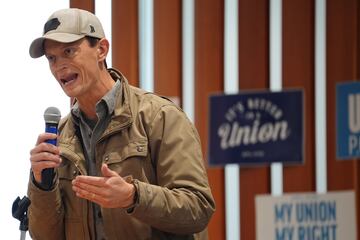
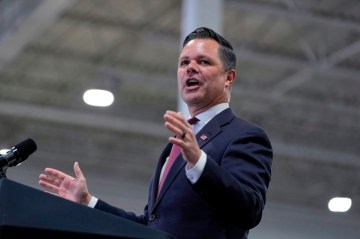
Rob Sand Wins Iowa Governorship, Ending Two Decades Without a Democrat
Sand, the state auditor and the only Democrat holding statewide elected office in Iowa, defeated businessman Zach Lahn in the race to succeed retiring Republican Gov. Kim Reynolds. The Associated Press called the contest with Sand ahead 57.7% to 42.3%, with 79% of votes counted. He is the first Democrat elected governor since 2006.
Sand campaigned as a moderate, emphasizing cooperation and focusing on issues including public education, cancer rates and pollution. He also criticized Republican-backed education policies and said he would oppose what he called culture-war legislation. He has pledged to raise the minimum wage and seek lower costs for health care and prescription drugs.
Lahn, a farmer and businessman who won a contested Republican primary, argued that Sand was too liberal and said he would support small businesses and tax cuts. Sand made Lahn’s recent ties to Kansas a campaign issue; Lahn said travel there reflected his blended family. President Donald Trump, who had backed Lahn’s primary opponent, endorsed Lahn after the primary and campaigned in Iowa. Sand’s win comes in a state Trump carried by more than 13 points in 2024, and he is expected to work with a Republican-majority legislature.
Iowa Voters End GOP’s Long Run With Sand’s Governorship Win
Iowa voters chose a change in leadership after two decades without a Democratic governor, electing Rob Sand over Republican Zach Lahn. The Associated Press called the race with Sand leading 57.7% to 42.3%, with 79% counted. The result breaks a Republican hold on the governor’s office that had lasted since 2010.
Sand made public education, cancer rates and pollution central campaign concerns, while criticizing Republican-backed education policies and pledging to oppose culture-war legislation. He also promised to pursue a higher minimum wage and more affordable health care and prescription drugs. His message of cooperation now faces the test of working with a Republican-majority legislature.
Lahn argued that Sand was too liberal, while promoting tax cuts and support for small businesses. Sand also questioned Lahn’s ties to Iowa after his recent residence and voting history in Kansas became campaign issues; Lahn said his travel was connected to his blended family. President Donald Trump endorsed Lahn after backing another candidate in the Republican primary and campaigned for him. Sand’s victory in a state Trump carried by more than 13 points in 2024 is a significant setback for Republicans’ effort to retain the governorship.
Iowa Elects Sand Despite Trump’s Strong Win in the State
Rob Sand’s victory hands Iowa’s governorship to a Democrat even though the state backed Donald Trump by more than 13 points in 2024. Sand defeated Republican Zach Lahn, with the Associated Press calling the contest at 57.7% to 42.3% and 79% of votes counted. Republicans will now have to work with a Democratic governor and a Republican-majority legislature.
Sand presented himself as a moderate and emphasized cooperation, but his agenda includes raising the minimum wage and pursuing lower health care and prescription-drug costs. He also said he would oppose culture-war legislation. Lahn warned that Sand was too liberal and argued for tax cuts and support for small businesses—priorities that voters will not see represented in the governor’s office.
Lahn’s campaign was also dogged by questions about his ties to Kansas, where he had lived and voted before registering in Iowa. He said his travel reflected his blended family. Trump had endorsed Lahn’s primary opponent, then backed Lahn after he won the nomination and campaigned in Iowa. Sand’s win makes him the first Democratic governor elected in the state since 2006, despite the state’s strong recent Republican record.
Reported by Townhall, NBC News, The Guardian US, The Washington Examiner, The Daily Beast, CBS News, PBS NewsHour, Mother Jones, Denver7, The Blaze, Breitbart, FOX 10 Phoenix.