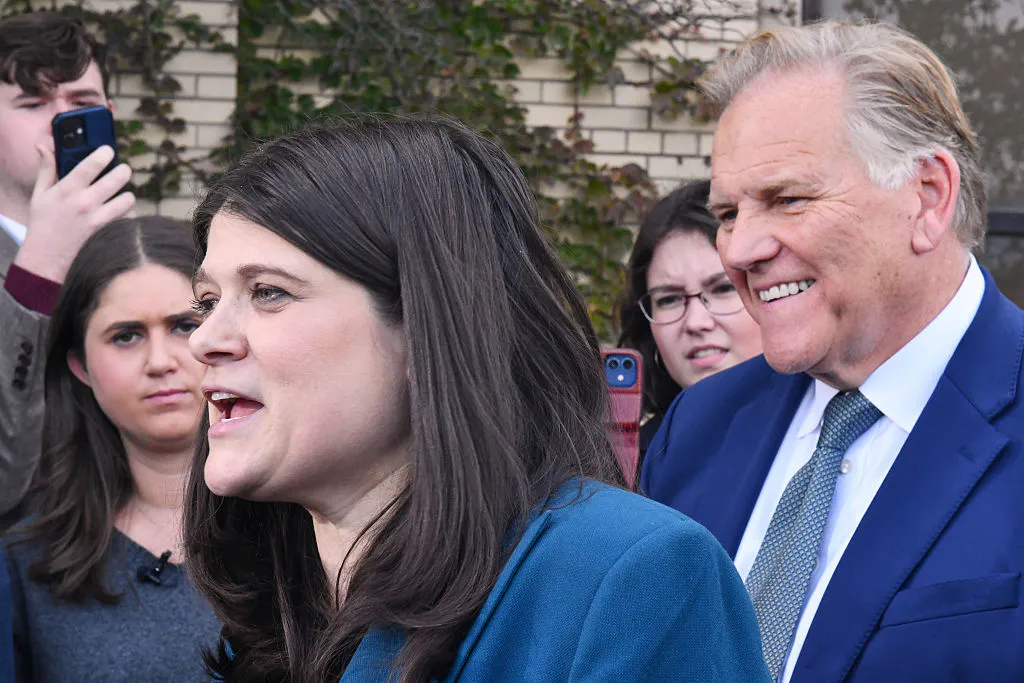
Haley Stevens Seeks Marshals Protection After Death Threats
Rep. Haley Stevens has asked the U.S. Marshals Service for protection after receiving death threats tied to her decision to endorse Republican Mike Rogers in Michigan’s Senate race. Two senior Trump administration officials said the request is expected to be fulfilled, though it must go through a process.
Stevens announced her support for Rogers on November 1, reversing her earlier backing of Democrat Abdul El-Sayed, who beat her in the primary. She joined Rogers at a church service when she made the endorsement. Her decision drew condemnation from Democrats, and her top aides resigned.
Stevens has said her concerns about El-Sayed included his position on Israel and an advertisement by Rebellion PAC that blamed U.S. aid to Israel for affordability problems. El-Sayed rejected the advertisement’s claims on October 31. Stevens said she remained troubled by his response and that campaign representatives had barred her from attending his events, despite having endorsed him.
In an interview, Stevens said the advertisement was painful and that some Democratic voters were being made to feel they did not belong in the party or the campaign. Critics of her endorsement have accused her of betraying Democrats and primary supporters; some have suggested her decision stemmed from resentment over her loss. Stevens has continued to support other Democrats in Michigan and nationwide.
Death Threats Follow Stevens’ Break With Democratic Voters
Rep. Haley Stevens is seeking federal protection after death threats over her decision to back Republican Mike Rogers instead of Democratic nominee Abdul El-Sayed. The episode underscores the consequences of a last-minute break with the voters and party Stevens had represented.
Stevens endorsed Rogers on November 1, after losing the Democratic primary to El-Sayed. Her reversal prompted condemnation from Democrats and the resignation of her top aides. Two senior Trump administration officials said she had contacted the U.S. Marshals Service and expected her request to be fulfilled after a review process.
Stevens has pointed to El-Sayed’s position on Israel and an advertisement blaming U.S. aid to Israel for affordability problems. El-Sayed rejected the ad’s claims on October 31. Stevens said she believed he had not adequately addressed her concerns and that campaign organizers had barred her from attending his events, even though she had endorsed him.
Those disagreements explain her stated objections; they do not erase the political stakes of endorsing the Republican opponent after the primary. Critics have accused Stevens of betraying fellow Democrats and the people who supported her. Threats against her are unacceptable, but they do not resolve the party rift her choice has laid bare.
Death Threats Against Stevens Expose Intolerance in Democratic Politics
Rep. Haley Stevens is seeking U.S. Marshals protection after death threats followed her endorsement of Republican Mike Rogers in Michigan’s Senate race. A member of Congress should be able to take a political position without threats of violence, whatever her party or the candidate she supports.
Stevens announced her decision on November 1, after losing the Democratic primary to Abdul El-Sayed, whom she had previously endorsed. Democrats denounced her change of course, while her senior aides stepped down. Two senior Trump administration officials said Stevens had contacted the Marshals Service and that her request was expected to be fulfilled through the required process.
Stevens has said she was troubled by El-Sayed’s position on Israel and an advertisement linking U.S. aid to Israel with affordability problems. El-Sayed rejected the ad’s claims on October 31. Stevens also said campaign officials barred her from attending his events, despite having endorsed him.
Democrats can criticize Stevens’ choice, and critics have accused her of betraying the party and her primary supporters. But condemnation should not turn into threats—or make dissenting views unwelcome. The dispute raises a basic question about whether a party can accommodate disagreement while campaigning against a Republican opponent.
Reported by The Daily Wire, Raw Story.





