Charles Begins Caribbean Tour Amid Calls for Slavery Reparations
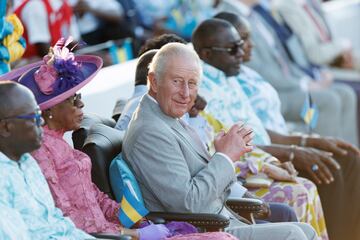
Charles’s itinerary includes The Bahamas, Guyana, and Antigua and Barbuda, where he and Queen Camilla are scheduled to take part in the Commonwealth Heads of Government Meeting. This marks his first formal trip to The Bahamas as monarch. The country closed public schools on New Providence as he arrived and was welcomed by Governor-General Dame Cynthia Pratt and Prime Minister Philip Davis, alongside a military and police guard of honour.
Calls for Britain to apologize and provide reparations have grown ahead of the meeting. The Caribbean Community plans to seek a place for reparations on the agenda. Its secretary-general, Carla Barnett, has described the issue as one of justice, recognition and accountability. Commonwealth Secretary-General Shirley Botchwey has also said discussions about reparations should take place.
Buckingham Palace has said Charles will address the legacy of slavery but will not issue an apology, describing such decisions as matters for governments. The king acts on ministers’ advice when representing Britain abroad. UK Business Secretary Jonathan Reynolds has rejected reparations as unreasonable, while saying Britain’s history should be discussed.
Charles is expected to speak about the past and its continuing resonance during the tour. He will visit Clifford Park, where he appeared in 1973 for Bahamian independence, and is scheduled to travel to Guyana on October 29, then Antigua and Barbuda on October 30 for the Commonwealth summit.
In The Bahamas, environmental advocates also hope the royal visit will draw attention to a proposed development on Sampson Cay involving a seawall and dredging near seagrass and coral reefs. The dispute is before the Bahamas Supreme Court.
Caribbean Leaders Press Charles to Confront Britain’s Slavery Legacy
Charles’s Caribbean tour opens with a demand that Britain face the lasting consequences of its role in the transatlantic slave trade. Caribbean leaders are pushing to put reparations on the agenda at the Commonwealth Heads of Government Meeting, where Charles and Queen Camilla are due to attend.
The Caribbean Community says reparations concern justice, recognition and accountability. Commonwealth Secretary-General Shirley Botchwey has backed discussions, while the Bahamas National Reparations Committee has urged the king not to arrive without action. Britain transported an estimated 3.2 million enslaved Africans; after slavery was abolished in 1834, compensation went to slave owners, while enslaved people received none.
Charles reached Nassau on October 27 for the first visit to The Bahamas during his reign. Buckingham Palace says he will address the painful history but not apologize, arguing that such matters belong to governments. That position leaves the monarchy acknowledging the past while Britain refuses the reparative step Caribbean leaders are demanding.
UK Business Secretary Jonathan Reynolds has called reparations unreasonable, despite saying the history can be discussed. Charles is expected to speak about the legacy of slavery during the tour, which also includes Guyana and Antigua and Barbuda. The summit will bring the debate directly before Commonwealth leaders.
Charles Faces Reparations Pressure as Britain Rejects Compensation Claims
Britain’s monarch begins his Caribbean tour under pressure to apologize for the slave trade and endorse reparations, even as the UK government rejects compensation demands. Charles arrived in Nassau on October 27 and is due to join Queen Camilla at the Commonwealth Heads of Government Meeting in Antigua and Barbuda.
The government’s position is that reparations are not reasonable, and Business Secretary Jonathan Reynolds has argued that present-day generations should not bear responsibility for what happened in the past. Buckingham Palace says Charles will speak about slavery’s history but will not apologize, since he acts on ministers’ advice when representing Britain. An official apology, the government argues, could expose the UK to extensive claims.
Caribbean leaders want reparations discussed at the summit. The Caribbean Community says the question is one of justice and accountability, while Commonwealth Secretary-General Shirley Botchwey has called for talks. Britain’s role in transporting an estimated 3.2 million enslaved Africans remains central to the calls.
Charles’s itinerary includes The Bahamas, Guyana and Antigua and Barbuda. He is expected to address the history during speeches, while the summit agenda also includes climate, trade and development. The question is whether acknowledgment of the past will satisfy leaders seeking concrete redress.
Reported by CNN, Daily Mail US, WTOP, PBS NewsHour, The Conversation US.