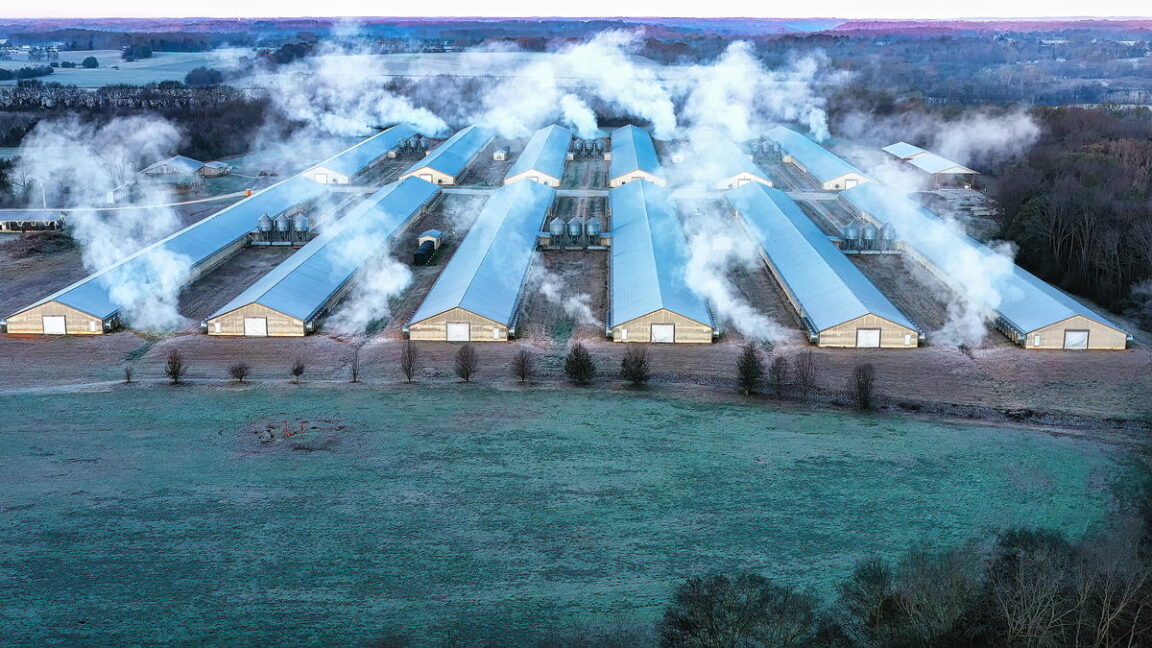
EPA Ends Effort to Measure Factory Farm Air Pollution
The Environmental Protection Agency is ending a long-running effort to develop ways to measure air pollution from concentrated animal feeding operations, or CAFOs. The agency announced the decision on October 30, saying data gathered through a study begun in 2005 are too old and limited to support reliable methods for farms to use.
EPA Abandons Factory Farm Pollution Oversight
The EPA is ending its effort to develop methods for measuring pollution from factory farms, leaving a key obstacle to enforcing federal clean-air requirements unresolved. The decision, announced October 30, closes a process that began more than two decades ago and has yet to produce the agency’s emissions-estimating methods.
CAFOs can emit fine particles and gases including ammonia, nitrogen-based gases, sulfur dioxide, and carbon-containing vapors. Research cited in the dispute links these emissions to nearly 12,700 U.S. deaths a year. The facilities are subject to Clean Air Act permitting requirements when emissions exceed thresholds, but have had a long-running safe harbor from legal action under an agreement with the EPA.
The agency says the study’s data are too old and limited to support methods farms could rely on, noting that barns and manure systems have changed. Food & Water Watch legal director Tarah Heinzen argues that ending the work effectively signals the administration has no intention of making large livestock operations answerable to federal clean-air law. She says the end of the agreement does not remove farms’ legal obligations, and points to California’s emissions models as an example of tools that can be used.
The agreement’s end removes the safe harbor, but there is no EPA-issued national method for estimating emissions. The agency’s decision leaves monitoring and enforcement uncertain while the federal requirements remain in place.
EPA Ends Outdated Factory Farm Emissions Study
The EPA is ending a study that has not produced usable national methods for measuring factory farm air pollution, saying its underlying data are too old and limited. The agency announced October 30 that it would not issue numbers it could not stand behind.
The study began under an agreement that gave thousands of concentrated animal feeding operations legal protection conditional on taking part in industry-funded research. The arrangement arose after livestock operators challenged the feasibility of measuring emissions. The EPA says farms have since modernized barns and manure systems, making the old study a poor basis for methods farmers could rely on.
National Pork Producers Council president Rob Brenneman said the decision reflects that farms differ and cannot be assessed with a single model. The agreement has now concluded, ending the safe harbor, while federal law continues to require permits from facilities whose emissions pass set limits.
The EPA’s decision does not erase those requirements, but the agency has no national emissions-estimating methodology ready to apply. Heinzen of Food & Water Watch says other studies and California’s models can help assess emissions, and argues that the absence of a federal method does not excuse farms from complying with federal law. The dispute leaves the practical question of how emissions will be measured and monitored unresolved.
Reported by Ars Technica, Mother Jones.




