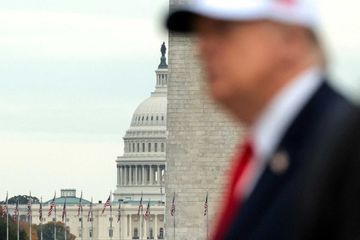
Voters Say Trump Is Hurting Republicans’ Midterm Chances
A majority of registered voters say President Donald Trump’s campaign efforts are hurting Republicans ahead of the November 3 midterm elections, according to a Daily Mail/Ipsos poll. Fifty-five percent said he was damaging his party’s chances, while 20 percent said he was helping and 23 percent saw no effect.
Trump has campaigned across more than two dozen states and staged no fewer than 24 events since starting his midterm push in September. He is not on the ballot, but has urged voters to turn out as if he were seeking re-election.
Among Republicans, 48 percent said Trump was helping the party, while 21 percent said he was hurting it. Independents were more negative: 60 percent said he was damaging Republican prospects.
The poll also found voters expect Democrats to gain seats. Forty-eight percent of registered voters anticipated Democratic gains in the House, compared with 24 percent who expected Republican gains. In the Senate, 43 percent expected Democrats to add seats and 26 percent expected Republicans to do so.
Economic concerns lead voters’ priorities: 45 percent named the economy and cost of living as the most important factors in their vote. Corruption ranked second at 16 percent. The survey questioned 1,021 U.S. adults, including 810 registered voters, from October 30 to November 1. Its margin of error for registered voters was 3.5 percentage points.
Trump’s Midterm Push Looks Like a Liability for Republicans
The verdict in a new poll is a warning for Republicans: President Donald Trump’s high-profile midterm campaigning appears to be a burden, not a boost. Fifty-five percent of registered voters said he was hurting the party’s chances, while only 20 percent said he was helping.
That assessment is especially stark among independents, 60 percent of whom said Trump was damaging Republican prospects. Even within his own party, fewer than half—48 percent—said he was helping. Trump has campaigned across more than two dozen states and staged no fewer than 24 events after starting his midterm push in September, though he is not on the ballot.
Voters also expect Democrats to make gains: 48 percent anticipated Democratic gains in the House, compared with 24 percent who expected Republicans to advance. In the Senate, 43 percent expected Democrats to gain seats and 26 percent expected Republican gains.
The poll points to the issues driving voter concern: 45 percent named the economy and cost of living as their top consideration, ahead of corruption at 16 percent. That focus leaves Republicans facing a test of whether Trump’s campaign can overcome public dissatisfaction. The survey covered 1,021 U.S. adults, including 810 registered voters, from October 30 to November 1; the registered-voter margin of error was 3.5 percentage points.
Poll Shows Trump’s Campaign Faces a Midterm Test
A new poll shows the challenge facing Republicans as they head into the November 3 midterms: 55 percent of registered voters believe President Donald Trump is hurting the party’s chances. Just 20 percent said he was helping, while 23 percent said his impact was neither positive nor negative.
The result comes despite an extensive campaign push. Trump has visited more than two dozen states and staged no fewer than 24 events after September, urging voters to turn out even though he is not on the ballot. Among Republicans, 48 percent said he was helping the party and 21 percent said he was hurting it; 60 percent of independents viewed his impact negatively.
Voters expect Democrats to gain ground in both chambers. In the House, 48 percent anticipated Democratic gains and 24 percent expected Republican advances. For the Senate, the figures were 43 percent expecting Democratic gains and 26 percent expecting Republican gains.
The survey also shows why the election is difficult terrain for either party: 45 percent named the economy and cost of living as their leading voting concern, while 16 percent cited corruption. The poll surveyed 1,021 people in the United States, among them 810 registered voters, from October 30 to November 1, with a 3.5-point margin of error among registered voters. The numbers register voters’ expectations, not the final outcome.
Reported by Daily Mail US, The Daily Beast.