Alaska Senate Race Faces Scrutiny as Election Nears
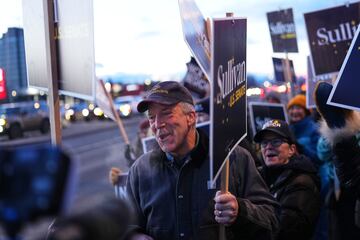
Alaska’s closely watched Senate contest is unfolding alongside a federal investigation into whether a candidate was recruited to draw votes away from another. Sen. Dan Sullivan, a Republican seeking a third term, faces former Democratic Rep. Mary Peltola. Daniel J. Sullivan, who filed as a Republican, is also on the ballot as a nonpartisan candidate listed as “Daniel J. Sullivan Jr.” The incumbent appears as “Dan S. Sullivan.”
The Justice Department has escalated its investigation into whether Peltola’s campaign was involved in recruiting the second Sullivan. The allegation has not been established as fact. President Donald Trump said on October 23 that he had directed the department to sue to block certification if Peltola wins. Alaska Republican officials previously tried to keep Daniel J. Sullivan off the primary ballot, but a state court allowed him to remain.
Peltola led the August 18 all-party primary with 49.5% of the vote, ahead of Sullivan’s 41.4%. The other two candidates advanced with less than 4% combined. Peltola has raised and spent more than twice as much as the senator. If no candidate wins a majority, ranked-choice voting will determine the winner. Voters will also decide races for the state’s House seat, governor and Legislature, as well as measures on ranked-choice voting and eligibility to vote. The election could affect control of the Senate, and Alaska has been a potential balance-of-power state in three consecutive election cycles.
Alaska Voters Face Senate Choice as Federal Probe Intensifies
Alaska’s Senate race is a major test of whether Mary Peltola can unseat Republican Dan Sullivan, with the Justice Department’s investigation adding scrutiny to a contest that could help decide control of the chamber. The department is examining whether Peltola’s campaign was involved in recruiting Daniel J. Sullivan, a candidate whose name resembles the incumbent’s. The allegation remains under investigation, not established fact.
Peltola topped the August primary with 49.5%, while Sullivan received 41.4%. She has raised and spent more than twice as much as the incumbent. Daniel J. Sullivan remains on the ballot after a state court rejected efforts by Republican officials to remove him. He filed as a Republican but is listed without a party label; the senator is identified as a Republican and incumbent.
President Donald Trump said on October 23 that he had directed the Justice Department to sue to stop certification if Peltola wins. The election’s outcome will be decided by ranked-choice voting if no candidate wins a majority. Alaska voters will also consider whether to repeal ranked-choice voting, alongside other statewide and legislative contests. The stakes include both Alaska’s representation and the balance of power in Washington.
Alaska Senate Race Raises Questions About Ballot Tactics
Alaska voters face a consequential Senate choice amid an investigation into an alleged effort to put a second, similarly named Sullivan on the ballot. The Justice Department is examining whether Peltola’s campaign was involved in recruiting Daniel J. Sullivan to draw votes from incumbent Republican Dan Sullivan. The allegation has not been proven, but the investigation has intensified as the election approaches.
The distinction matters on the ballot: the incumbent is listed as “Dan S. Sullivan,” a Republican and incumbent, while the other candidate appears as “Daniel J. Sullivan Jr.” without a party label, despite filing as a Republican. State Republican officials tried to block the challenger from the primary, but a court allowed him to proceed. He remains on the ballot.
Trump said on October 23 that he had directed the Justice Department to sue to block certification if Peltola wins. Peltola led the August primary with 49.5%, compared with Sullivan’s 41.4%, and has raised and spent more than twice as much as the senator. If no one wins a majority, ranked-choice voting will determine the result. Voters will also decide whether to repeal that system, making the election a test of both the candidates and the rules governing Alaska’s vote.
Reported by CNN, The Philadelphia Inquirer.