X Adds Parental Controls for Teen Accounts
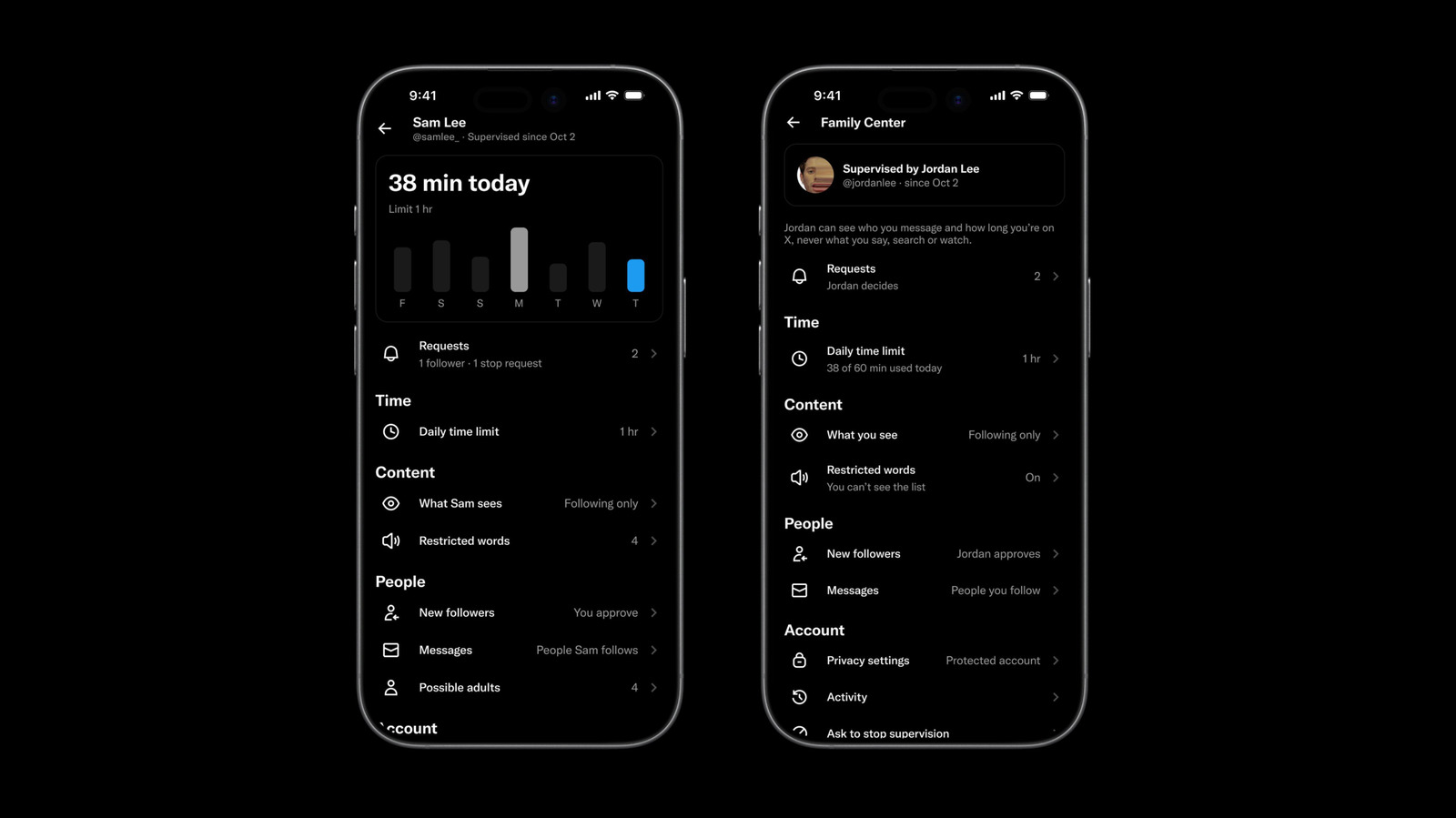
X has introduced its first parental controls for teen accounts, offering families options to monitor time spent on the platform and set daily limits. Parents and guardians can also require approval for new followers and limit suggestions to profiles a teen already follows.
The controls allow adults to filter specific words, disable sensitive media and manage who can send a teen direct messages. They can see which accounts a teen has messaged one-on-one, but cannot read those messages or view searches and viewing history. X says parents cannot post as a teen or access the teen’s account, and that changes made through supervision are visible to the teen.
A teen and a parent or guardian must both agree to link accounts. One adult account can supervise as many as five teens, while each teen can be linked to only one adult at a time. X says teen accounts already default to a protected mode that restricts sensitive media and targeted advertising.
The rollout follows scrutiny of Grok, X’s AI tool, and lawsuits concerning sexualized deepfakes. Oregon and Virginia recently sued SpaceX over Grok-generated pornographic deepfakes. A Virginia complaint accuses Elon Musk of disregarding concerns about the images; three teens also sued xAI earlier this year, alleging Grok generated child sexual abuse material.
X says its service is not designed or promoted for children, though it allows users who meet the minimum age requirement to use it. The new controls give parents additional ways to shape teens’ experience as X faces scrutiny from states and regulators.
X’s New Teen Controls Arrive After Deepfake Scrutiny
X is adding parental controls for teenagers only after its AI tool Grok became the focus of lawsuits over sexualized deepfakes. The new settings may give families some safeguards, but they arrive amid allegations that Grok generated child sexual abuse material and that concerns about deepfakes were ignored.
Parents and guardians can set time limits, approve new followers, restrict recommendations, filter words and manage who can direct-message a teen. They can also see which accounts a teen has messaged, but not the messages themselves. X says adults cannot view searches or viewing history, access the account or post as the teen.
The timing matters: Oregon and Virginia have sued SpaceX over Grok-generated pornographic deepfakes, and three teens sued xAI earlier this year over alleged child sexual abuse material generated by Grok. These controls offer families guardrails, but they do not erase the concerns that brought the platform under scrutiny.
X says teen accounts already default to protected mode, restricting sensitive media and targeted advertising. Linking requires agreement from both the teen and adult, and a teen can have only one supervising adult at a time. X says it is not designed or promoted for children, even as it now gives parents new tools to manage young people’s use of the service.
X Gives Parents New Tools to Set Teen Account Limits
X’s new parental controls put practical limits in parents’ hands without giving adults access to a teen’s private messages or account. Parents can set daily time limits, approve new followers, restrict recommendations and decide who may send direct messages.
They can also filter words, turn off sensitive media and view the profiles a teen has exchanged direct messages with. X says adults cannot read the messages, inspect searches or viewing history, or post as the teen. Both the adult and teenager must agree to link accounts, and changes are visible to the teen.
The controls build on existing defaults: teen accounts use a safer default setting that limits sensitive media and prevents targeted ads. One parent or guardian can supervise up to five teens, while each teen can link to just one adult.
The rollout comes as X faces scrutiny over Grok and lawsuits concerning sexualized deepfakes, including cases brought by Oregon and Virginia against SpaceX. The allegations are serious, but the new settings offer families concrete choices rather than requiring parents to surrender control of a teen’s account. X says its platform is not designed or promoted for children, while noting that it takes extra care with young users who are there.
Reported by Engadget, The Verge.