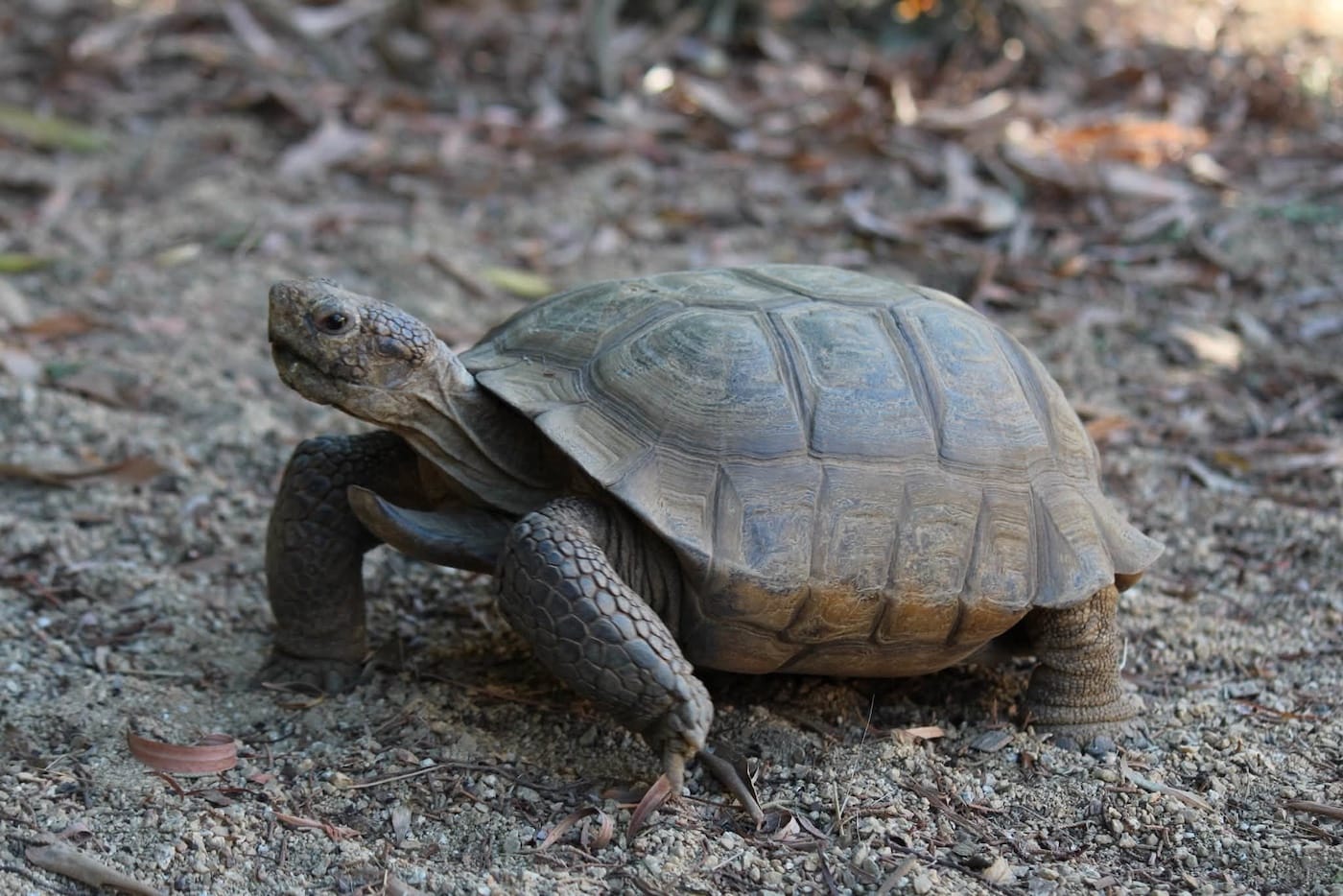
San Francisco Zoo’s Oldest Animal, Mojave the Tortoise, Dies at 79
November 23, 2026
Mojave, the San Francisco Zoo’s oldest living animal, died at 79 after a spinal condition worsened. Zoo officials decided to euthanize him on November 19, after keepers and veterinary hospital staff monitored his condition for months. A CT scan earlier this year revealed the condition, which eventually affected his quality of life.
Mojave had lived at the zoo since 1997, at its Koret Animal Rescue and Conservation Center. Through the zoo’s Wildlife Theater and Nature Trail programs, he introduced thousands of visitors, staff and volunteers to desert tortoises and their role in the ecosystem. Zoo staff spent time with him before his death.
The Mojave desert tortoise is a threatened keystone species and California’s official state reptile. Its numbers have fallen sharply: California populations outside designated recovery areas are now estimated at just two or three adult tortoises per square mile, compared with hundreds per square mile in parts of the Mojave Desert 80 years ago.
California upgraded the tortoise’s status to endangered last year, following a petition by wildlife groups. The designation could help direct more resources to conservation, while reductions in federal personnel and funding suspensions during the Trump administration have fueled concern about future efforts.
Some recovery work is continuing. In 2024, 70 young tortoises were released at Edwards Air Force Base through a partnership involving conservation organizations and federal agencies. Researchers are monitoring their health, behavior and use of burrows.
Mojave’s Death Highlights the Stakes of Protecting a Threatened Tortoise
November 23, 2026
Mojave spent nearly three decades introducing zoo visitors to desert tortoises. The San Francisco Zoo euthanized its 79-year-old resident on November 19 after a spinal condition worsened and began affecting his quality of life.
His death underscores the vulnerability of a species whose numbers have plunged. California populations outside designated recovery areas are estimated at roughly two to three adult animals per square mile, compared with hundreds per square mile in parts of the Mojave Desert 80 years ago. The tortoise is a threatened keystone species and California’s official state reptile.
California upgraded the species to endangered last year, a designation that could direct more resources to conservation. But reductions in federal personnel and suspended funding during the Trump administration have raised concerns about the future of that work. Kristina Drake, a former head of the U.S. Fish and Wildlife Service’s Desert Tortoise Recovery Office, left through the administration’s deferred resignation program and said she does not expect additional federal funding for the species.
A 2024 release of 70 young tortoises at Edwards Air Force Base offers a hopeful example of collaborative recovery work. Researchers are tracking their health and behavior, including how they establish and modify burrows. But the need for such monitoring stands against the dwindling populations and uncertainty over federal support.
Mojave’s Legacy Lives On in Practical Tortoise Recovery Work
November 23, 2026
Mojave spent nearly 30 years at the San Francisco Zoo, where he introduced thousands of visitors to desert tortoises. The zoo euthanized the 79-year-old animal on November 19 after a spinal condition began affecting his quality of life, following months of monitoring by keepers and veterinary staff.
The species faces serious challenges: California populations outside designated recovery areas are estimated at only two or three adults per square mile. California upgraded the tortoise’s status to endangered last year, a move that could direct additional resources toward conservation.
There are also concrete efforts underway. In 2024, 70 young tortoises returned to the wild on Edwards Air Force Base in a joint project by The Living Desert Zoo and Gardens and San Diego Zoo Wildlife Alliance, federal agencies and the U.S. Geological Survey. Researchers monitor the animals’ condition and conduct, as well as whether they can create and alter burrows.
Reductions in federal personnel and suspended funding during the Trump administration have prompted concern about future conservation work. But the release and ongoing monitoring show that recovery efforts also depend on coordinated, hands-on programs. Mojave’s years as an ambassador helped visitors understand the species and its role in desert ecosystems.
Reported by ABC7 San Francisco, SFist.





