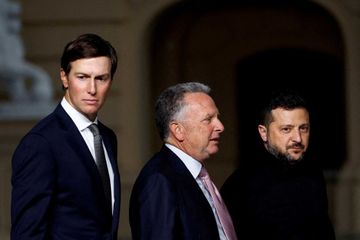
Kushner Warns Israel Risks Becoming a Global Pariah
On November 23, Jared Kushner warned that Israel could become a “global-pariah” state if it continues on its current path. In an interview published Monday, President Donald Trump’s son-in-law said Israel could instead emerge from the October 7 tragedy more secure and integrated internationally.
Kushner has been working to advance the second phase of a deal brokered in October 2025. The proposed next steps include rebuilding Gaza, establishing a technocratic government, disarming Hamas and withdrawing Israeli forces in stages. The ceasefire has not cleared the way for those plans, and the effort is at risk of collapsing.
Israeli Prime Minister Benjamin Netanyahu has resisted parts of the plan, citing Hamas’ failure to disarm. Kushner went to Egypt during August for talks with a Hamas delegation about disarmament, then went to Jerusalem to urge Netanyahu to approve a Gaza recovery plan. Netanyahu did not approve it, and negotiations stalled. Gadi Eisenkot, Netanyahu’s political rival, is working to form a government after the election.
Kushner also defended his private investment business, Affinity Partners, which received $2 billion from a Saudi sovereign wealth fund after the first Trump administration. He said he follows the rules and that he had not acted in diplomacy to benefit his business. His diplomatic role and private dealings have drawn scrutiny over possible conflicts of interest.
Kushner described Saudi Crown Prince Mohammed bin Salman as a friend and said they play League of Legends. He has also cultivated ties with senior officials in the United Arab Emirates.
Kushner’s Warning Highlights the Cost of Netanyahu’s Gaza Stalemate
Israel’s path toward deeper international isolation is now being acknowledged by Jared Kushner, a senior Trump envoy who warned on November 23 that the country could become a “global-pariah” state if it stays on its current course. His warning comes as Gaza’s reconstruction and political transition remain blocked.
The second phase of a deal brokered in October 2025 is meant to bring rebuilding, a technocratic government, Hamas disarmament and staged Israeli withdrawals. Those steps have not advanced. Netanyahu has resisted parts of the plan, pointing to Hamas’ failure to disarm, while Kushner’s August meetings with Hamas representatives and Netanyahu did not produce agreement.
The stakes are not abstract: the effort to move beyond the ceasefire is at risk of collapsing, while the war-battered enclave awaits reconstruction. Netanyahu’s refusal to approve Kushner’s recovery plan has left the process stalled as Gadi Eisenkot tries to form a government after the election.
Kushner’s role also raises questions that his own defense does not erase. Affinity Partners received $2 billion from a Saudi sovereign wealth fund after the first Trump administration, and his diplomatic work has faced scrutiny over potential conflicts. Kushner says he follows the rules and has not used diplomacy to benefit his business. But close ties to powerful regional leaders, including Saudi Crown Prince Mohammed bin Salman, make transparency central to public confidence.
Kushner’s Israel Warning Risks Oversimplifying a Security Deadlock
Jared Kushner warned on November 23 that Israel may drift toward “global-pariah” status, but the stalled Gaza plan is not simply a matter of Netanyahu rejecting diplomacy. The proposed next phase calls for Hamas to disarm, a technocratic government to take charge, reconstruction to begin and Israeli forces to withdraw in stages. Netanyahu has resisted some steps because Hamas has not disarmed.
Kushner has tried to move the plan forward, meeting a Hamas delegation in Egypt in August and later urging Netanyahu to approve a recovery plan. Talks stalled, and the effort is now at risk of collapse. The security conditions at the heart of the dispute matter: a ceasefire cannot by itself settle the question of whether Hamas will give up its weapons.
Kushner’s warning presents international integration as one possible outcome, but the other path he described would leave Israel increasingly isolated. His intervention comes as Gadi Eisenkot works to form a government after the election, adding political uncertainty to negotiations.
There are also legitimate questions about Kushner’s own role. His investment firm, Affinity Partners, received $2 billion from a Saudi sovereign wealth fund after the first Trump administration, while he has returned to diplomacy. Kushner says he complies with the rules and has not used diplomacy to benefit his business. His close relationship with Saudi Crown Prince Mohammed bin Salman underscores why scrutiny of private interests and public duties remains important.
Reported by The Daily Caller, New York Post, The Washington Examiner.