Trump Shrugs Off China Spy Concerns Amid Nvidia Scandal
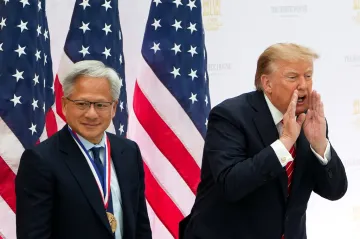
On November 23, President Donald Trump brushed aside concerns about reports that Alice Huang, a woman linked to Nvidia CEO Jensen Huang, had contact with an officer of China’s Ministry of State Security. “Who isn’t in contact?” Trump said, adding that China speaks with everyone and that contact alone does not make people bad.
U.S. intelligence reports describe contact between Alice Huang and the Chinese officer from spring 2025 into this fall. Officials in the administration say they have yet to determine whether she engaged in espionage for China, while Beijing rejects the accusations. Trump also said the greater risk would be losing Jensen Huang’s “brainpower.” He declined to say if intelligence on the matter had been presented to him, and posted that the CEO’s return to Nvidia posed no known national security risk.
Trump intervened over the weekend to help secure Jensen Huang’s reinstatement as Nvidia CEO. Former and current national security officials have raised concerns about the company’s role in the U.S.-China AI competition and efforts to limit China’s access to advanced chips. The FBI calls countering China’s intelligence collection and economic spying its foremost counterintelligence concern. Jensen Huang is scheduled to respond to questions in a private session with three House committees on December 1.
Trump Plays Down China Espionage as Nvidia Faces Security Questions
Trump’s shrug at reported Chinese intelligence contacts is the wrong message at a moment when U.S. leaders are trying to keep advanced AI chips out of China’s hands. On November 23, he said China speaks with everyone and that contact does not make people bad.
The intelligence reports describe contact between Alice Huang and an officer of China’s Ministry of State Security from spring 2025 into this fall. Authorities have not determined that she engaged in espionage for China, and Beijing rejects the accusations. But the uncertainty makes careful scrutiny essential, not casual dismissal. The FBI identifies countering Chinese intelligence collection and economic spying as its foremost counterintelligence concern.
Trump also intervened to help restore Jensen Huang as Nvidia CEO, and said the greater threat would be losing the executive’s “brainpower.” National security officials have warned that Nvidia’s central role in the AI race makes the matter especially sensitive. Trump’s assurance that the CEO’s return poses no known security risk does not resolve those concerns. Jensen Huang is due to appear for a private session with three House committees on December 1.
Trump Rejects Alarmism Over Nvidia CEO’s Return
Trump is right to distinguish reported contact from proof of spying. On November 23, he said China speaks with everyone and that contact alone does not make someone bad. Authorities have not determined that Alice Huang engaged in espionage for China, and Beijing rejects the accusations.
The reports describe her contact with an officer of China’s Ministry of State Security from spring 2025 into this fall. That deserves scrutiny, but treating allegations as established guilt risks turning a complex matter into a verdict before officials have reached one. Trump said the bigger danger would be losing Jensen Huang’s “brainpower” and posted that his return to Nvidia posed no known national security risk.
The debate has real stakes: Nvidia is central to the AI industry, and the U.S. has sought to restrict China’s access to its most advanced chips. Yet the concerns raised by national security officials do not, by themselves, settle the accusations against Alice Huang or prove that Jensen Huang’s return is unsafe. He is scheduled to answer questions in a private session with three House committees on December 1.
Reported by Raw Story, MSNBC, Los Angeles Times.