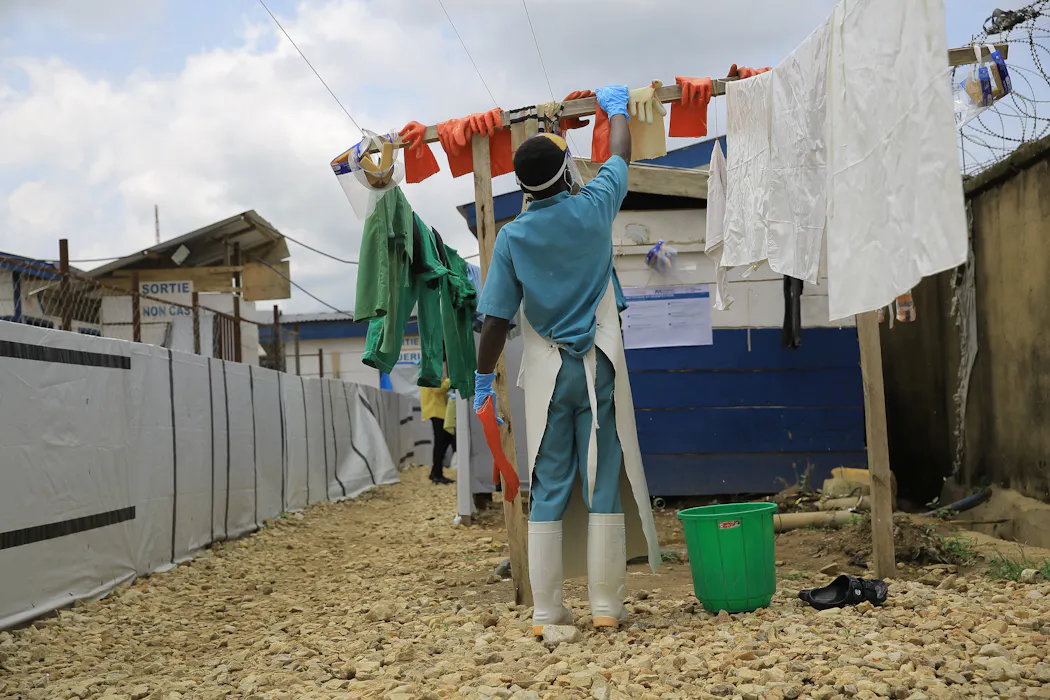
Conflict and mistrust hamper Congo’s Ebola response
The largest recorded outbreak of the Bundibugyo strain of Ebola continues to spread in the Democratic Republic of the Congo, with conflict in the east disrupting medical care and disease-control work. The outbreak was declared in May, and confirmed cases have been recorded in 68 health zones across eight provinces. In 48 zones, at least one new case was reported in the three weeks before November 17.
On November 22, World Health Organization Director-General Tedros Adhanom Ghebreyesus said heavy fighting near a hospital in Ituri had forced health workers and response partners to shelter in a maternity ward for more than a day. The fighting disrupted hospital operations and the wider Ebola response, he said. The WHO has also raised concern about attacks on healthcare facilities and workers.
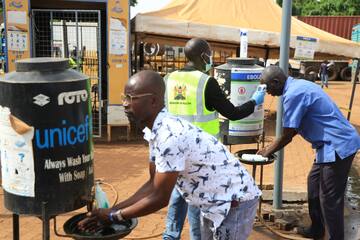
Armed groups and years of violence make it dangerous for residents to seek care and for health teams to trace contacts. In some communities, distrust of officials and medical workers adds another obstacle: beliefs about Ebola include that it is caused by poisoning or witchcraft, or that the disease is not real. In one case described by the WHO, a family refused disinfection and contact tracing after a suspected infection in May.
Poor roads and difficult terrain also delay supplies and diagnosis. In some areas, journeys through rainforest and bogs can take weeks. Local testing in Mongbwalu, however, can now provide results in less than an hour, the WHO said.
The official death count may not capture the full toll. The WHO has assessed that the actual outbreak may reach between two and four times the scale indicated by official figures, while an analysis of satellite images and gravediggers’ accounts indicated deaths may have been undercounted during the early stages. The agency said many deaths continue to occur in communities outside treatment centers, particularly among young children.
Conflict Leaves Congo’s Ebola Response and Civilians at Risk
The Ebola emergency in the Democratic Republic of the Congo is worsening in a region where armed conflict is making public health work hazardous. The outbreak, declared in May, has caused 5,678 deaths among 11,613 confirmed cases as of November 17, and the WHO says the true scale could be substantially larger.
On November 22, WHO chief Tedros Adhanom Ghebreyesus said heavy fighting near a hospital in Ituri had forced response workers to take shelter in a maternity ward for more than 24 hours. The violence interrupted hospital services and Ebola operations, putting patients, families and staff at risk. The WHO says attacks on healthcare have increased.
The consequences reach beyond hospitals. Violence and the threat of attacks make contact tracing and treatment harder, while civilians displaced by conflict can end up in crowded camps where disease may spread. The WHO has warned that many deaths are occurring in communities outside treatment centers, especially among young children—a sign of how difficult it remains to identify cases and reach people early.
Mistrust also stands in the way. Some residents suspect poisoning or sorcery, or doubt Ebola exists; one family refused disinfection and contact tracing after a suspected case. That distrust has grown amid years of conflict and abuses, and cannot be addressed by medical teams if they cannot safely reach communities.
The response is also slowed by terrain: supply trips can take weeks, though local testing in Mongbwalu can return results in under an hour. The crisis shows the human cost of allowing violence to obstruct care: without safe access for health workers and patients, containment remains much harder.
Armed Groups Undermine Congo’s Ebola Fight
Congo’s Ebola response is being undermined by armed groups and a security crisis that keeps health workers from reaching communities. The outbreak, declared in May, has produced 11,613 confirmed cases and 5,678 deaths as of November 17, and the WHO warns that violence is disrupting efforts to contain it.
On November 22, WHO Director-General Tedros Adhanom Ghebreyesus said heavy fighting near a hospital in Ituri forced health workers and partners to shelter in a maternity ward for more than a day. Hospital work and the wider response were disrupted. The WHO has also reported more than 87 attacks on healthcare in the country.
Contact tracing in areas where armed groups operate can be dangerous, while competing authorities and militia control make coordination with national and international health officials difficult. The ADF, CRP and M23 are among the groups cited as obstructing access or complicating medical work. Violence also drives people from their homes into crowded camps, where poor hygiene can help Ebola spread.
The official toll may be incomplete. The WHO has projected that the actual toll might amount to between double and quadruple the number recorded, and an analysis of satellite images and local gravediggers’ accounts suggested early deaths were undercounted. Many people have died outside treatment centers, particularly children, the agency said.
Mistrust of authorities and health workers adds another barrier, with some residents rejecting medical explanations or refusing contact tracing. Meanwhile, rough terrain can keep supplies from reaching hotspots for weeks. Local testing in Mongbwalu offers a faster route to diagnosis, but safe access and cooperation remain essential to the response.
Reported by Newsweek, Breitbart, The Conversation US, The Philadelphia Inquirer.