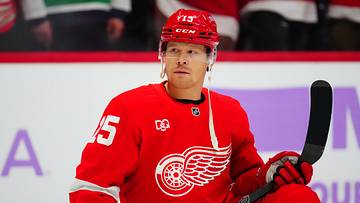
Detroit turns Larkin’s departure into a bet on its next chapter

Detroit’s long-running dispute with Dylan Larkin ended in a blockbuster Dylan Larkin trade to Montreal, converting a strained relationship with its former captain into NHL players, a prospect and future draft capital. The Canadiens get an established center to strengthen their lineup; the Red Wings take on a package aimed at reshaping theirs. The deal also brings a public trade request, a lost captaincy and a suspension to a close. Its value for either team will depend on what Larkin adds in Montreal and how the pieces headed to Detroit develop.
The trade details show Montreal receiving Larkin, along with Detroit’s 2027 third-round selection and its 2028 second-round selection. Detroit gets forward Kirby Dach, goaltender Samuel Montembeault and prospect Michael Hage. The package also includes first-round selections for 2027 and 2029, plus a fourth-round pick in 2028 and a second-round pick in 2027. Detroit’s return is substantial, but the package is not all equivalent: Dach and Montembeault are current NHL players, Hage is a prospect, and draft picks carry uncertainty until they turn into players. The reports differ on whether Detroit’s first-round selections are conditional; one account specifies conditions, while others list the picks without that qualification.
Larkin did not arrive at this exit in a quiet or orderly fashion. He requested a trade in June after Detroit’s postseason drought reached 10 seasons, according to the reports, and started the season with the club. Detroit removed his captaincy as it sought a deal. After playing 10 games, he stopped reporting to the team, and Detroit suspended him without pay and took him off the roster on Oct. 29. The suspension followed his refusal to play, not a decision by Montreal: until the trade, Detroit had to find a partner under difficult circumstances.
The terms of Larkin’s contract and his trade protections narrowed Detroit’s options. He had a full no-trade clause, while the club spoke to teams on a destination list he supplied; Montreal was not among his initial preferences. His agent communicated in October that Larkin no longer intended to play for Detroit. Interim general manager Shawn Horcoff described the challenge of finding a partner acceptable to the parties, with Detroit also considering interest from teams outside Larkin’s preferred destinations. The eventual agreement makes clear that a deal was possible, though the accounts do not explain what changed to bring Montreal into it.
For the Canadiens, the case for the move is straightforward: Larkin supplies a proven center to a forward group seeking more depth down the middle. The Montreal-focused account frames him as a strong second-line option alongside Nick Suzuki, while noting the Canadiens paid a premium in picks and prospect value. Larkin is under contract through the 2030–31 season, with an average annual value of $8.7 million, so Montreal is not renting him for a brief playoff push. That commitment buys stability at a position the reports say the team has struggled to fill beyond Suzuki, but it also makes the trade a longer-term investment in a 30-year-old player.
Detroit’s return offers several ways to make the deal work, rather than one guaranteed replacement for Larkin. Hage, the prospect selected by Montreal in the 2024 draft, is the most intriguing long-range possibility in the reports; he has not yet played an NHL game. Dach brings size and versatility, but injuries have interrupted his career, and one report notes modest early-season production. Montembeault adds an experienced goaltending option, though Detroit already has several goalies in its system. The account of Hage’s development underscores the upside, while the uncertainty around Dach and the picks keeps any early verdict provisional.
Larkin leaves after 12 seasons with the only NHL organization he had represented. His Detroit record: 278 goals, 649 points and 818 regular-season appearances, according to the reports. He was Detroit’s 15th overall selection in 2014, became captain in January 2021 and later helped the United States win Olympic gold in 2026. His most recent season included 34 goals and 33 assists, and he had five consecutive seasons with at least 30 goals, according to one account. Those results explain why Montreal was willing to pay heavily; they do not erase the cost of giving up multiple future assets.
Detroit’s difficulty in moving Larkin had been visible before the trade. A report on the club’s handling of a possible Minnesota offer described the limited room created by his trade request and protections (the earlier report). The transaction also lands amid broader questions about Detroit’s direction and roster construction, including the team’s changes after 21 games (a look at the roster’s changing outlook). Neither link changes the math of this deal: the Red Wings exchanged a high-end current player for a mix of immediate help and future opportunity, while Montreal converted picks and a prospect into a center expected to contribute now.
For my part, the most interesting detail is how different the two teams’ timelines look in this exchange. Montreal is paying for certainty at center; Detroit is accepting uncertainty in several forms. That is a coherent trade for both sides, but the prospect and picks need time before anyone can call the return a win.
The next test is on the ice, not in the announcement. Montreal must fit Larkin into its lineup and decide how much of its future capital it can spare for the present. Detroit must determine how Dach and Montembeault fit, and whether Hage becomes the kind of player who can help offset the loss of a franchise center. The deal ends the uncertainty over Larkin’s destination; it does not settle whether either club bought the right version of its future.
Update, November 23, 2026: Larkin signed his eight-year, $69 million contract in March 2023. His first preferred destinations were Florida, Vegas and Minnesota, and Montreal reportedly was not on a later list of teams he would accept. At the start of the 2026–27 season, an upper-body injury kept him out of Detroit’s first two games. He returned against Ottawa, helping the Red Wings win, but was booed by fans at Little Caesars Arena.
Reported by The Philadelphia Inquirer, New York Post, Sports Illustrated, ClickOnDetroit WDIV, CBS Sports, The Daily Caller, CBS Detroit, FOX 2 Detroit, Boston.com.