Rubio Gains Ground as Republicans Look Toward 2028
The Republican succession picture has shifted since the midterm elections. Vice President JD Vance had been widely viewed as the leading contender to follow President Donald Trump, but recent polling has put Secretary of State Marco Rubio ahead, as some conservatives urge him to enter the race.
An Emerson poll cited in the discussion of the race gives Rubio 36% support among Republicans, compared with 20% for Vance. Ron DeSantis is also among the potential contenders. The poll is described as showing Vance losing more than half his support over the past year, with former support moving to Rubio and DeSantis.
Vance’s role has diminished in dealings with Iran. Trump removed him from those negotiations and assigned him to investigate alleged Democratic Party fraud and corruption. Trump has criticized Vance’s proposed memorandum of understanding with Iran, calling it a “waste of time,” and has publicly praised Rubio.
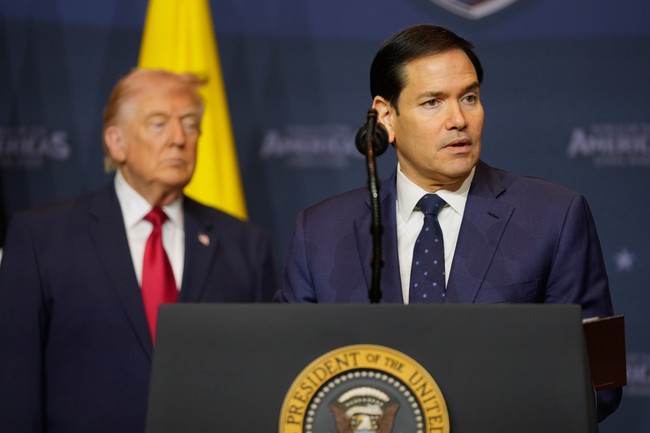
Rubio has taken on a prominent public role as secretary of state, including speaking to address concerns about cyberattacks on U.S. infrastructure. Supporters point to his diplomatic work and his record in office as reasons he could appeal beyond the Republican base.
Some conservative commentators argue Rubio should resign to begin preparing a campaign. The case for staying in his post is that doing so would show loyalty to Trump and avoid appearing to abandon the administration after the midterm setback. The 2028 primaries remain well ahead, and either candidate’s standing could change.
Republicans’ 2028 Scramble Puts Rubio’s Record to the Test
Republicans are already weighing who can carry the party into 2028 after their November midterm losses. Marco Rubio’s rise over JD Vance in recent polling is being treated by some conservatives as a reason to start planning for a new standard-bearer.
An Emerson poll puts Rubio at 36% among Republican voters and Vance at 20%, with Ron DeSantis also gaining support. Vance’s standing has fallen sharply, while Trump has removed him from Iran negotiations and assigned him to investigate alleged Democratic Party fraud and corruption. Trump has called Vance’s proposed Iran memorandum a “waste of time.”
Rubio’s supporters emphasize his work as secretary of state, including diplomatic efforts and a public appearance addressing concerns about cyberattacks on U.S. infrastructure. But a changing poll does not settle who can win a general election, and the claims about Rubio’s appeal beyond the party remain arguments, not proof.
Some conservatives want Rubio to resign and begin building a campaign. Others say staying in the administration demonstrates loyalty. The choice also highlights the tension in a party trying to maintain Trump’s agenda while deciding who should lead it next.
Rubio’s Steady Rise Offers Republicans a Strong 2028 Option
Republicans need a candidate who can keep the party’s agenda moving after the November midterm setback. Marco Rubio’s rise in recent 2028 polling makes him a compelling option: an Emerson poll gives him 36% support among Republicans, against 20% for JD Vance.
Vance’s position has weakened after he led Iran negotiations and Trump later removed him from that role, assigning him to investigate alleged Democratic Party fraud and corruption. Trump has criticized Vance’s proposed memorandum with Iran as a “waste of time” and has publicly praised Rubio.
Rubio, meanwhile, has remained in his secretary of state post and taken visible roles, including addressing concerns about cyberattacks on U.S. infrastructure. Supporters point to his diplomatic work and argue that his experience and wider appeal could help carry the party’s agenda into 2028.
Some commentators say he should resign now to prepare a campaign. Staying on the job has its own political logic: it avoids looking disloyal to Trump or abandoning the administration after a difficult election. The primary contest is still distant, but Rubio’s rise has made the succession question immediate.
Reported by PJ Media, The Washington Examiner, New York Post.





