A Spy Chief Should Explain, Not Excuse, the Word “Friend”

The director of national intelligence can defend a president’s diplomatic language; he should not leave the public guessing about the interests that language serves. Jay Clayton’s Sunday television interviews made that distinction harder to see. He defended President Donald Trump’s use of “friend” for Vladimir Putin, then said Putin was not America’s friend in Ukraine. In the same round of interviews, Clayton declined to call the January 6 Capitol riot an attack and acknowledged that advanced American chips had reached places they should not have. These are separate questions, but together they test the clarity expected of the nation’s senior intelligence official.
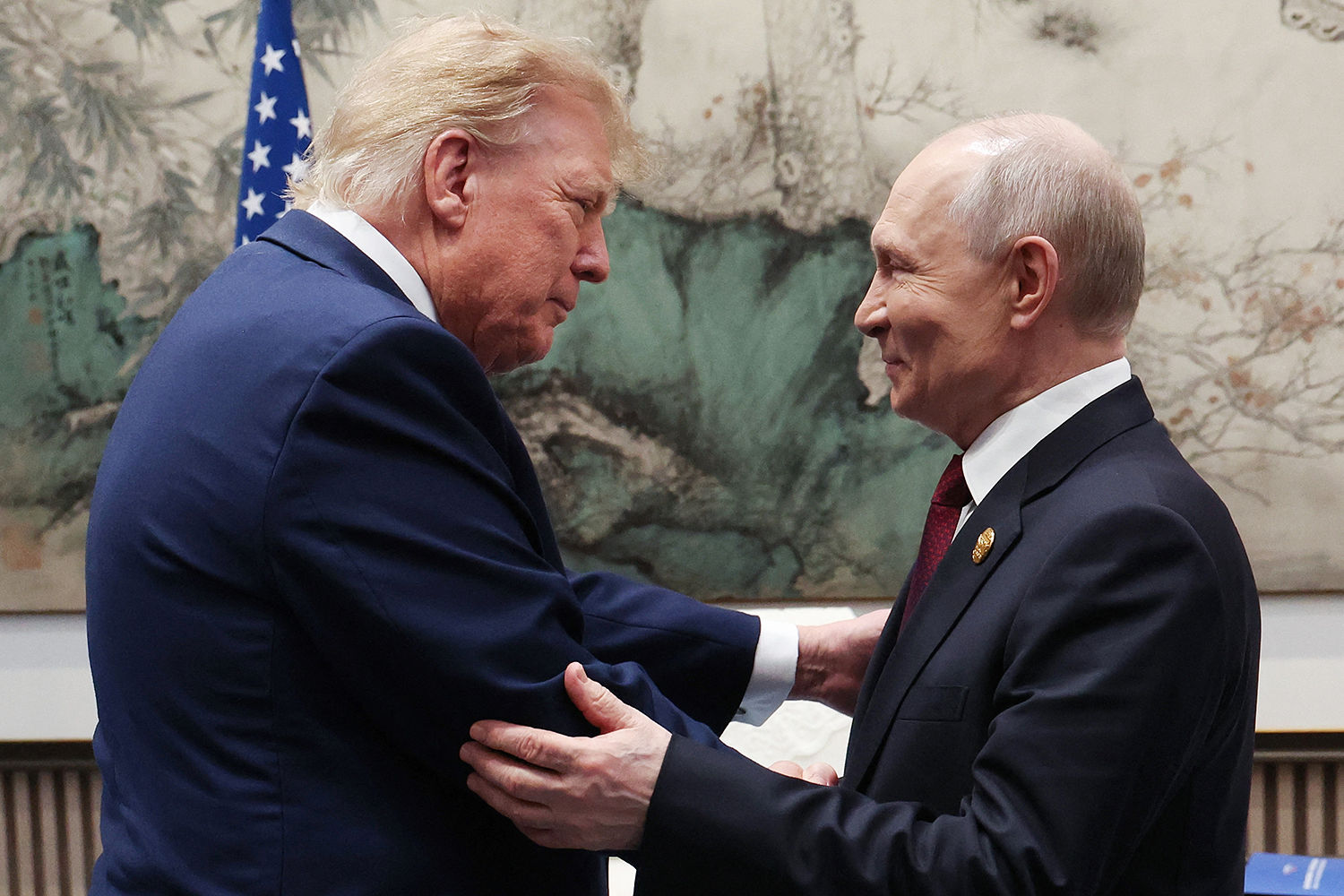
The immediate setting was a summit in China involving Trump, Putin and Chinese President Xi Jinping. Trump greeted Putin as his “friend,” and a photograph of the two was posted with the caption “My Friend.” On Friday, at a White House briefing, Trump declined to say whether Putin was a friend to the United States, saying he could not speak for America. The exchange left a basic question hanging: was the warm language a diplomatic courtesy, or did it signal a more substantive judgment?
On ABC’s This Week, anchor Jonathan Karl put that question directly to Clayton. The intelligence chief argued that the photograph and the word “friend” belonged to a particular setting: a meeting among the three leading nuclear powers, where the purpose was to prevent a nuclear incident. In that context, he said, the word was appropriate. But when Karl asked whether Putin was America’s friend, Clayton answered that he was not America’s friend in Ukraine. Clayton’s ABC interview thus offered a distinction between the language of high-level nuclear diplomacy and Russia’s conduct in the war; it did not explain how the administration’s broader policy toward Moscow should be judged.
On CNN’s State of the Union, Dana Bash asked a similar question. Clayton did not draw the Ukraine distinction there. Instead, he praised Trump as a highly capable conductor of foreign policy and said he trusted him completely, whatever language the president chose. The answer defended the president’s discretion, but it offered little account of the substance behind the wording. The CNN discussion sharpened the contrast with Clayton’s more specific response on ABC: one answer stressed trust in Trump, while the other identified a clear limit to calling Putin a friend.
That distinction matters because words from the president are not merely private courtesies when they concern an adversary at war with a country whose interests are at stake. Diplomatic tact can be useful; ambiguity can also be exploited. The reports give no evidence that the summit’s language changed American policy, and it would be careless to claim that it did. But when the president will not define the relationship and the intelligence chief says he trusts the president whatever language he uses, the public is left to infer the meaning from the conduct and the stated policy. That is a poor substitute for an explanation.
Clayton faced other questions that made the Sunday appearances more consequential than a semantic dispute. Karl asked whether there had been an attack on the Capitol on January 6, 2021. Clayton said he would not relitigate the issue, rather than directly answering. The question concerned a public event, not an intelligence assessment whose details had to remain secret. His refusal therefore invited criticism that the country’s senior intelligence official was avoiding a plain description. A separate site report concerns a nominee for an election-security role who also said January 6 was not an “attack”; the questions are related, but the people and offices are different. The separate election-security controversy should not be mistaken for Clayton’s own answer.
The technology questions brought a different kind of uncertainty. Karl asked Clayton whether he knew where Alice Huang, a Chinese technology executive, was; Clayton said he did not. Karl noted reports that she was in China. In a separate interview on Fox News Sunday, Shannon Bream asked whether the highest-level U.S. technology had certainly been kept from China. Clayton acknowledged that some chips had ended up where they should not. The reports describe this as part of a widening Nvidia controversy and say Commerce Secretary Howard Lutnick’s department has faced bipartisan criticism over chip-export controls. They do not establish where the chips went, how they got there, or what responsibility any particular official bears. Those questions require answers, not insinuation.
The summit itself has drawn broader attention to the relationship among Trump, Putin and Xi. Trump’s friendly public presentation of Putin prompted rebukes from European figures, according to a related report; another account describes concerns about China-Russia intelligence sharing at the meeting. The summit’s European reaction and concerns about intelligence sharing help explain why the photograph carried weight beyond its setting. Yet the material here does not establish that intelligence was shared, or that the three leaders reached an agreement on any specific matter. The stated purpose Clayton gave was avoiding a nuclear incident; the larger strategic consequences remain uncertain.
Clayton’s Sunday appearances therefore left several matters open: what the administration’s language toward Putin means for policy in Ukraine, why he would not directly characterize January 6, and how U.S. chip controls failed to keep some advanced products from improper destinations. The reports do not say what action, if any, will follow, so the next step is not a foregone conclusion. For my part, a careful distinction between diplomatic courtesy and strategic judgment is sensible. It works only when officials explain the distinction plainly.
Update, November 22, 2026: Later reports say the three leaders issued a joint declaration pledging to uphold strategic stability, discuss reducing nuclear risks and preventing proliferation, and affirm that nuclear war cannot be won or fought. They also reported agreements to increase global oil supplies and pursue United Nations reform, alongside a statement emphasizing state consent and officials’ immunities in relation to the International Criminal Court. Separately, Clayton warned that replacing aging systems would bring further technology-service disruptions. Senate Democratic leader Chuck Schumer called the summit a historic embarrassment.
Reported by ABC News, Raw Story, CNN, The Philadelphia Inquirer, The Guardian, Daily Mail US, MSNBC.