Lutnick’s Nvidia scandal puts loyalty against oversight

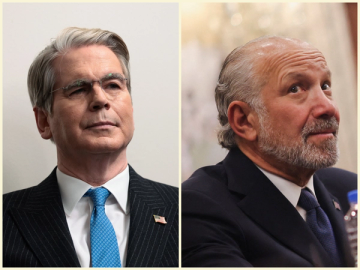
The question now hanging over Howard Lutnick is not just whether he will keep his job. It is whether the Commerce secretary delayed action on suspected chip diversions to China—and whether Congress can establish what he knew, what he did, and who benefited. The Lutnick Nvidia scandal has turned a dispute over export controls into a test of how much accountability a cabinet official owes when national security and private financial interests collide.
The controversy centers on Nvidia chips that reportedly reached Chinese technology firms through Megaspeed International, a Singapore-based company, and a Malaysian subsidiary. U.S. intelligence agencies suspect Megaspeed executive Alice Huang of ties to Chinese intelligence. Jensen Huang, Nvidia’s co-founder and chief executive, resigned after reports of an affair with her. The reports describe more than $4 billion in advanced AI semiconductors moving through the company, in violation of U.S. export controls. The allegations and suspicions are serious; they are not, by themselves, proof that Lutnick personally arranged or approved the shipments.
The central dispute inside the administration is about what happened before the scandal became public. Treasury Secretary Scott Bessent said several agencies—including Treasury, Defense and State—had wanted Megaspeed placed on a trade blacklist months earlier, while Commerce did not act. Bessent’s account puts the responsibility for explaining the delay squarely on Lutnick’s department. Commerce, in turn, said its investigation of Megaspeed had lasted two years, but did not clarify why the company escaped blacklisting. Lutnick has faced accusations that he ignored intelligence warnings or directed others to disregard them; the department’s handling and Lutnick’s role are now questions lawmakers want answered.
Republicans have joined the pressure. Senate Intelligence Committee chair Tom Cotton said Lutnick had repeatedly ignored warnings about chips being smuggled to China and faulted him for not taking the threat seriously enough. Senator John Kennedy called for Lutnick to explain what he knew. Senate Banking Committee chair Tim Scott has requested testimony from Lutnick and Huang next month, citing concerns about national security and the protection of sensitive technology. Lutnick has agreed to testify voluntarily, according to one account of the dispute and the coming hearing.
Democrats are preparing a broader inquiry when they take control of Congress in January. Senator Ron Wyden and Representative Richard Neal have demanded that Lutnick preserve records concerning Nvidia export decisions. They raised questions about whether political considerations influenced policy, particularly after President Donald Trump approved advanced Nvidia chip exports to China. Representatives Jamie Raskin, Gregory Meeks and Sydney Kamlager-Dove are also examining whether Lutnick’s official actions may have protected Cantor Fitzgerald from losses linked to scrutiny of Nvidia. The firm, which Lutnick formerly led, is now controlled by his sons. Democrats’ request for records on Lutnick’s Nvidia ties makes clear that investigators are looking beyond the regulatory delay to possible financial conflicts.
That is a separate line of inquiry from the chip-control question, and the two should not be blurred. The allegations involving Cantor Fitzgerald concern whether Lutnick’s public office affected the interests of a firm connected to his family. The export-control inquiry concerns whether his department acted on warnings about a suspected route for advanced chips to reach China. A commentator quoted in one report characterized the Cantor issue as ordinary cronyism rather than an apparent crime, while describing the national-security questions as more consequential. Neither characterization settles what investigators may find. The reported dispute over continuing chip sales to China shows why the policy stakes extend beyond one official’s tenure.
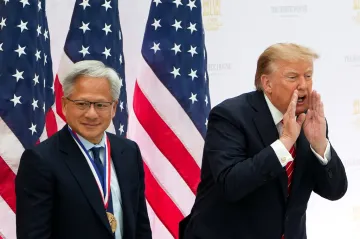
Trump has publicly backed Lutnick, saying he has not lost confidence in him and praising his business record. Their relationship goes back decades: Lutnick became a prominent corporate supporter, helped finance Trump’s political comeback and co-chaired his 2024 transition team. A report on the growing backlash describes Trump’s personal loyalty as a reason Lutnick remains in office, even as some Republicans criticize him. That account also raises the possibility that Lutnick’s private conversations with Trump about export restrictions could matter if he is dismissed and later defends himself. It is speculation, not evidence of what either man said.
The political calendar adds urgency. With Democrats set to assume control of Congress in January, Lutnick is now a likely target for hearings and document requests. The Senate Banking Committee’s planned testimony is a nearer-term step; the preservation demand and the House inquiry could establish a larger documentary record. The Republican criticism of Lutnick’s handling of warnings underscores that this is not simply a partisan fight over the administration. The key facts remain to be established: what warnings reached Commerce, when they arrived, why action stalled, and whether any private interest shaped the decisions.
For my part, the unresolved timeline is the detail I keep coming back to. A department’s explanation should be tested against records and testimony, not loyalty or partisan suspicion. If the evidence shows that warnings were sidelined, the public deserves to know who made that call and why.
Reported by The Guardian, Raw Story, The Daily Beast, MSNBC, The New Republic.