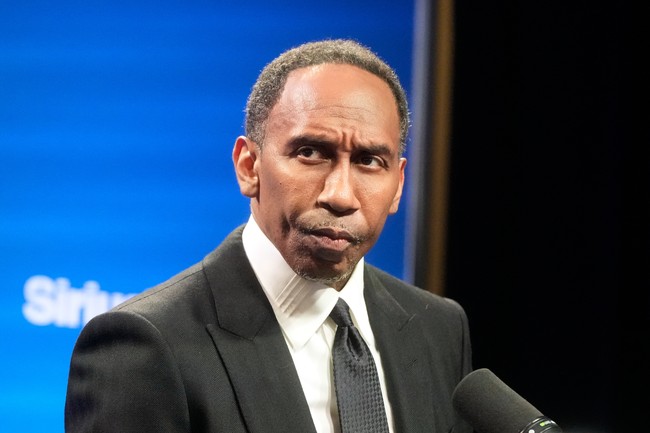
Stephen A. Smith Questions Democrats’ Reliance on Black Voters
Sports commentator Stephen A. Smith questioned whether Democrats will continue addressing Black voters’ concerns if the party can build support among other groups through immigration. Speaking at a Washington, D.C., salon called Kut Klose on November 18, he argued that Democrats take Black voters for granted and should focus on affordability, inflation, jobs and public safety.
Smith said immigration could help create a voting bloc that makes Black voters less politically important to the party. He also raised concerns about representation, noting that census population counts determine each state’s number of seats in the House and its Electoral College votes. The census counts residents regardless of citizenship, while noncitizens are barred from casting ballots in national elections.
His remarks have prompted debate about the Democratic Party’s relationship with Black voters and the political effects of immigration. Former Border Patrol official Gregory Bovino supported Smith’s argument, saying immigration affects citizens’ political influence through congressional apportionment.
Smith also said he was being criticized for raising questions about the party’s priorities. He challenged that criticism, arguing that Black Americans should be able to ask whether Democrats are responding to their needs. The discussion has drawn attention online to whether the party can rely on Black voters’ support without addressing their concerns.
Smith’s Immigration Claims Distract From Democratic Voters’ Concerns
Stephen A. Smith’s warning that Democrats could rely less on Black voters as immigration changes the electorate turns a legitimate debate about representation into an unsupported accusation about the party’s motives. At a November 18 barbershop discussion in Washington, D.C., the sports commentator argued that immigration serves to assemble a voting coalition and asked whether Democrats would still prioritize Black voters.
Smith urged Democrats to address affordability, inflation, employment and public safety. Those are real priorities for voters, but his claim that immigration is designed to secure electoral advantage goes further than the facts he cited. Census counts include residents regardless of citizenship and shape House representation; noncitizens are not legally permitted to vote in federal elections.
Black voters’ support is not a blank check, and Smith is right that elected officials should answer questions about whether they are delivering. But treating immigrant communities as a political instrument—and suggesting their growth means Black voters will be discarded—risks obscuring the actual policy choices at stake.
The argument has gained attention online, including support from former Border Patrol official Gregory Bovino, who said immigration affects citizens’ political influence through apportionment. The debate should focus on representation and policy, not assume a hidden plan to replace one group of voters with another.
Smith Challenges Democrats’ Immigration Politics and Black Voter Reliance
Stephen A. Smith is asking a question Democratic leaders would rather avoid: if immigration helps expand the party’s coalition, will they still work to earn Black voters’ support? Speaking at a Washington, D.C., barbershop on November 18, the sports commentator argued that Democrats could use immigration to build a voting bloc while neglecting Black Americans’ concerns.
Smith challenged the party to deliver on affordability, inflation, employment and public safety rather than assume continued support. His concern about political power also points to a basic feature of representation: census population counts include residents regardless of citizenship and determine House seats and Electoral College votes. Noncitizens, however, cannot legally vote in federal elections.
Former Border Patrol official Gregory Bovino backed Smith’s warning that immigration affects citizens’ political influence through congressional apportionment. The issue is not just campaign rhetoric; it is whether changes in population and representation leave communities with less influence and whether party leaders respond to voters’ needs.
Smith says he is being criticized simply for questioning Democratic priorities. Black voters should not be expected to accept that criticism as a substitute for answers. His challenge puts the party’s record on affordability, jobs and safety—and its assumptions about reliable support—at the center of the debate.
Reported by Breitbart, PJ Media.