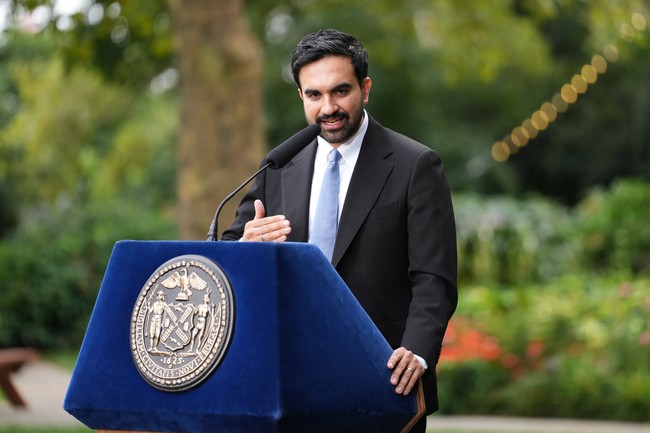
Mamdani’s Reforms Face New York’s Old Political Tests
Mamdani has proposed closing Rikers Island by 2032 and breaking up the NYPD’s Strategic Response Group, a unit created after the September 11 attacks. The proposals echo earlier reform efforts and have revived questions about how much influence a mayor can exert over public safety institutions in New York City.
James Barney’s new book, A Partnership Under Strain: David Dinkins, Coalition Politics, and the Challenge of Leading a City in Turmoil, examines the city’s first Black mayor and his attempts to address policing. Barney argues that Dinkins’s quiet leadership and difficulty building a shared political narrative weakened his agenda and reelection prospects. The book also describes the NYPD and its institutions as unusually independent from civilian control.
Dinkins campaigned in 1989 on hiring thousands of additional officers and extending police presence in communities of color by recruiting officers with comparable life experiences. His opponent, Rudy Giuliani, argued that the approach would divert officers from white neighborhoods. Dinkins’s mayoralty also faced public disorder, including the Crown Heights and PBA riots. The book argues that perceptions of disorder contributed to his defeat even as crime rates were falling.
The housing debate has also drawn attention to East Harlem. Of 27 rent-stabilized buildings put up for foreclosure auction, 26 received no bids; one smaller building sold for about $826,000. The properties were among 39 buildings containing roughly 900 apartments. Rent stabilization limits increases for covered homes, while landlords face rising operating costs.
The history of earlier administrations offers a political warning for Mamdani: reform efforts can face resistance from police institutions and voters concerned about crime. Dinkins’s experience also shows how the public framing of disorder can shape a mayor’s prospects and the fate of a broader agenda.
Mamdani’s Reform Push Meets a Police System Built to Resist Oversight
Mamdani has proposed closing Rikers Island by 2032 and breaking up the NYPD’s Strategic Response Group. Those proposals confront a department and surrounding institutions that have long exercised substantial independence from civilian oversight, a central lesson in James Barney’s new history of David Dinkins’s mayoralty.
Barney’s book, A Partnership Under Strain, describes Dinkins’s attempts to rein in police excesses and the limits he faced. Dinkins campaigned on hiring thousands of officers and increasing police presence in communities of color by recruiting officers with comparable life experiences. Giuliani attacked the plan as a threat to policing in white neighborhoods. The book argues that rhetoric about crime and disorder helped defeat Dinkins even as crime rates were falling.
Dinkins’s experience matters because the cost of losing a public-safety debate can extend beyond policing. Earlier progressive mayors, including Bill de Blasio, also pursued reforms; Mamdani is now facing a version of the same political test. The question is not only whether a mayor promises change, but whether a city’s institutions will answer to elected leadership.
Housing pressures offer another warning about the consequences of policy and market forces. At a foreclosure auction in East Harlem, 26 of 27 rent-stabilized buildings received no bids; a smaller property sold for about $826,000. The buildings were part of a group of 39 containing roughly 900 apartments. The episode underscores the vulnerability of tenants and properties when owners struggle with costs under rent limits.
New York’s history suggests that reform cannot be judged only by the promises made at City Hall. It also turns on who controls powerful institutions and whose account of public safety wins public support.
Mamdani’s Public-Safety Plans Invite a Familiar New York Gamble
Zohran Mamdani is proposing to close Rikers Island by 2032 and disband the NYPD’s Strategic Response Group. New York has seen ambitious reform efforts before, and David Dinkins’s mayoralty offers a caution: when residents perceive disorder, a mayor’s broader agenda can be put at risk.
James Barney’s new book on Dinkins examines how the city’s first Black mayor tried to address policing. Dinkins campaigned on hiring thousands more officers and bolstering police presence in communities of color by recruiting officers with comparable life experiences. Rudy Giuliani argued that this would draw police away from white neighborhoods. The book says perceptions of disorder helped sink Dinkins, despite falling crime rates.
Mamdani’s proposals come against that political history. Closing Rikers and replacing a specialized police unit are consequential changes to public safety, and past reform promises have not always been fulfilled. The city’s police department and related institutions also have significant independence from civilian control, making policy changes difficult to carry out.
A separate East Harlem foreclosure auction illustrates the risks surrounding rent-stabilized housing. Of 27 buildings put up for sale, 26 attracted no bids; one smaller building sold for about $826,000. The properties were among 39 buildings with roughly 900 apartments. Rent limits can help preserve affordability, but owners still face operating costs.
Dinkins’s experience shows how quickly arguments over policing can become a test of a mayor’s credibility. Mamdani’s plans will be judged not only by their goals, but by how New Yorkers assess their consequences for safety and city life.
Reported by PJ Media, Jacobin.