Enten Says Midterm Results Do Not Signal a Democratic Mandate
On November 20, CNN data analyst Harry Enten cautioned Democrats against treating their victories in the 2026 midterm elections as a broad endorsement of the party. Democrats are set to control both chambers of Congress starting in January.
Enten said more Americans viewed the Democratic Party unfavorably than favorably, with its net favorability at six points underwater. He contrasted that figure with the party’s standing after earlier midterm victories: three points above water after the 2018 elections and 26 points above water after the 2006 elections.
He argued that the results reflected opposition to President Donald Trump more than support for Democrats as a party. CNN anchor Kate Bolduan described the result as resembling a conditional arrangement, and Enten agreed.
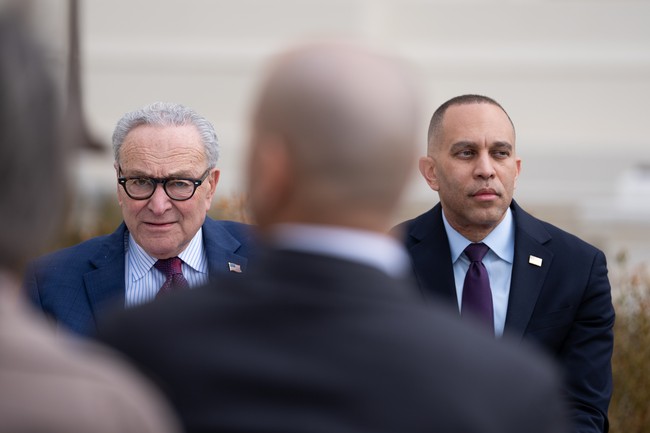
Democratic leaders also had low favorability ratings in the figures discussed: Senate Minority Leader Chuck Schumer was 30 points underwater, while House Minority Leader Hakeem Jeffries was 17 points underwater. Enten characterized the pair as highly unpopular.
Enten also cited polling showing that 67% of Americans worried Democrats would go too far in investigating the Trump administration. That included 49% of Democrats. He said the party’s next major legislative proposal, referred to as HR-1, could show whether its leaders had understood voters’ message or mishandled the opportunity.
Midterm Gains Give Democrats a Chance, Not a Blank Check
Democrats won control of both chambers in the 2026 midterms, but the result is no blank check for the party—or permission to ignore what voters want next. On November 20, CNN analyst Harry Enten said the party’s net favorability stood six points underwater, far below its position after the 2018 and 2006 midterms.
Enten said the gains were more a rejection of President Donald Trump than an endorsement of Democrats. That is a warning to an incoming majority: opposition can win seats, but it does not automatically build trust in the party or its leaders.
The numbers make that challenge plain. Senate Minority Leader Chuck Schumer was 30 points underwater, and House Minority Leader Hakeem Jeffries was 17 points underwater. Enten said both were deeply unpopular.
Democrats also face public concern about their priorities. Enten cited polling showing 67% of Americans worried the party would go too far investigating the Trump administration, including 49% of Democrats. Those concerns deserve attention, not dismissal. As Democrats prepare to take control in January, their next major proposal, HR-1, will help show whether they can turn electoral gains into a credible agenda—or squander the opportunity by failing to hear voters.
Democrats Claim a Mandate Despite Weak Favorability
Democrats are preparing to control both chambers of Congress in January, but the election results do not amount to the sweeping endorsement party leaders claim. On November 20, CNN analyst Harry Enten said the Democratic Party’s net favorability was six points underwater, a poor showing compared with its standing after the 2018 and 2006 midterms.
Enten’s central point was that voters acted against President Donald Trump, not out of strong support for Democrats. That distinction matters: a victory over an opponent is not proof that the incoming majority has public backing for whatever it chooses to pursue.
The party’s leaders are unpopular, too. Enten put Senate Minority Leader Chuck Schumer 30 points underwater and House Minority Leader Hakeem Jeffries 17 points underwater, calling them a highly unpopular pair.
And the public is already wary of the incoming majority’s investigative agenda. Enten cited polling showing 67% of Americans fear Democrats will go too far investigating the Trump administration; even among Democrats, the figure was 49%. If the party treats its midterm gains as permission to prioritize investigations, rather than listening to those concerns, it risks turning a temporary win into another political liability. Enten said HR-1 will offer a test of whether Democrats have absorbed the voters’ message.
Reported by Twitchy, PJ Media, Hot Air.