Nayib Bukele makes his next move in El Salvador’s election

Nayib Bukele has formally entered El Salvador’s February 28 presidential election, seeking a third consecutive term after his party and Congress changed the rules that once barred indefinite reelection. The Bukele third term bid comes with striking public support and little effective opposition. But his candidacy also sharpens a central question: whether an election can be genuinely democratic when the governing party has steadily weakened the limits on presidential power.
Bukele filed his paperwork with the Supreme Electoral Tribunal on Thursday night, November 19. His party, New Ideas, commands a large majority in Congress and had selected him as its candidate in July. Supporters gathered outside the tribunal with signs backing him for 2027, while candidates for 60 legislative seats and 44 municipal councils also submitted their registration documents. The ceremony was both an election formality and a political display, in keeping with a leader whose public events often carry the force of campaign rallies.
The case for Bukele remains rooted in security. His crackdown on gangs, launched in 2022, has sharply reduced violence, according to the reports, and helped lift his approval to around 90 percent in recent polling. El Salvador had been terrorized by criminal groups, and many residents say they would rather accept restrictions on democratic freedoms than return to that insecurity. The crackdown has also brought accusations of widespread human rights abuses. Those competing realities help explain why criticism of Bukele’s concentration of power has not translated into a strong electoral challenge. The reports on his candidacy describe a popular president whose opponents have been weakened both by his government’s actions and by the failures of older political parties.
The legal and institutional path to another term has changed over several years. El Salvador’s Constitution had long prohibited consecutive reelection, against the background of a fragile democracy. In 2024, a Supreme Court dominated by Bukele allies cleared the way for him to run again. Then, in 2025, the governing party’s congressional majority eliminated presidential term limits and advanced the national election timetable from 2029 to 2027. Opposition figures and international observers say the third-term plan is illegal; Bukele’s government presents the country as an open democracy in which all parties may compete. That dispute concerns more than campaign procedure: it is about whether constitutional rules can be reshaped by the same political force that benefits from the changes.
Bukele has directly challenged critics to observe the process. After filing, he said international bodies, including the United Nations and the Organization of American States, and journalists were welcome to come and assess democracy in El Salvador. He pointed to the participation of rival parties and urged Salvadorans to vote, arguing that ballots, not opinion polls, decide elections. His supporters see an elected leader delivering security and asking voters to renew his mandate. Critics see courts and political institutions brought under his influence, alongside pressure on opposition groups, watchdog organizations and journalists. Human Rights Watch’s Americas deputy director, Juan Pappier, said the concentration of authority had defined Bukele’s presidency. These are claims about public conduct and the state of institutions, not a judicial ruling on the legality of this particular candidacy.
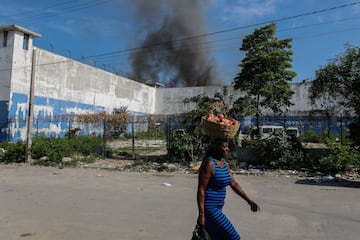
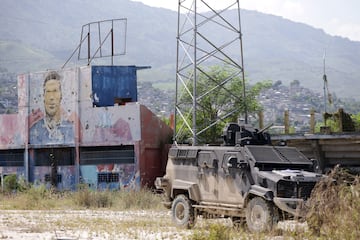
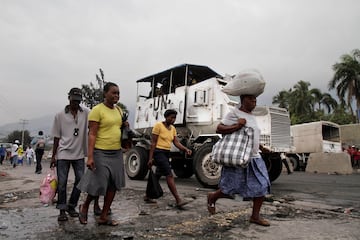
The campaign is unfolding alongside a striking extension of Bukele’s security policy abroad. After four Salvadoran aviation technicians disappeared in an October gang attack in Haiti, Bukele sent about 2,500 Salvadoran troops there to fight gangs. He has portrayed the deployment as an effective show of force. Critics argue that the Haiti operation can also rally domestic support, blunt international scrutiny and advance his longer-term political project. The reports establish the deployment and the competing interpretations; they do not settle what the operation will achieve. Related reporting describes growing international concern over the Haiti mission, while another account focuses on the response of Haitians facing gang violence and calls for security in the country.
The weakness of the opposition is part of the story, not just a consequence of the latest rules. Traditional parties helped bring Bukele to power in 2019 after years of corruption and political failures, and the reports describe today’s opposition as largely irrelevant. One party, Vamos, said it would not take part in the presidential election because it considered the process unconstitutional and did not want to legitimize indefinite reelection. That choice reflects the dilemma facing challengers: participating may lend credibility to rules they reject, while abstaining leaves the ballot even less contested. The reports do not establish how many voters will follow that argument or whether it will change the outcome.
For my part, the security gains and the democratic questions should be judged separately, not traded away as if only one can matter. A government can earn real support for reducing violence and still face serious questions about checks on its power. The February vote will show how Salvadorans weigh those claims, but the rules and institutions around the vote matter too.
The immediate next step is the February 28 election, in which Bukele is strongly positioned to win according to the reports. The larger test will outlast election night: whether El Salvador can preserve meaningful political competition and independent checks on whoever governs, while maintaining the security that has become the administration’s strongest argument. The Spanish-language account of the campaign adds Bukele’s own appeal for voters to turn out and the opposition’s refusal to endorse what it calls an unconstitutional contest. Neither high approval nor a crowded ballot alone answers the deeper question of how much power a president should be able to keep.
Reported by KPRC 2 Click2Houston, The Philadelphia Inquirer, Breitbart.