Mullin’s TV Flubs Put White House Messaging Under Strain

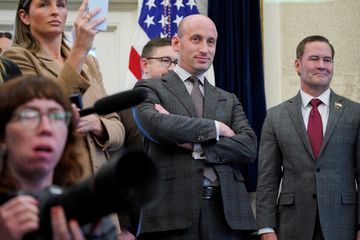
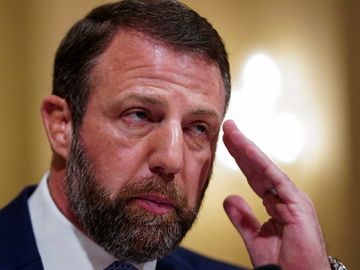
The White House has shifted Homeland Security Secretary Markwayne Mullin out of the public-facing response to recent technology disruptions after his television comments frustrated some officials, according to reports. The Markwayne Mullin messaging shift was reportedly coordinated by chief of staff Stephen Miller from Manila, with Secretary of State Marco Rubio and Jay Clayton, the national intelligence director, taking on more of the public role. The administration says it wants the right officials addressing each issue; a separate account says Mullin’s statements had become a source of internal anger. The dispute is about more than one awkward interview: it has put the administration’s message discipline, and Mullin’s standing, under a brighter spotlight.
The most detailed account says Miller intervened while traveling in Asia with President Donald Trump, after Mullin discussed a possible connection between infrastructure problems and artificial intelligence. Mullin referred to advice from an unnamed technology figure, taking care to say the person was not Elon Musk. His remarks drew strong reactions in White House chats, according to sources cited in Politico’s report. The reported response was to have the national intelligence director and Rubio take over more of the administration’s public explanations.
The underlying disruptions have touched federal agencies and private companies, and the reports describe different incidents rather than one confirmed common cause. Mullin told viewers there was no evidence of a cyberattack, while also relaying the unnamed source’s speculation about AI systems. In another interview, he expressed high confidence that a cyberattack was not responsible, but qualified that certainty. The distinction matters: officials have said there is no indication of a coordinated malicious attack, but the reports do not establish a single technical explanation for every outage. Coverage of the nationwide flight halt shows why clear, careful briefings matter when disruptions affect ordinary travelers.
There was also an earlier point of friction over immigration. Last week, Mullin told reporters he could be open to a policy granting permanent legal status to some people brought to the United States as children. That appeared to depart from the administration’s harder-edged public line and revived attention to DACA, the program that protects some immigrants who arrived as children from deportation. The reports do not say that a new policy was adopted. They do show how a secretary’s off-the-cuff answer can create uncertainty on a subject where the administration has a clear political message and where the practical consequences are substantial.
Accounts differ on what the staffing shift means. Sources speaking to Politico described Miller’s move as a response to Mullin’s mixed messaging and said he had been benched, at least for now. Another administration official disputed the idea that Mullin had angered colleagues, telling Blaze Media that the government was matching messengers to the subject and the official best equipped to discuss it. That official characterized the roster as evolving along with the incidents. The two explanations are not identical: one describes a correction after a communications problem; the other, a deliberate division of duties. There has been no reported announcement that Mullin is losing his job.
Mullin’s public role has also been clouded by scrutiny of his weekend travel. The New York Post reported that he took a family trip to Baton Rouge for the Texas-LSU football game while people were dealing with the effects of a Friday FAA ground stop. Mullin then devoted his opening statement at a House Homeland Security Committee hearing to defending the trip, according to that report. The same coverage says he later appeared at a charity event at Mar-a-Lago. The football trip prompted criticism, but the supplied accounts do not establish that it played a part in Miller’s decision to redirect the administration’s media appearances. The criticism of Mullin has continued to grow, as reflected in calls for his resignation.
Trump has shown impatience with coverage of the disruptions, saying in a Fox News interview that he thought the press was enjoying the situation. That complaint does not resolve the administration’s communications problem. When officials offer different theories, or a cabinet secretary cannot point clearly to the basis for a claim, reporters have an obvious opening—and the public has reason to ask what is known, what remains uncertain, and who is responsible for finding out. The press has often missed the mark, but the cure for bad coverage is not a muddled briefing. It is a better one.
For my part, the most revealing detail is the administration’s need to separate technical expertise from political messaging. A confident sound bite is no substitute for a clear account of what investigators know. The next test is whether the White House can explain the disruptions consistently while making clear what remains unsettled.
The immediate change is straightforward: the national intelligence director and Rubio have become prominent messengers, while Mullin’s television role appears reduced. The larger questions remain open. Will the administration settle on a clearer account of the outages, and will Mullin return to the briefing rotation? The reports leave his job status uncertain, and the White House’s alternative explanation means the sidelining story itself remains contested.
Reported by The New Republic, New York Post, The Daily Beast, Raw Story, The Blaze.