Reporters’ Phones Collected as Air Force One Leaves China
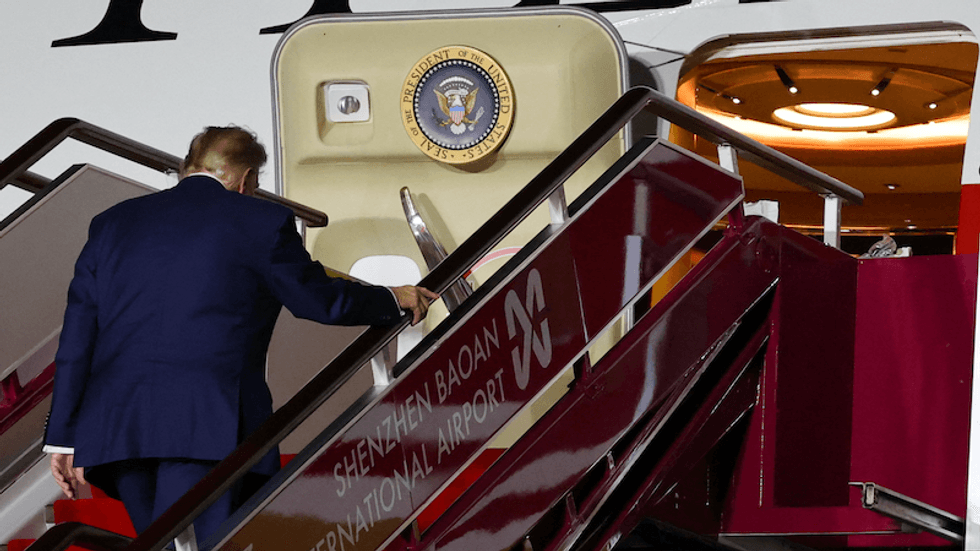
Journalists traveling with President Donald Trump were asked to give their phones to U.S. officials as Air Force One prepared to leave Shenzhen on November 19. The stated reason was security. Reporters said they learned of the arrangement only after boarding, and one correspondent described it as highly unusual. The phones were being held temporarily, but officials had not said when they would be returned or what specific security issue prompted the move.
The collection came hours after Trump met Chinese leader Xi Jinping and Russian President Vladimir Putin in Shenzhen. The three leaders posed beneath a sign describing their gathering as a summit, though senior U.S. officials had earlier used the term “trilateral meeting.” China and Russia issued matching statements describing four areas of agreement, including United Nations reform, refined petroleum supply, the International Criminal Court and reducing the risk of nuclear confrontation. The administration had not issued its own version by November 19.
Trump had raised the possibility of meeting North Korean leader Kim Jong Un during the trip, but no such meeting took place in China. A reporter suggested the phone collection might mean the plane was not heading directly home, while its destination remained unclear. During an earlier part of the trip, White House staff discarded Chinese-issued credentials, delegation pins and burner phones over concerns that Beijing might have bugged them.
White House Takes Reporters’ Phones Without Warning
The White House’s decision to collect journalists’ phones as Air Force One prepared to leave Shenzhen raises a clear concern about transparency. Reporters said they were not told about the arrangement until after boarding, and the stated security rationale came without an explanation of the specific threat or when their devices would be returned.
The timing makes the episode more consequential: it followed Trump’s meeting with Xi Jinping and Vladimir Putin, where the three leaders presented themselves beneath a sign calling their gathering a summit. China and Russia issued a joint declaration describing agreements on issues including nuclear risks, while the White House had not published its own version by November 19.
Trump had also raised the prospect of meeting North Korean leader Kim Jong Un, though that meeting did not happen in China. A journalist wondered whether the phone collection signaled a change in the plane’s route, and its destination remained unclear. Security may be important, but a last-minute demand affecting the press corps—without a clear account of its basis—invites legitimate questions about openness and accountability.
Officials Cite Security in Collecting Phones on China Flight
U.S. officials collected the phones of journalists traveling with President Donald Trump as Air Force One prepared to leave Shenzhen, citing security reasons. The request came after Trump met with Xi Jinping and Vladimir Putin, and the trip had already included concerns that Chinese-issued credentials and devices could have been bugged.
The collection was unusual, and reporters said they were not informed until they had boarded. Officials had not specified the concern behind the measure or said when the phones would be returned. But the security rationale matters: protecting a presidential flight and its passengers is a serious responsibility, particularly during travel in a country where White House staff had discarded credentials, pins and burner phones over fears of surveillance.
The gathering with Xi and Putin produced matching statements from China and Russia on issues including nuclear risks and the International Criminal Court. The White House had not released its own version by November 19. Trump’s floated possibility of meeting Kim Jong Un did not result in a meeting in China, and the plane’s destination remained unclear. The unusual phone policy deserves an explanation, but it should not be treated as proof of an undisclosed political motive.
Reported by Raw Story, Daily Mail US, The New Republic.