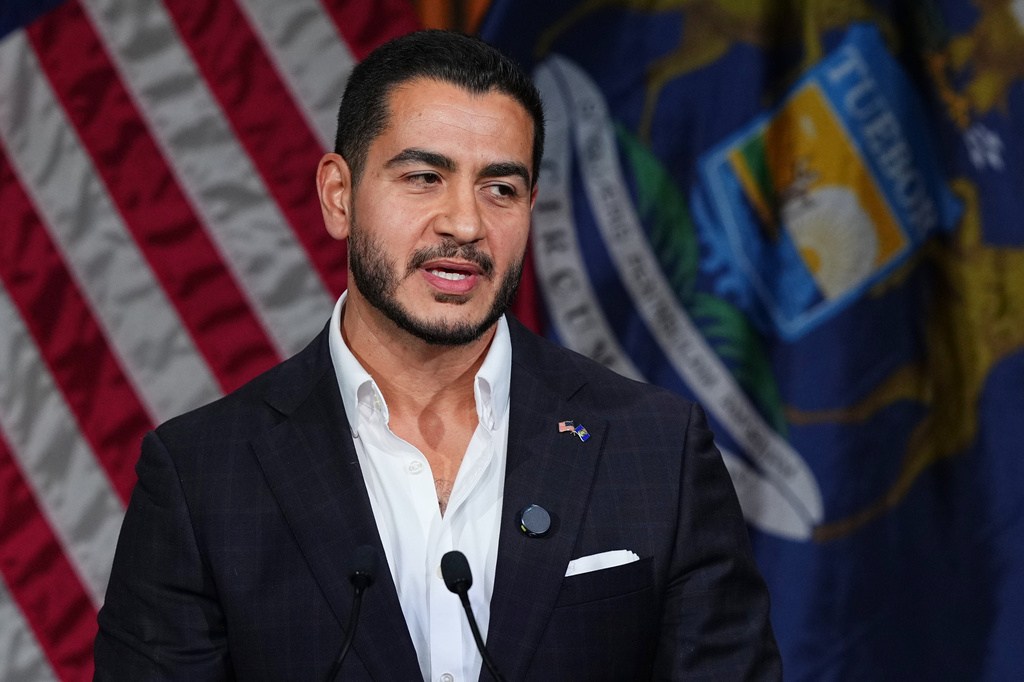
El-Sayed Pitches Trump on Rebranding Medicare for All
El-Sayed addressed Trump in a joking video posted on X, suggesting the president could call universal health coverage “Trumpcare for All” and put his name on it. The pitch repackaged a policy El-Sayed campaigned on: Medicare for All.
Polling offers different measures of public support. In a September survey, KFF found 66% favored a national plan in which everyone received insurance through one government program. But after respondents heard potential drawbacks, support shifted: 76% opposed the plan when told it could cause treatment delays, and 65% opposed it when told most people would pay more in taxes. Positive descriptions also raised support.
An Axios/Ipsos poll that described the proposal as a public insurance program that would take the place of most private coverage found 43% in favor, 24% opposed and 32% unsure. The White House criticized the idea as a government takeover that could undermine access to care. It also cited an administration analysis estimating Medicare for All would add about $47.4 trillion to the federal deficit from 2027 through 2036 without new taxes or revenue. El-Sayed is due to enter the Senate on January 3.
Trump Could Put His Name on Universal Health Care
El-Sayed offered Trump a chance to claim ownership of a popular goal: universal health coverage. In a joking video, the Michigan Democrat suggested calling Medicare for All “Trumpcare for All” and putting the president’s name on it.
KFF found 66% support for a national plan covering everyone through one government program. Support rose to 76% when people heard the plan would guarantee insurance as a right, and 75% when they heard it could eliminate premiums and lower out-of-pocket costs for most people. An Axios/Ipsos survey found 43% support when the policy was explicitly described as a public insurance program replacing most private plans.
The findings point to the stakes in a debate over health costs and access. The White House answered with warnings about a government takeover and an administration estimate that Medicare for All would add about $47.4 trillion to the deficit over 2027–2036 without additional revenue. That objection does not erase the public appetite for action: 66% in the Axios/Ipsos poll said federal leaders ought to allocate more money from taxes to bring down health costs. El-Sayed is set to join the Senate on January 3.
Medicare for All Pitch Hides Its Costs and Trade-Offs
El-Sayed’s playful “Trumpcare for All” pitch asks a Republican president to attach his name to a sweeping expansion of government-run health coverage. But the polling picture depends heavily on how the policy is presented—and support falls when voters hear about possible consequences.
KFF found 66% initially favored a single government plan. After respondents were told the proposal could delay tests and treatments, 76% opposed it; 65% opposed it when told most Americans would pay more in taxes. An Axios/Ipsos poll, which specified that public insurance would take the place of most private plans, found 43% support, against 24% opposed and 32% unsure. Among Republicans in that survey, 52% opposed the plan.
The White House called the proposal a government takeover that could damage access to care. It also cited an administration analysis estimating a $47.4 trillion increase in the federal deficit from 2027 through 2036 without new taxes or revenue. Those are central questions for a plan that could replace much of the private insurance system, not details a new label can settle. El-Sayed is due to take his Senate seat on January 3.
Reported by The Washington Examiner, Newsweek.




