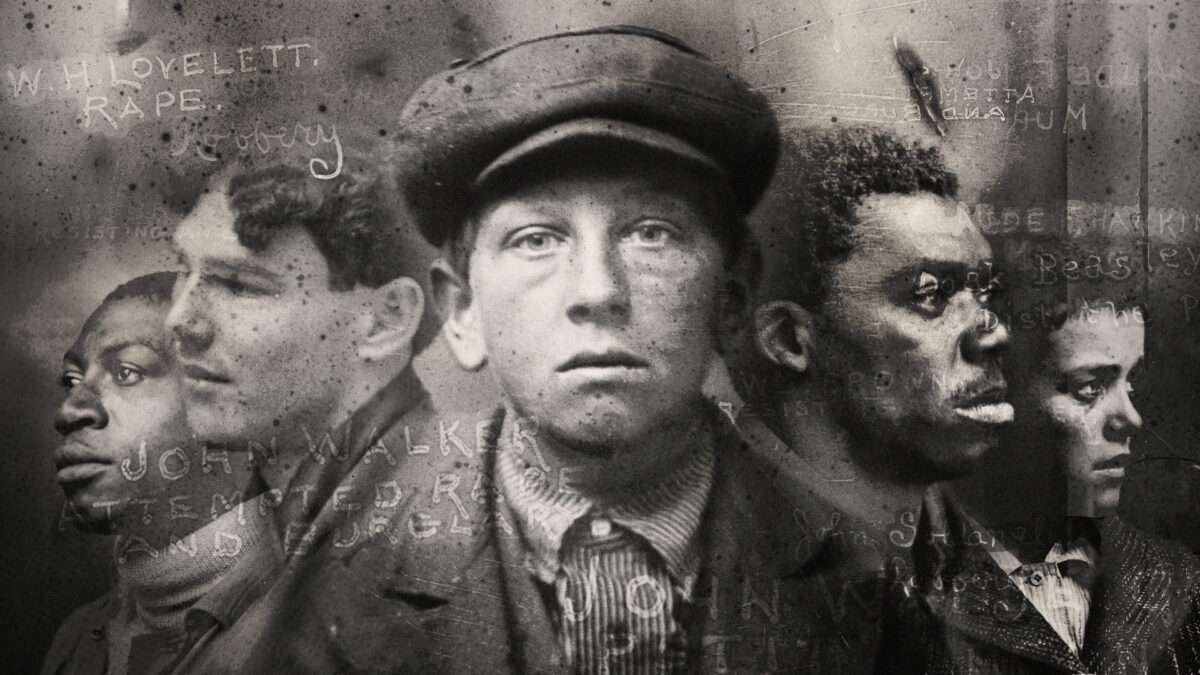
PBS Series Traces America’s History of Crime and Punishment
Lynn Novick directs the series, with Ken Burns serving as executive producer; it examines how the country has defined crime and sought to shape punishment. Its story reaches back to the early 19th century, when American reformers developed the penitentiary as an alternative to public punishments and frequent executions inherited from England’s criminal code.
Those reformers hoped prisons could improve people, but experiments in extreme isolation brought grim consequences. The series follows later cycles of prison scandal and public alarm about crime, showing how the country repeatedly reconsidered punishment without resolving the debate over what a fair and humane system should be.
A previewed episode on the turn toward tougher policies begins with the 1971 Attica prison uprising, then covers mandatory minimum sentences, prison expansion in the 1980s and the victims’ rights movement. During the retaking of Attica, state police killed 30 incarcerated men and nine hostages. The documentary also draws on archival material, interviews with historians and firsthand accounts, including those of former officers and inmates.
The four episodes take on a subject that intersects with many other parts of U.S. history, including Prohibition, Japanese internment during World War II and the criminalization of abortion before Roe v. Wade. The series features civil rights lawyer Bryan Stevenson, Philadelphia District Attorney Larry Krasner and former California Gov. Jerry Brown, among others.
PBS Series Shows the Human Cost of America’s Punishment Cycles
Crime and Punishment in America follows a familiar and troubling pattern: prison systems are built with grand promises, fail, and are followed by another wave of punishment. Lynn Novick directs the four-part PBS series, with Ken Burns serving as executive producer; it traces that history from the creation of the penitentiary in the early 19th century.
The first reformers sought to replace public penalties and executions, but their confidence in extreme isolation produced fatal experiments. The documentary also examines the turn toward tougher policies, including mandatory minimum sentences and the prison-building boom of the 1980s. Its account of Attica includes the 1971 uprising and the police retaking of the prison, during which 30 incarcerated men and nine hostages died.
The history raises the question of whether repeated expansions of punishment have delivered the fair and humane system Americans have sought. The series follows changing public responses to prison scandals and fear of crime, and includes interviews with historians, former officers and incarcerated people. Its scope also reaches into issues such as Japanese internment and abortion’s criminalization before Roe v. Wade.
The documentary debuts November 16. Its account puts the human costs and recurring failures of punishment at the center of a debate too often narrowed to demands for tougher laws.
PBS Series Revisits Crime, Punishment and the Push for Order
Crime and Punishment in America examines how the United States has struggled to balance humane treatment with public safety. Lynn Novick directs the four-part PBS series, with Ken Burns as executive producer; it traces the development of prisons and criminal justice across American history, including recurring periods of concern about crime.
The series’ account of the modern tough-on-crime era begins with the 1971 Attica uprising and moves through mandatory minimum sentences, expanded prison construction in the 1980s and the growth of the victims’ rights movement. During the police operation to retake Attica, 30 incarcerated men and nine hostages died, a stark reminder of the consequences when a prison standoff ends in violence.
The documentary also describes how public attitudes swung between outrage over prison scandals and anxiety about crime. That history matters: debates over sentencing and incarceration involve not only the failings of institutions, but also how society responds to crime and recognizes victims. The series features interviews with historians, former correctional officers and inmates, as well as figures including Philadelphia District Attorney Larry Krasner and former California Gov. Jerry Brown.
Debuting November 16, the series ranges across four centuries of policing, prisons and punishment. Its historical account offers context for the difficult choices involved in creating a system that is both just and capable of protecting the public.
Reported by Reason, PBS NewsHour.


