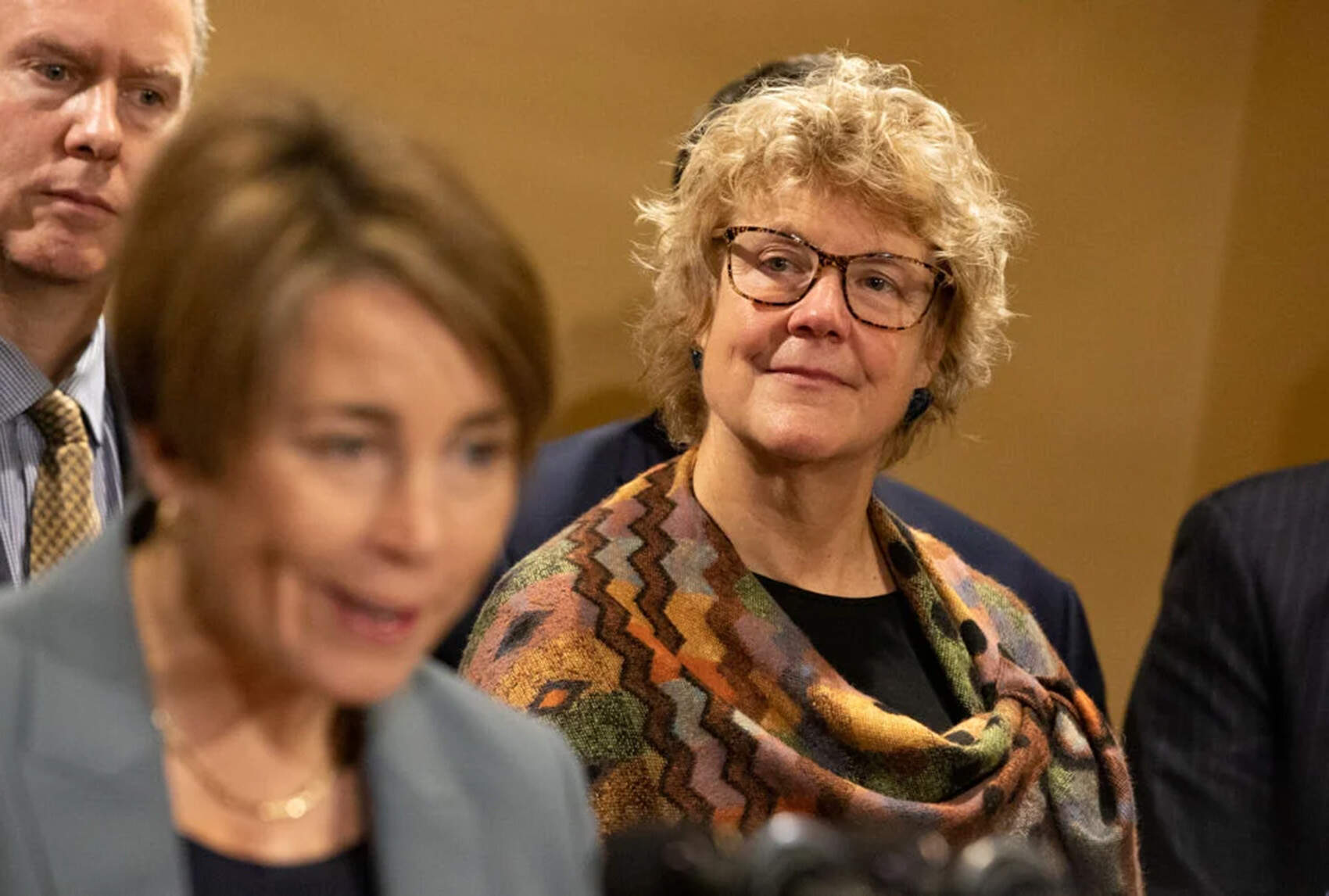
Rebecca Tepper to Leave Healey Administration on December 4
On November 16, the Healey administration announced that Tepper will step down on December 4. Healey plans to appoint Cooper to lead the state’s energy and environmental agency temporarily while she searches for a permanent successor. Tepper has not decided what she will do next and said she wants time to rest and read.
The transition comes as Healey and lawmakers work on measures addressing electricity costs, a growing concern for residents and businesses. Two bills Tepper led—a measure on energy affordability and an environmental bond bill—remain in conference committee negotiations.
Tepper oversaw six agencies covering energy, the environment and natural resources, with about 3,000 employees, and chaired three related public bodies. Her work included efforts to add clean energy to the grid, upgrade transmission infrastructure and speed up energy permitting. She also helped create climate-resilience planning programs for municipalities.
She promoted regional coordination on grid reliability and energy development, including work with other New England states and Canadian partners. Last week, she announced a collaboration with Nova Scotia on developing its first offshore wind farms.
Tepper has worked in state government for 17 years, including roles at the Energy Facilities Siting Board and Department of Public Utilities, and spent eight years working with Healey in the attorney general’s office before joining her administration in 2023. Healey praised Tepper’s work on clean-energy projects, transmission and environmental protection. Cooper has held senior roles overseeing environmental policy and conservation investments.
Tepper’s Exit Puts Clean-Energy Progress at a Pivotal Moment
Tepper’s departure creates a leadership change at a consequential moment for Massachusetts’ clean-energy transition. The secretary, who leaves on December 4 after serving through Gov. Maura Healey’s first term, helped advance clean-energy projects, transmission upgrades and faster permitting. Healey will appoint environmental undersecretary Stephanie Cooper as interim secretary while seeking a permanent replacement.
The next secretary will take over amid high electricity costs and stalled negotiations on two bills Tepper led: an energy-affordability measure and an environmental bond bill. The state is also debating whether it can achieve its midcentury emissions-reduction goals or ought to revise them.
Tepper worked to expand clean power and grid capacity, build climate resilience and coordinate energy projects across New England and with Canadian partners. Last week, she announced a partnership with Nova Scotia focused on that province’s first offshore wind farms. Healey credited her with advancing major clean-energy projects and expanding solar and storage on the grid.
Tepper said she was proud of her work on clean infrastructure and natural-resource protection. Her departure leaves Healey to choose who will lead these efforts in the administration’s second term, while affordability legislation remains unresolved.
Tepper’s Departure Leaves Energy Costs and Grid Choices Unresolved
Tepper’s exit comes as electricity costs weigh on Massachusetts residents and businesses, with two bills she led still stalled in legislative negotiations. One addresses energy affordability; the other is an environmental bond bill. Healey will appoint Undersecretary Stephanie Cooper interim secretary after Tepper leaves December 4.
The transition gives Healey a chance to select a new official to lead energy policy in her second term. That choice matters as the state pursues clean-energy projects while weighing whether it can achieve its midcentury emissions-reduction goals or ought to revise them.
Tepper oversaw efforts to bring more clean energy onto the grid and improve transmission infrastructure, and backed regional coordination with New England states and Canadian partners. Last week she announced a Nova Scotia collaboration on developing the province’s first offshore wind farms. Healey praised Tepper’s work on major clean-energy projects and cutting permitting delays.
Tepper, who has held state roles for 17 years, said she plans to take time off and has not settled on her next step. The administration now faces the task of choosing a permanent successor as it works to address energy affordability and determine the direction of its energy agenda.
Reported by The Boston Globe, CommonWealth Beacon.