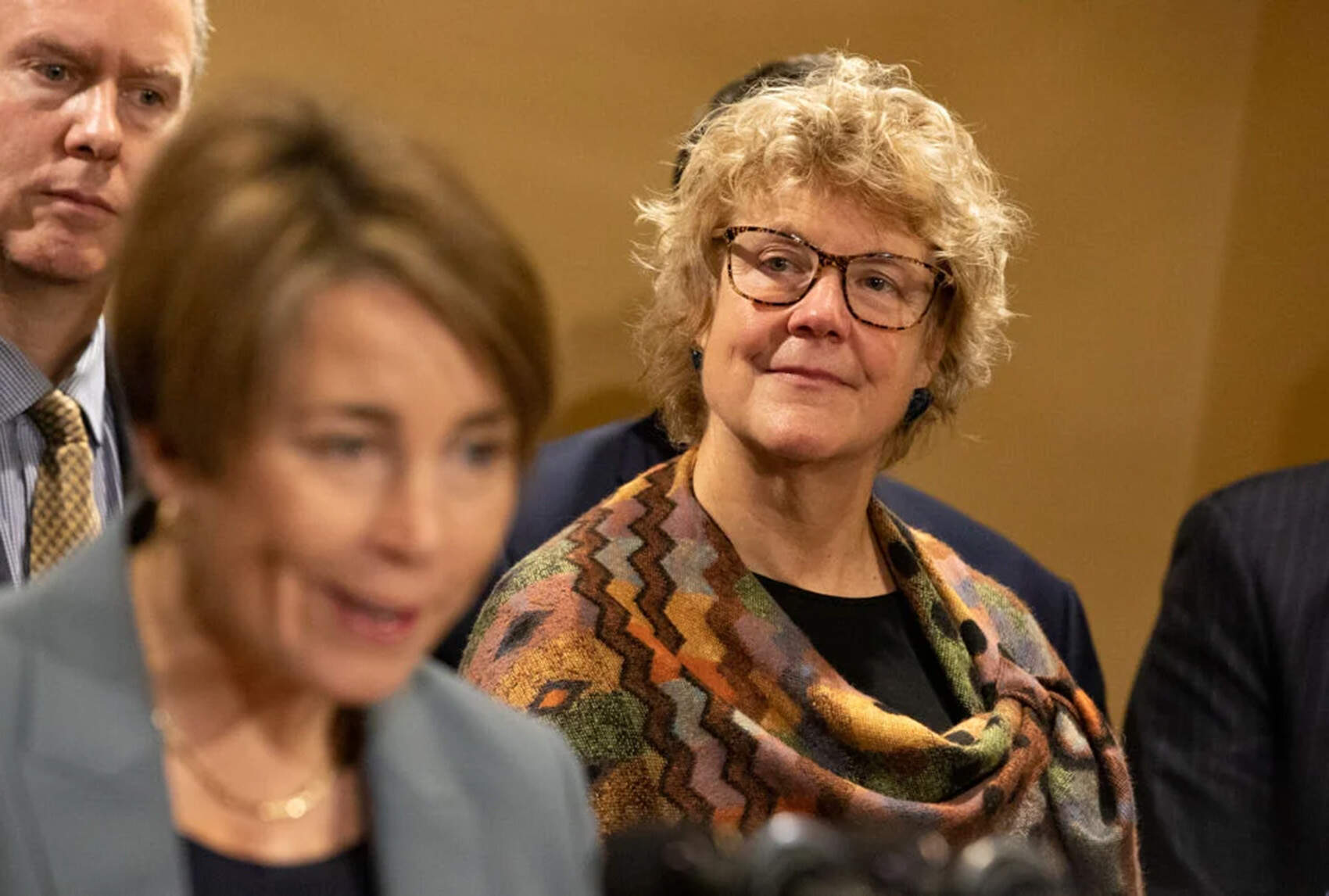
Healey Names Aladdine Joroff Massachusetts Climate Chief
Joroff will take over the Massachusetts climate chief role after serving as Healey’s deputy climate official, overseeing emissions cuts and community resilience in the Office of Climate Innovation and Resilience. She also teaches environmental science and public policy as a visiting lecturer at Harvard and has worked as Boston’s climate policy director and as an attorney.
She said she would continue the work Hoffer led in carrying out the Healey-Driscoll administration’s government-wide climate agenda. Hoffer, the state’s first climate chief, is departing to take the helm at Vermont Law and Graduate School on December 1.
Joroff assumes the position as Massachusetts faces pressure to reduce greenhouse gas emissions by half from 1990 levels by 2030, while residents and lawmakers contend with rising energy costs. The state’s climate and energy choices have also been complicated by the Trump administration’s cancellation of offshore wind projects. Healey has supported natural gas as one part of an effort to increase energy supplies and contain utility bills.
Hoffer, speaking to environmental advocates before leaving, called for a halt to new natural gas infrastructure and a phaseout by 2050. The position she is vacating has limited formal power and a relatively small budget, and Hoffer previously described the difficulty of getting state agencies to work together. Conservation Law Foundation vice president Rishi Reddi welcomed Joroff’s experience and said the state needs leadership that can unite stakeholders and deliver results.
Joroff Inherits Climate Post as Massachusetts Faces Energy Test
Massachusetts needs climate leadership that can keep the transition moving while making clean energy affordable, and Gov. Maura Healey has chosen Aladdine Joroff to take on that challenge. Joroff, previously the state’s deputy climate chief, succeeds Melissa Hoffer, who leaves to lead Vermont Law and Graduate School on December 1.
The state is legally required to cut greenhouse gas emissions in half from 1990 levels by 2030. Yet residents face rising energy costs, and the Trump administration has canceled offshore wind projects that were expected to supply clean power. Those setbacks make the work of the climate office more consequential, not less.
Healey has backed gas-fired power as one way to broaden energy supply and slow utility-bill increases. Hoffer, by contrast, recently called for stopping new gas infrastructure and phasing it out by 2050. Joroff now inherits that divide as well as the challenge of coordinating agencies through an office that lacks regulatory authority and has a modest budget.
Joroff has worked on climate mitigation and community resilience in Healey’s administration and taught environmental policy at Harvard. The question is whether the state can meet its climate obligations while leaders make choices that do not lock in more reliance on gas.
Healey’s New Climate Chief Faces Affordability Before Green Targets
Massachusetts’ next climate chief takes office as families and lawmakers grapple with soaring energy costs—and as the state presses ahead with emissions targets that could constrain its energy choices. Gov. Maura Healey appointed Aladdine Joroff, a former deputy climate chief, to replace Melissa Hoffer, who is leaving for Vermont Law and Graduate School.
Healey has argued for an all-of-the-above energy approach, including natural gas, to add supply and slow rising utility bills. That is a practical response to affordability and growing power demand. Hoffer, departing on December 1, instead called for stopping new gas infrastructure and phasing it out by 2050, a stance that underscores the tension between climate goals and dependable, affordable energy.
Massachusetts is required to halve greenhouse gas emissions from 1990 levels by 2030. Meanwhile, the Trump administration has canceled offshore wind projects that were expected to provide clean power. The state must now weigh its targets against the costs and supply needs facing residents.
Joroff brings experience in climate policy, community resilience and teaching environmental science and public policy. But the climate chief’s office operates without regulatory powers and on a relatively small budget. The administration’s challenge is not simply to set ambitious goals; it is to deliver an energy system people can afford.
Reported by WBUR, The Boston Globe, CommonWealth Beacon.