Supreme Court Declines Challenge to California Bias Training Requirement
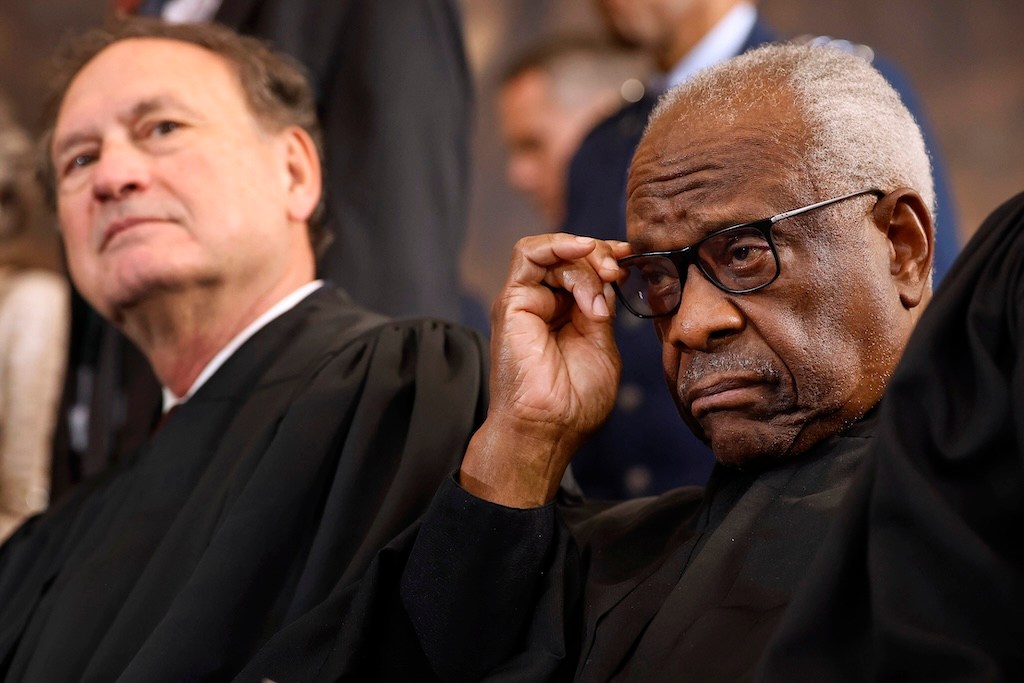
The Supreme Court declined to review a challenge by California doctors who say the state’s implicit-bias training requirement violates instructors’ First Amendment rights. Justices Clarence Thomas, Samuel Alito and Neil Gorsuch favored hearing the case, but the court did not take it up; four votes were needed to do so.
California mandates 50 hours of recognized medical study for licensed physicians in each two-year period. Under a 2019 law, qualifying courses involving patient care must teach about unconscious prejudice and how it can affect patients’ health.
The challengers argued that requiring instructors to address the subject compels private speech. The Ninth Circuit treated the instruction as government speech, rather than private expression protected by the First Amendment. Thomas said that approach wrongly blurred the distinction between government expression and speech by private people operating under regulation. He also urged the court to reconsider its test for identifying government speech.
The court’s refusal to hear the case does not decide whether California’s requirement is constitutional. It leaves the Ninth Circuit’s judgment intact, and the state’s continuing-education rules remain in effect. Thomas’s dissent raises the possibility that the court could revisit its approach in a future case.
Court Leaves California’s Health Training Requirement in Place
California’s requirement that qualifying medical courses teach about implicit bias will remain in place after the Supreme Court declined to hear a challenge on November 16. The rule applies to patient-care courses in a state system requiring doctors to complete 50 hours of approved continuing education every two years.
The challenge came from doctors who argued that requiring instructors to cover implicit bias violates the First Amendment. The Ninth Circuit treated the instruction as government speech, and the Supreme Court’s decision not to review that ruling leaves it standing without deciding the constitutional issue nationwide.
Justice Clarence Thomas, joined by Samuel Alito and Neil Gorsuch in wanting the case heard, argued that the lower court confused government speech with private expression subject to regulation. Thomas also called for reconsideration of the court’s test. But the court’s refusal to take the case means California’s policy survives this challenge, while the alleged compelled-speech problem remains unresolved.
Supreme Court Passes on Challenge to State-Mandated Speech
California can continue requiring qualifying medical courses to address implicit bias after the Supreme Court declined on November 16 to hear doctors’ First Amendment challenge. The state requires licensed physicians to complete 50 hours of approved continuing education every two years, with a 2019 law specifying instruction for certain patient-care courses.
The doctors argued the mandate forces instructors to deliver speech chosen by the state. The Ninth Circuit instead classified the instruction as government speech. By declining review, the Supreme Court left that ruling in place without deciding whether the requirement violates the Constitution.
Justice Clarence Thomas, with Justices Samuel Alito and Neil Gorsuch favoring review, warned that regulation should not automatically transform private expression into government speech. He urged the court to reconsider its test. The court’s inaction leaves the challengers without a ruling on the merits and allows California’s mandate to stand for now.
Reported by The Washington Examiner, Newsweek.