Families Demand Answers After Deadly Iran Drone Strike
Families of U.S. service members killed in the Iran war are seeking answers about the decisions that left troops exposed to an Iranian drone attack in Kuwait. The investigation also examined damage to American military and diplomatic sites across the Middle East during the conflict.
The strike hit Port Shuaiba, an Army outpost about 65 miles from Iran, during the first day of fighting. Twenty-three U.S. service members and contractors have been killed in the war, according to figures the Pentagon has disclosed. President Donald Trump has repeatedly said the United States has lost no soldiers.
About 70 members of the Army Reserve’s 103rd Sustainment Command had been sent to the site. Major Stephen Ramsbottom, the unit’s deputy operations chief, said the installation was not equipped to defend against aerial attacks. He said he had raised concerns about drone protection with leaders, and that a promised counter-drone system never arrived. Six soldiers told the investigation they had seen intelligence identifying the site as a potential Iranian target.
Civilian medic Tanner Carson said the outpost lacked the personnel and supplies to handle a mass-casualty event. Master Sgt. Nicole Amor, who was killed in the attack, had asked him about plans for such an emergency, he said. Her husband, Joey Amor, blamed decisions by the 103rd’s command and said soldiers need to be able to trust that similar failures will not happen again.
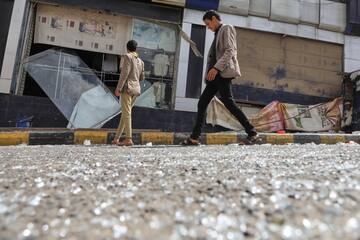
Satellite imagery and videos examined for the investigation showed that Iran had hit at least 31 military and diplomatic sites in eight countries, causing damage to hundreds of buildings and structures. The attacks continued after Trump declared victory on April 1; the U.S. Navy’s 5th Fleet headquarters in Bahrain was destroyed. Major Ramsbottom has asked Congress to investigate the lack of dedicated drone defenses at Port Shuaiba.
Iran War Losses Demand Accountability From Trump’s Pentagon
The Iran war’s human cost and damage to U.S. sites are at odds with President Donald Trump’s repeated claim that America has lost no soldiers. The Pentagon has disclosed 23 service members and contractors killed, while an investigation found Iranian strikes reached at least 31 military and diplomatic sites in eight countries.
At Port Shuaiba in Kuwait, an Iranian drone killed U.S. personnel in the first 24 hours of fighting. About 70 members of the Army Reserve’s 103rd Sustainment Command were sent to the outpost, where deputy operations chief Major Stephen Ramsbottom said defenses were not designed to stop aerial attacks. Six soldiers said they had seen intelligence listing the site as an Iranian target.
Ramsbottom said he warned leaders about the danger and that a promised counter-drone system never arrived. Civilian medic Tanner Carson described inadequate staffing, transport and medical supplies for a mass-casualty event. Master Sgt. Nicole Amor had asked about emergency plans before she was killed, Carson said.
Her husband, Joey Amor, blamed decisions by the unit’s command. Ramsbottom has asked Congress to investigate the absence of dedicated defenses against one-way drones. Iran’s strikes damaged hundreds of structures, including destroying the U.S. Navy’s 5th Fleet headquarters in Bahrain, and continued after Trump declared victory on April 1. Declaring victory cannot substitute for answers about whether troops were sent into danger without the protection they needed.
Iran War Investigation Must Separate Losses From Political Claims
The Iran war has exacted a serious toll: the Pentagon has disclosed 23 U.S. service members and contractors killed, and Iranian attacks damaged hundreds of structures at military and diplomatic sites across eight countries. An investigation also raised questions about the protection provided at a Kuwait outpost where troops died.
About 70 members of the Army Reserve’s 103rd Sustainment Command were sent to Port Shuaiba. Major Stephen Ramsbottom, the unit’s deputy operations chief, said the site lacked defenses designed for aerial attacks and that a counter-drone system discussed before the strike never arrived. Six soldiers said they had seen intelligence identifying the outpost as a potential target.
Civilian medic Tanner Carson said the site did not have the resources to manage a mass-casualty incident. Master Sgt. Nicole Amor had asked about emergency plans before she was killed. Her husband, Joey Amor, said the unit’s command had handled the matter poorly, while Ramsbottom called for a congressional investigation into the lack of dedicated drone protection.
Those failures warrant scrutiny, but the investigation also became a platform for political attacks, including calls to impeach President Donald Trump and fire Defense Secretary Pete Hegseth. The facts presented point to specific questions about planning, defenses and medical readiness at Port Shuaiba. Iran struck at least 31 sites, and the attacks continued after Trump’s April 1 victory declaration; the U.S. Navy’s 5th Fleet headquarters in Bahrain was destroyed.
Reported by CBS News, Raw Story.