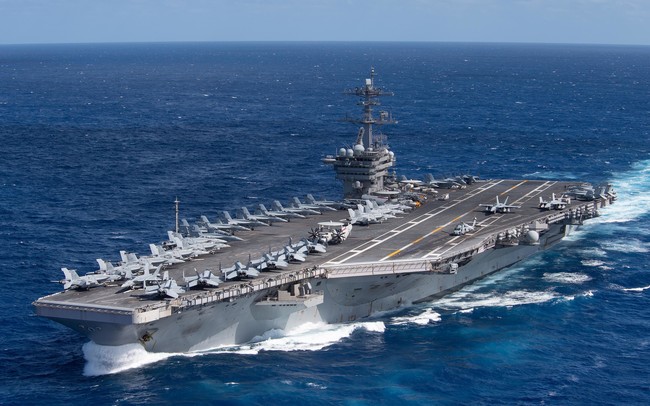
Navy Families Challenge Extended Carrier Deployment
Published November 11, 2026: Navy leaders faced angry questions from about 500 families at a November 9 meeting at Naval Station Norfolk after saying the George H.W. Bush naval force would not return home for the holidays. Families were told to prepare for a deployment that could last a year, the second extension since the group left Virginia on March 31 for an expected six to seven months at sea.
The force of more than 7,000 sailors reached the Middle East in April. The carrier did not make a port call until October 4, when it stopped in Phuket, Thailand, after 187 days without one. Families described strained trust, changing timelines and poor communication. They also raised concerns about food, broken equipment and access to mental health care. One spouse said her husband had tried to take his own life repeatedly and had not received help.
Acting Navy Secretary Hung Cao said the mission was intended to prevent Iran from becoming a nuclear-armed country and protect shipping. He said Iranian attacks continued to target U.S. ships. When asked what would bring the carrier home, Cao said Iran would have to agree to a non-nuclear status, but offered no timeline. Families challenged the mission’s cost and duration and asked what Navy leaders were doing to prevent a prolonged war.
Adm. Karl Thomas acknowledged the strain and said the group’s future depended on how events developed. He also said fresh produce spoiled before reaching the carrier from Japan and the Philippines, leaving sailors with canned vegetables. Navy leaders said they were working on the problems; Vice Chief of Naval Operations Adm. James Kilby said turkeys were headed to the ship for Thanksgiving. Cao said unmanned vessels were being developed to eventually reduce the number of carrier strike groups needed for the blockade.
Families Pay the Price of an Open-Ended Iran Mission
Published November 11, 2026: The Navy’s extended Iran mission is leaving families facing another holiday without their sailors and no clear return date. At a November 9 town hall in Norfolk, about 500 family members heard that the George H.W. Bush naval force could remain deployed for a year, after leaving Virginia in March for a six-to-seven-month assignment.
Families said repeated extensions and shifting timelines had eroded trust. They raised accounts of deteriorating food, broken equipment and limited mental health care. One spouse said her husband had repeatedly tried to take his own life without receiving help. The carrier had gone 187 days without a port call before stopping in Phuket, Thailand, on October 4.
Acting Navy Secretary Hung Cao defended the operation as necessary to protect shipping and prevent Iran from becoming a nuclear power. But when a family member asked what would bring the force home, Cao said Iran must agree to a non-nuclear status and gave no timetable. Families questioned whether escorting ships through the Strait of Hormuz was sustainable and asked how leaders would prevent another prolonged war.
Adm. Karl Thomas acknowledged the stress and said the mission’s course could change with events. He also confirmed that fresh produce spoils quickly during the journey to the carrier, leaving sailors with canned vegetables. Navy leaders said they were working on onboard problems, while Adm. James Kilby said turkeys were on their way for Thanksgiving. The promised relief through unmanned vessels remains a future plan, not a return date for families waiting at home.
Navy Families Need Answers as Iran Deployment Drags On
Published November 11, 2026: Families of more than 7,000 sailors are demanding answers as the George H.W. Bush naval force’s Iran deployment stretches beyond its original schedule. At a November 9 meeting in Norfolk, Navy leaders said the sailors would not be home for the holidays and advised families to prepare for a possible year at sea.
The group left Virginia beginning in March on a mission initially set to last six to seven months away. Its carrier went 187 days without a port call before reaching Phuket, Thailand, on October 4. Families raised concerns about food, equipment and mental health support, including one spouse’s account that her husband had repeatedly tried to take his own life without getting help.
Acting Navy Secretary Hung Cao said the operation protects shipping and is intended to prevent Iran from becoming a nuclear-armed country. He said Iranian attacks continue to target U.S. ships. Asked what would end the deployment, Cao said Iran must agree to a non-nuclear status, while giving no timeline. Some family members called the conflict unsanctioned and questioned whether the mission could continue indefinitely.
Adm. Karl Thomas said the situation remains uncertain and that future events could mean a shift in the force’s role. He acknowledged that fresh fruit and vegetables spoil on the way to the carrier, leaving sailors with canned food. Navy leaders said they were working on conditions aboard, and Adm. James Kilby said turkeys were headed to the ship for Thanksgiving. Cao said unmanned vessels could eventually ease the burden on carrier strike groups, but families still have no date for their loved ones’ return.
Reported by MSNBC, The Daily Beast, Newsweek, The Daily Caller.