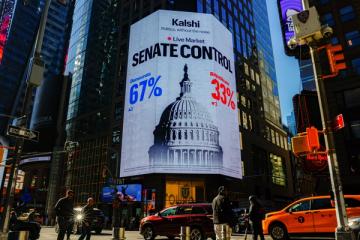
Kalshi Faces Possible CFTC Charges Over Contract Notifications
The Commodity Futures Trading Commission has warned prediction-market operator Kalshi that it could face charges over whether it gave the agency proper notice about dozens of products in development. The months-long investigation includes scrutiny of the exchange’s use of self-certification, a process that can allow new contracts to begin trading as soon as the next day without advance CFTC approval.
Kalshi spokesperson Elisabeth Diana characterized the issue as a procedural error involving a handful of contract submissions, many of which were not live, and said the company was addressing it. The CFTC offered no immediate response to a request for comment.
Under self-certification, exchanges attest that new products meet federal requirements, including standards intended to guard against market manipulation. The certification system has faced criticism as prediction-market companies expand into areas such as sports, elections and government policy. CME Group CEO Terry Duffy has raised concerns that some wagers could be manipulated, while the CFTC warned operators in July against making overly broad claims when certifying products.
The scrutiny comes as the CFTC, led by Michael Selig, has supported prediction-market companies in legal disputes with state officials who argue the platforms violate gambling laws. At the same time, the agency is investigating Polymarket, including whether it complied with a 2022 settlement requiring its offshore platform to block U.S. users.
Democrats, following midterm election victories, are preparing to increase oversight of prediction markets in the next Congress. The possible Kalshi charges add to pressure on an industry that has benefited from a more favorable federal regulatory approach.
CFTC Scrutiny Tests Prediction Markets’ Regulatory Free Pass
Kalshi’s possible exposure to CFTC charges shows why prediction markets need meaningful oversight, even as the agency has backed the industry in its legal fights with state officials. The investigation concerns whether Kalshi properly notified the regulator about dozens of products in development, and the agency’s warning suggests enforcement may be approaching.
Kalshi calls the matter a procedural error involving a handful of submissions, many for contracts that were not live, and says it is addressing the issue. But the inquiry has been underway for months, and it focuses in part on self-certification, which can put new products on the market as soon as the next day without advance CFTC approval.
That speed matters as exchanges expand wagers into sports, elections and government policy. Self-certification requires exchanges to attest that contracts meet federal rules, including safeguards against manipulation. CME Group CEO Terry Duffy has questioned whether some prediction-market wagers meet that standard, and the CFTC itself warned operators in July against overly broad certification claims.
The agency is also examining Polymarket, including whether it followed a settlement requiring its offshore platform to block U.S. users. Democrats are preparing to step up industry oversight in the next Congress. A regulatory approach that has welcomed prediction markets cannot substitute for rigorous scrutiny of how their products are launched and policed.
CFTC’s Kalshi Probe Puts Prediction-Market Growth at Risk
The CFTC’s possible case against Kalshi raises the prospect of Washington tightening its grip on a growing prediction-market industry. The agency is investigating whether the company properly notified it about dozens of products in development, even as Kalshi describes the matter as a procedural error involving a handful of submissions, many for contracts that were not live.
The dispute centers in part on self-certification, a process that lets federally regulated exchanges bring products to market quickly after attesting that they meet federal requirements. The CFTC does not have to approve each contract in advance. That approach has helped prediction markets broaden their offerings, while the agency under Michael Selig has supported companies in disputes with state officials who contend the platforms violate gambling laws.
Yet the CFTC is now warning Kalshi that charges could follow, and it is separately investigating Polymarket’s compliance with a settlement requiring its offshore service to block U.S. users. The agency’s July warning against broad certification claims and concerns raised by CME Group CEO Terry Duffy about potential manipulation show the regulatory pressure is not limited to one company.
Democrats are preparing to increase oversight in the next Congress. That push risks replacing a flexible framework with more political supervision just as prediction markets are expanding. The central question is whether regulators can address specific compliance concerns without undermining the faster product-launch process that has enabled the industry to grow.
Reported by New York Post, Business Insider.