What Pope Leo saw at Argentina’s Cottolengo home

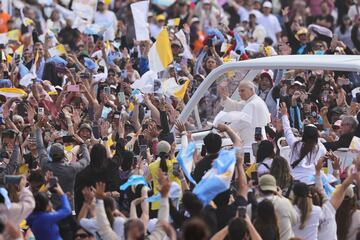
Pope Leo XIV began his first full day in Argentina at a place where the costs of public policy are not abstract. At Cottolengo Don Orione, a residential center for people with disabilities in Claypole, south of Buenos Aires, he met residents and staff and called on the country to protect people who are especially vulnerable. The visit was a pointed intervention in President Javier Milei’s austerity debate, though it did not settle the question at its heart: how to protect care while preserving the government’s fiscal balance. Argentina disability funding was central to that debate. The visit brought that dispute into view.
Founded in 1935, Cottolengo houses more than 400 people across a 50-hectare site. The institution has described its finances as gravely strained, and the reports say austerity has affected health and social services, including specialized therapy programs. Payment delays and charges that have not kept pace have added pressure. The Spanish-language account says the center warned in March that its precarious finances threatened the continuation of services. Associated Press reporting describes the center’s economic distress. At the home’s chapel, Leo praised the work of those who care for residents and urged Argentines to measure national progress by how people with disabilities are welcomed.
The human stories gave the visit its particular weight. Two residents spoke to the pope about lives marked by abandonment and repeated moves between institutions before finding a home at Cottolengo. Norma Donato, who has lived there for decades, described eventually finding a place where she felt accepted. Leo gave rosaries to Donato and another resident, Marta Torres, who was born with a disability and abandoned by her mother. These accounts do not answer the budget question; they show what is at stake when care arrangements fail. Residents and workers welcomed Leo warmly, and some wept as he greeted people in wheelchairs.
The funding conflict has a legislative history. Last year, lawmakers passed expanded support for disability care despite Milei’s veto. His administration has resisted putting that law into effect, arguing that it could endanger the fiscal balance the government has worked to achieve. Care homes, including Cottolengo, are still owed substantial sums. Within days, the Senate is expected to consider a separate proposal to earmark funds for disability payments in the coming year’s budget; Milei opposes it. The immediate contest, then, is not simply over whether vulnerable people deserve support, but over the level and source of public spending and the risks of either course.
Leo had already placed that debate in broader terms. On arriving Sunday, with Milei beside him, he invoked the principle that economic life should serve people rather than make people serve the economy. On Monday, he was scheduled to join a gathering at the Catholic University of Argentina with representatives from commerce, organized labor and popular movements. The invited groups include manufacturers facing competition from cheaper imports after Milei removed long-standing trade barriers, and labor representatives concerned about job losses and falling wages. The visit thus connected disability services to a wider argument over the shape and burdens of economic adjustment. Leo’s earlier appeal to put people before economic policy is part of the same message.
Milei’s government presents the cuts as part of an effort to reduce waste and fraud in public administration. The reports do not establish how much of the disputed spending was fraudulent, nor do they provide a detailed accounting of the programs affected. That matters: a state should not preserve every payment merely because it is familiar, but savings on paper are not savings if they leave essential services unable to function. The case for fiscal discipline is strongest when it distinguishes waste from necessary care and explains how the latter will be sustained. The government’s stated concern about the budget and the center’s unpaid bills are both part of the record; neither makes the other disappear.
The day also carried a larger religious and national significance. Leo is emphasizing Catholic social teaching associated with his predecessor, Pope Francis, the Argentine-born pontiff who died in 2025. The scale of the welcome suggested that the visit mattered well beyond policy circles. Thousands gathered for Leo’s first Argentine Mass at the Monumento a los Españoles, where the previous papal Mass in the country had been celebrated by John Paul II nearly four decades earlier. Organizers expected a crowd of as many as two million. Young people were present too, including Margarita Lanús, who celebrated her sixteenth birthday with her family while waiting for the Mass; the reports note a sharp decline in Catholic identification among Argentina’s youth. The visit also places Leo before a Church divided from Milei’s government.
What comes next is concrete: the Senate’s consideration of disability funding, the administration’s response to the existing law, and whether overdue payments reach providers. The reports do not say how the Senate will vote or what Leo’s meetings with labor and business leaders will produce. For my part, the visit made a complicated argument easier to see. A balanced budget matters, but so does knowing which services its arithmetic is putting at risk.
Reported by KPRC 2 Click2Houston, The Philadelphia Inquirer, PBS NewsHour, The Boston Globe, Breitbart.