Pope Leo XIV Begins South American Tour in Uruguay
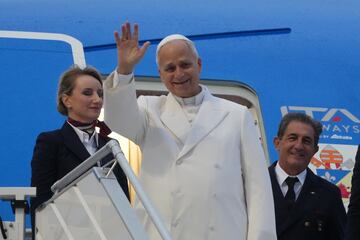
Leo landed after a nearly 14-hour flight from Rome, with Uruguayan President Yamandú Orsi at the airport to welcome him. The visit is the first by a pope to Uruguay since John Paul II traveled there in 1988, and comes as the 71-year-old pontiff continues recovering from surgery on October 13.
His Uruguay itinerary includes a meeting with Orsi, an address to government officials and diplomats, and a service at Montevideo’s cathedral. He is also scheduled to visit a neighborhood affected by gang violence and celebrate Masses in Paysandú and Florida. A prayer vigil at Montevideo’s Centenario Stadium drew enough interest for its tickets to sell out after two days, church officials said.
Uruguay is regarded as Latin America’s most secular country. The state separated from the church more than a century ago, and official names for Christmas and Holy Week reflect that divide. The country has also legalized abortion and same-sex marriage despite church opposition.
Vatican communications chief María Montserrat Alvarado said Leo had completed the 14-day recovery period set by his doctors and that medical care would be available during the trip. The pope is expected to present Catholic faith as a response to contemporary challenges and to emphasize Uruguay’s Catholic heritage.
After Uruguay, Leo will travel to Argentina, Pope Francis’ homeland, which Francis did not visit during his papacy, and then to Peru. Leo holds Peruvian citizenship and spent two decades there as a missionary and bishop.
Pope’s Uruguay Visit Tests Church’s Reach in Secular Country
Pope Leo XIV’s arrival in Uruguay puts the Catholic Church’s effort to restore its public influence in sharp focus. The country, which has kept church and state separate for more than a century, is the first stop on his three-country South American tour.
Leo landed in Montevideo on November 6 after nearly 14 hours in the air, less than a month after lung surgery. His itinerary includes a meeting with President Yamandú Orsi, public addresses, Masses in Paysandú and Florida, and a visit to a neighborhood affected by gang violence. A prayer vigil in Montevideo’s Centenario Stadium sold out its tickets after two days.
Uruguay’s secular identity is reflected in its official names for Christmas and Holy Week. Uruguay was an early adopter in Latin America of laws permitting abortion and marriage between same-sex couples, both over church objections. The visit therefore carries stakes beyond ceremony: Leo is expected to promote faith as an answer to current problems and highlight the country’s Catholic roots.
The church’s case for a larger role now meets a society whose laws and public institutions have long taken a different path. Leo’s three days in Uruguay will be followed by visits to Argentina and Peru. Vatican communications chief María Montserrat Alvarado said the pope had passed the 14-day recovery period doctors required after his October 13 operation and would have medical care during the journey.
Pope’s Uruguay Tour Revives Catholic Roots in Secular Nation
Pope Leo XIV’s visit offers Uruguay a chance to reconnect with the Catholic heritage that helped shape its history. He arrived in Montevideo on November 6, setting out on a three-nation journey fewer than four weeks after an operation on his lung.
The country has separated church and state for more than a century, and official holiday names such as “Family Day” and “Tourism Week” reflect that secular tradition. Uruguay has also legalized abortion and same-sex marriage despite Catholic Church opposition. But the public response to Leo’s visit suggests interest in the faith remains: tickets for a prayer vigil at Montevideo’s Centenario Stadium sold out after two days.
Leo’s packed three-day schedule includes a meeting with President Yamandú Orsi, an address to officials and diplomats, a neighborhood visit, and Masses in Paysandú and Florida. The pope is expected to present faith as an answer to current challenges and to recall Uruguay’s Catholic roots. The visit challenges the idea that secular public life has erased the country’s religious inheritance.
Vatican communications chief María Montserrat Alvarado said Leo had completed the 14-day recovery period required after his October 13 surgery, and that medical care would be available on the trip. Uruguay is the first stop; Leo will then visit Argentina and Peru, where he holds citizenship and served for two decades as a missionary and bishop.
Reported by The Philadelphia Inquirer, CBS News.